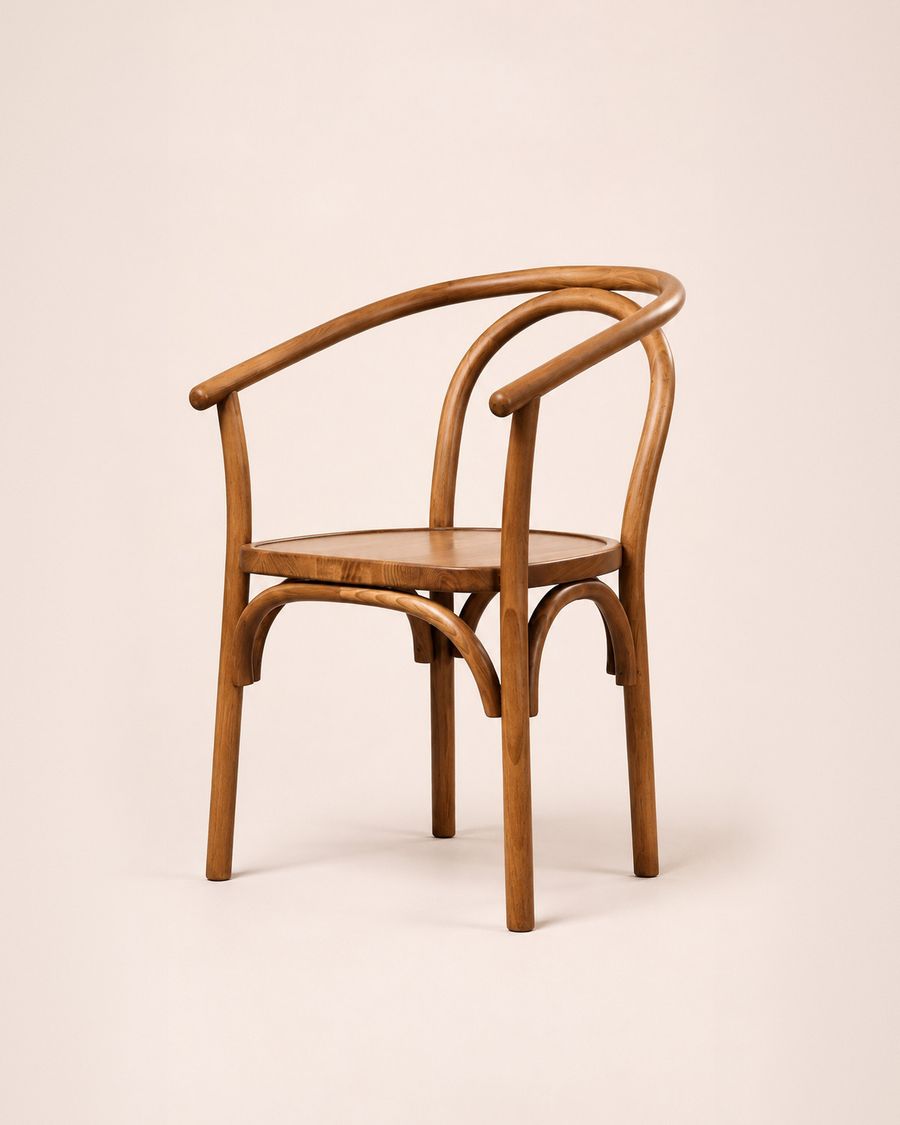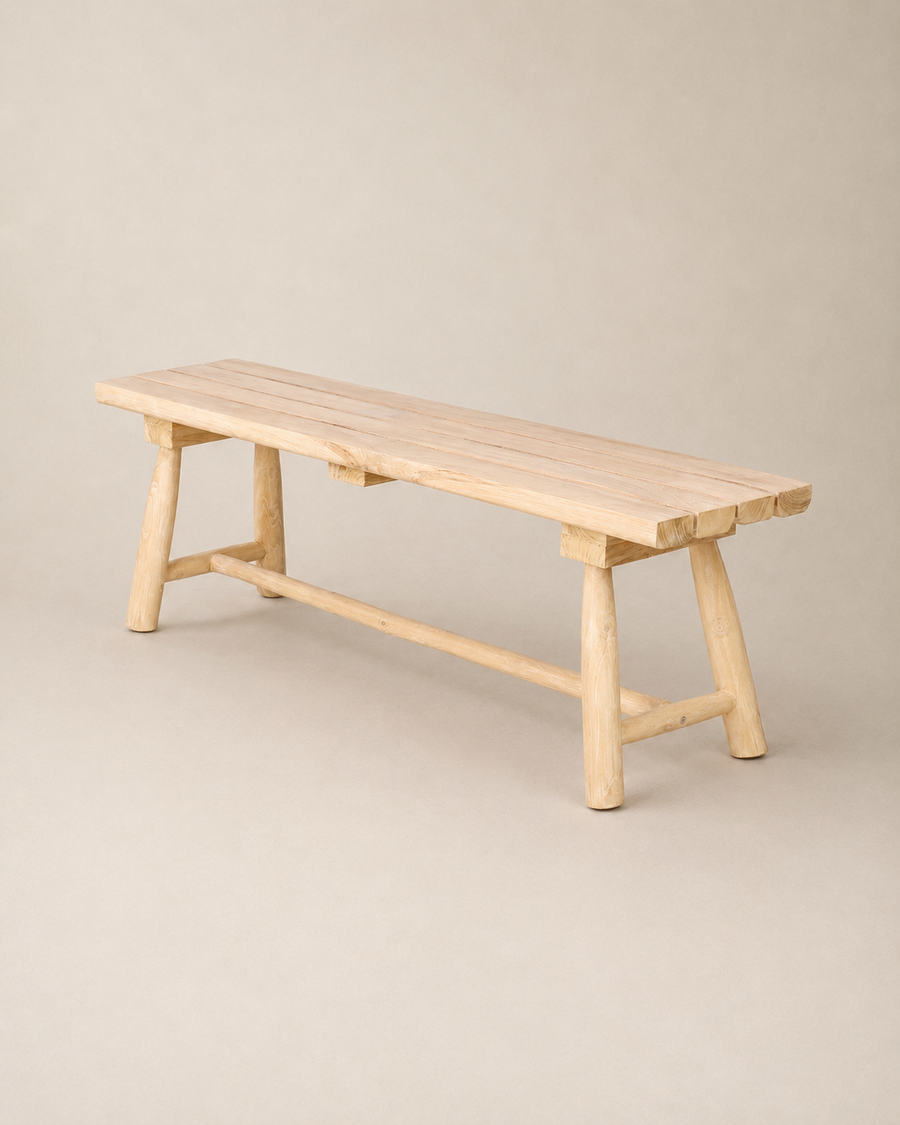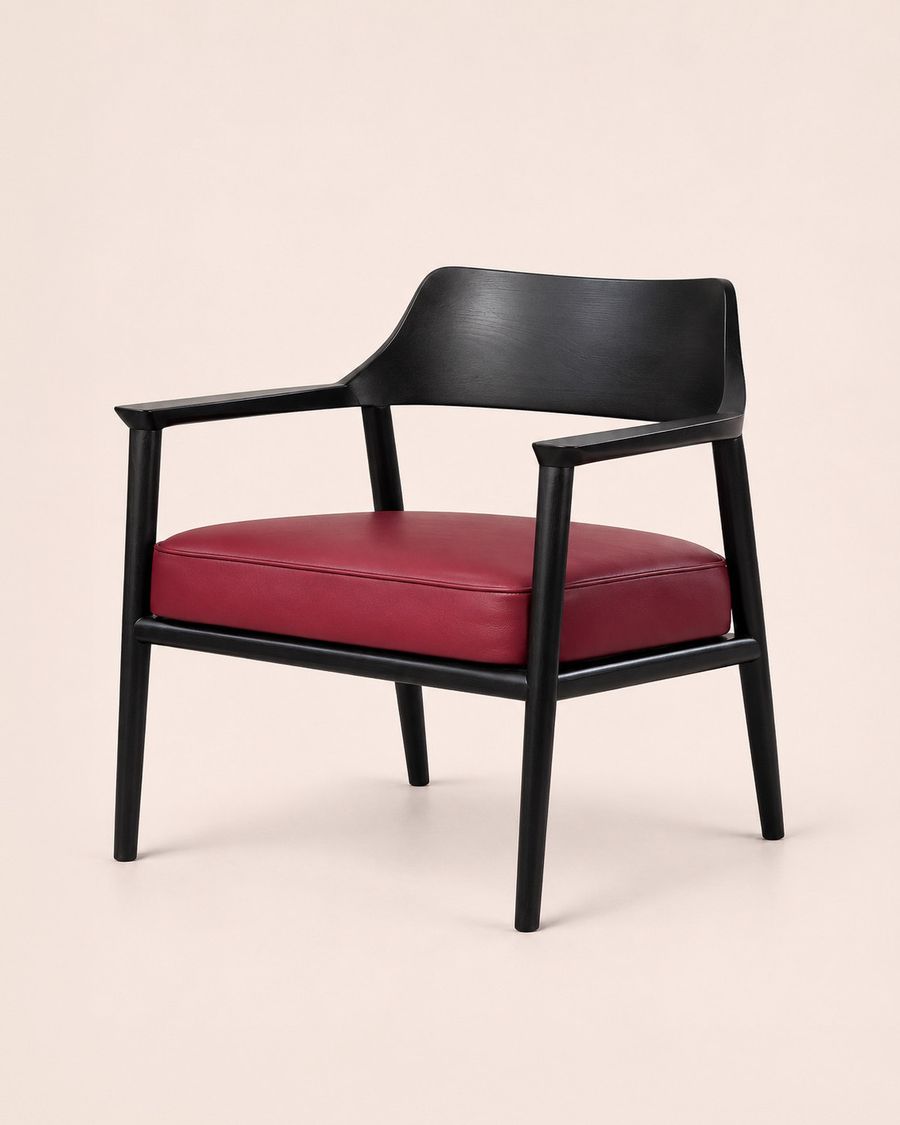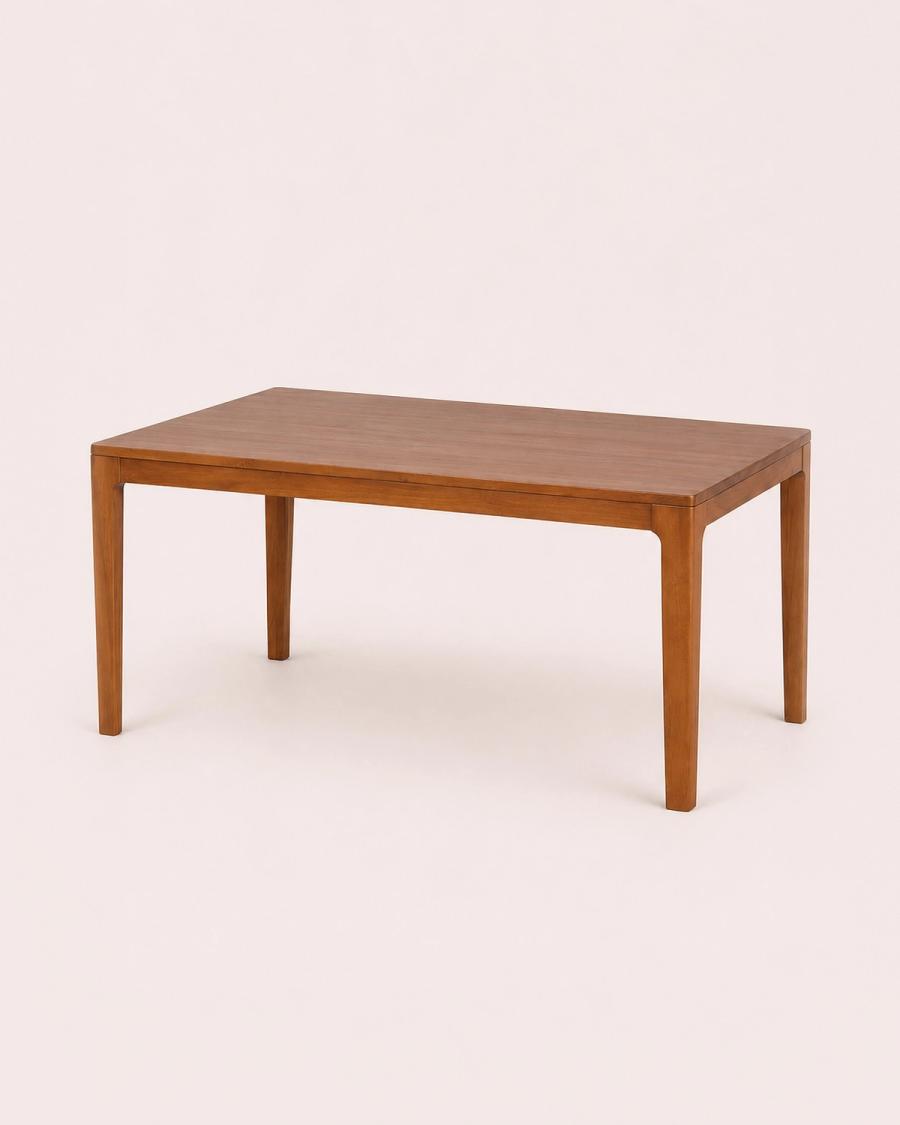
RimbaDining table
Teak
From 30 December 2026 (30 June 2027 for micro and small businesses), teak furniture sold in the EU must be legal, free of deforestation after 31 December 2020 and covered by a due diligence statement with the geolocation of the plots it came from. SVLK and FLEGT licences prove legality; neither replaces that statement.
The EUDR is Regulation (EU) 2023/1115 on deforestation-free products. It applies from 30 December 2026 to large and medium businesses and from 30 June 2027 to micro and small ones, with an exception for some furniture explained below.
It replaces the EU Timber Regulation (EUTR, Regulation 995/2010), which is repealed on 30 December 2026. The EUTR only required timber to be legal. Under Article 3 of the EUDR, a product can be sold in or exported from the EU only if it meets three conditions at once:
The dates have already moved twice: the regulation was amended in December 2024 and again in December 2025. Plenty of pages still quote older timetables, so check when anything you read was written. The dates in this guide come from the September 2026 consolidated text on EUR-Lex and the European Commission's EUDR page.
Yes. Annex I of the regulation lists wooden seats and wooden furniture, so a teak chair, bar stool, table or bench is in scope. These are the lines that matter for furniture:
| Code | What it covers | Examples |
|---|---|---|
| 9401 61 00 | Seats with wooden frames, upholstered | Upholstered armchairs and chairs on a teak frame |
| 9401 69 00 | Seats with wooden frames, not upholstered | Teak chairs and bar stools without upholstery |
| 9401 80 00 | Other seats, of wood | Wooden seats that fit none of the lines above |
| 9401 91 90 | Parts of seats, of wood | Loose backs, legs or frames |
| 9403 30 to 9403 60 | Wooden office, kitchen, bedroom and other furniture | Tables, benches, bedside tables and sideboards |
| 9403 91 | Parts of furniture, of wood | Loose table tops or legs |
Every line excludes used and second-hand products. Each piece's exact code comes from its customs classification, so ask your supplier for the HS code of every item. Two details matter for hospitality buyers:
The operator: the business that first places the furniture on the EU market. When the maker is outside the EU, the first person established in the EU who makes it available is treated as the operator (Article 7).
That is usually the importer. Take care if your hotel or restaurant imports straight from Indonesia: the regulation counts use in your own business as a commercial activity (Article 2, point 19), so a company importing furniture to fit out its own premises is an operator too. Check with your customs or legal adviser how this applies to each import.
Before selling or using the furniture, the operator gathers the information in Article 9, assesses the risk and, unless it is zero or negligible, reduces it. For timber, that information includes:
The operator then files the statement in the EU information system, keeps it for five years and passes its reference number to the buyer (Article 4(7)). Businesses that sell the product on after the operator keep their supplier's details and those numbers for at least five years (Article 5). If you buy from an EU importer, that reference number is what you ask for and file.
SVLK (Sistem Verifikasi Legalitas Kayu) is Indonesia's mandatory system for verifying that timber complies with Indonesian law from its source to its sale. It is the basis of the FLEGT licences that let that timber into the EU.
According to Indonesia's Ministry of Forestry, the country has assured timber legality through this system since 2012, supported by the SILK information platform. The V-Legal document has been required for exports since 1 January 2013.
FLEGT is the EU's action plan against illegal logging. The EU and Indonesia signed a Voluntary Partnership Agreement, in force since 1 May 2014, and Indonesian FLEGT licences have applied since 15 November 2016 (Delegated Regulation (EU) 2016/1387). The licensed products include seats with wooden frames and wooden furniture. In practice a buyer sees two things: the SVLK certificate of each company in the chain and, with each shipment to the EU, the V-Legal document that serves as the FLEGT licence.
No. Both help, but neither replaces the due diligence statement, because neither proves on its own that the plot was not deforested or degraded after 2020.
Article 10(3) says wood products covered by a valid FLEGT licence are deemed to comply with Article 3(b): legality. It says nothing about Article 3(a), deforestation-free, and does not waive the statement. With FLEGT-licensed teak, the operator still needs the plot geolocation and evidence of no deforestation or degradation.
FSC is a voluntary certification of forest management and chain of custody: every company that buys and sells the timber with an FSC claim must hold its own certificate, and the invoice carries the claim and the certificate code. FSC Spain itself warns that certification does not automatically exempt companies from their EUDR obligations. The regulation lets operators use information from certification schemes as supporting evidence in their risk assessment (Article 10(2)(n)), as long as it meets the information requirements of Article 9.
| Document | What it is | What it proves | Under the EUDR |
|---|---|---|---|
| SVLK certificate | Indonesia's mandatory system | Legality under Indonesian law | The basis of the FLEGT licence |
| FLEGT licence (V-Legal) | Export licence to the EU, per shipment | Legality of the product | Deemed to meet the legality condition (Article 10(3)) |
| FSC certificate | Voluntary forest and chain-of-custody certification | Forest management to the FSC standard | Supporting information for the risk assessment; no exemption |
| Due diligence statement | The operator's filing in the EU system | Legality, deforestation-free status and geolocation | Required to sell the furniture in the EU |
Rule of thumb: FLEGT and FSC answer 'is this timber legal?'. The EUDR also asks 'which plot did it come from, and was it deforested after 2020?'. Without the statement's reference number, the furniture is not ready for the EU.
Ask for evidence, not assurances. Before you place the order, agree who will be the importer and what you will receive with each shipment:
It is worth writing these documents into the quote or the contract, alongside lead times. If you order from a maker such as Kadek, ask when you request the quote: whether the factories hold SVLK certificates, whether each shipment travels with a FLEGT licence, whether FSC teak is available, and who will act as importer into the EU.
To go further, the guide to teak prices and grades covers the timber itself, and the guide to buying furniture from Indonesia covers ordering and shipping from the factory. To see actual pieces, here is all the teak furniture in the collection.
Not straight away. Timber produced before 29 June 2023 and placed on the market from 30 December 2026 stays under the EUTR until 31 December 2029, and must meet the EUDR from that date (Article 37).
Each member state sets them, but Article 25 requires that, for a legal person, the maximum fine is at least 4% of its total annual EU-wide turnover, alongside confiscation of the products. For the penalties that apply in a given country, Spain included, check with its competent authority or your legal adviser.
No. In the May 2025 classification (Implementing Regulation (EU) 2025/1093) only Belarus, North Korea, Myanmar and Russia are high risk, and Indonesia is not on the low-risk list, so it is standard risk and needs full due diligence. The classification can be revised, so check the current list before each import.
Each member state designates competent authorities. In Spain it is the Directorate-General for Biodiversity, Forests and Desertification at the Ministry for the Ecological Transition (MITECO), with an authority in each autonomous community.
Look up its code in FSC's public database, info.fsc.org, and check that it is valid and that its scope covers the product you are buying. The invoice should carry that code and the FSC claim for each item.
Not in Great Britain (England, Scotland and Wales), where the UK Timber Regulations apply and Indonesian timber with a FLEGT licence is treated as legal. The EUDR does apply in Northern Ireland.