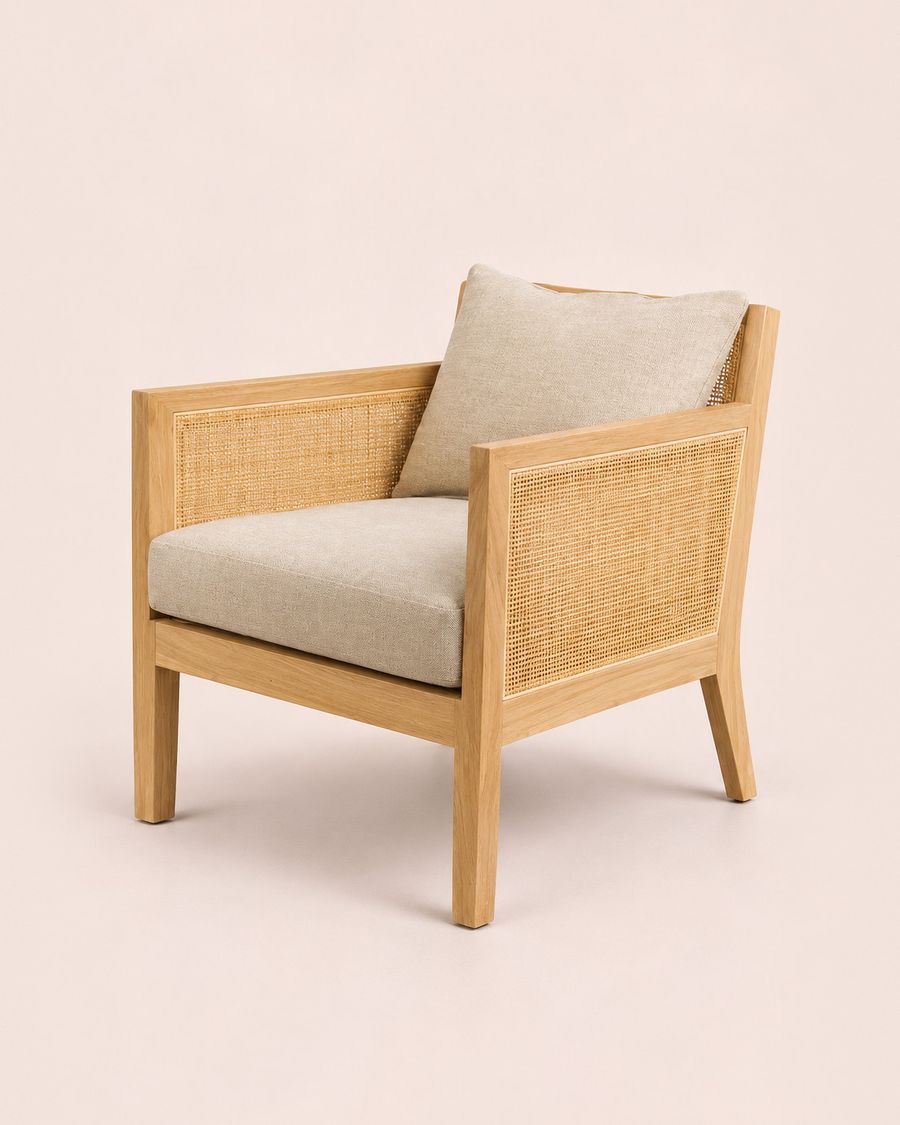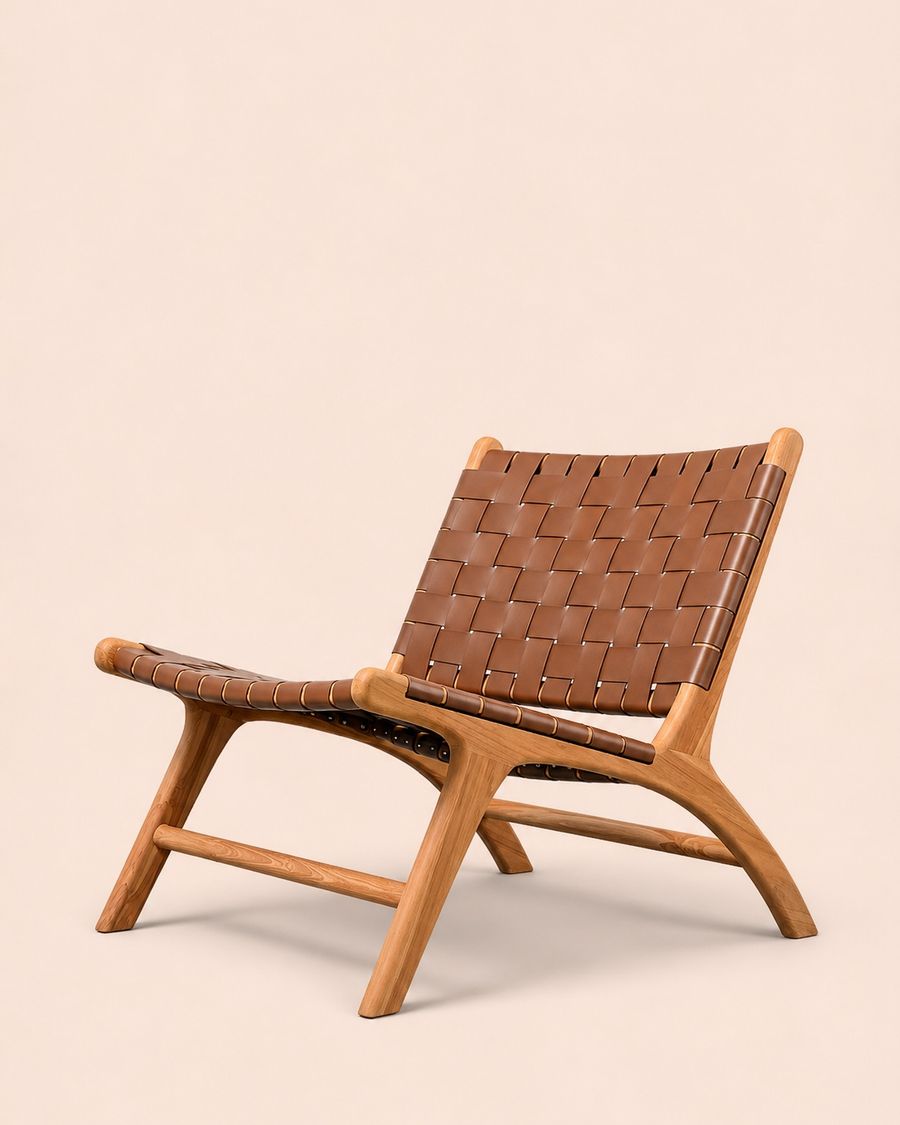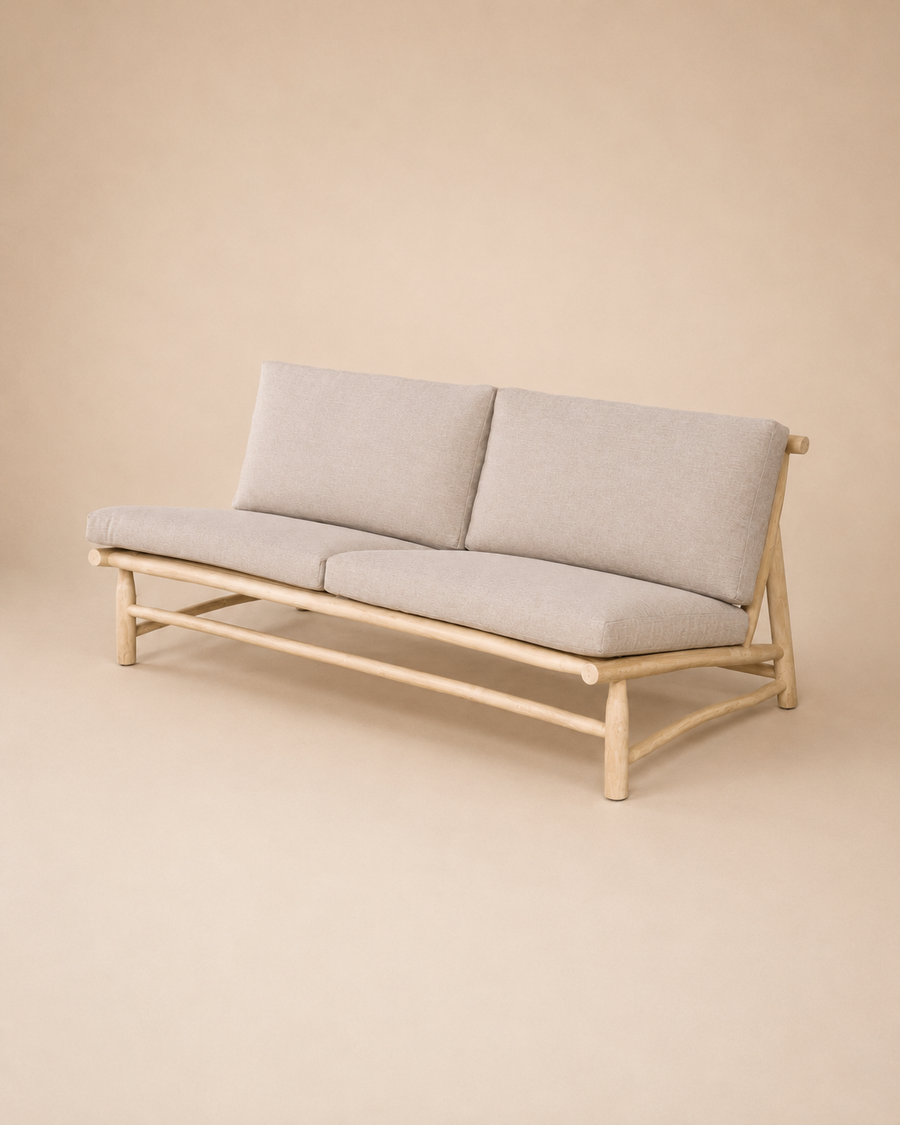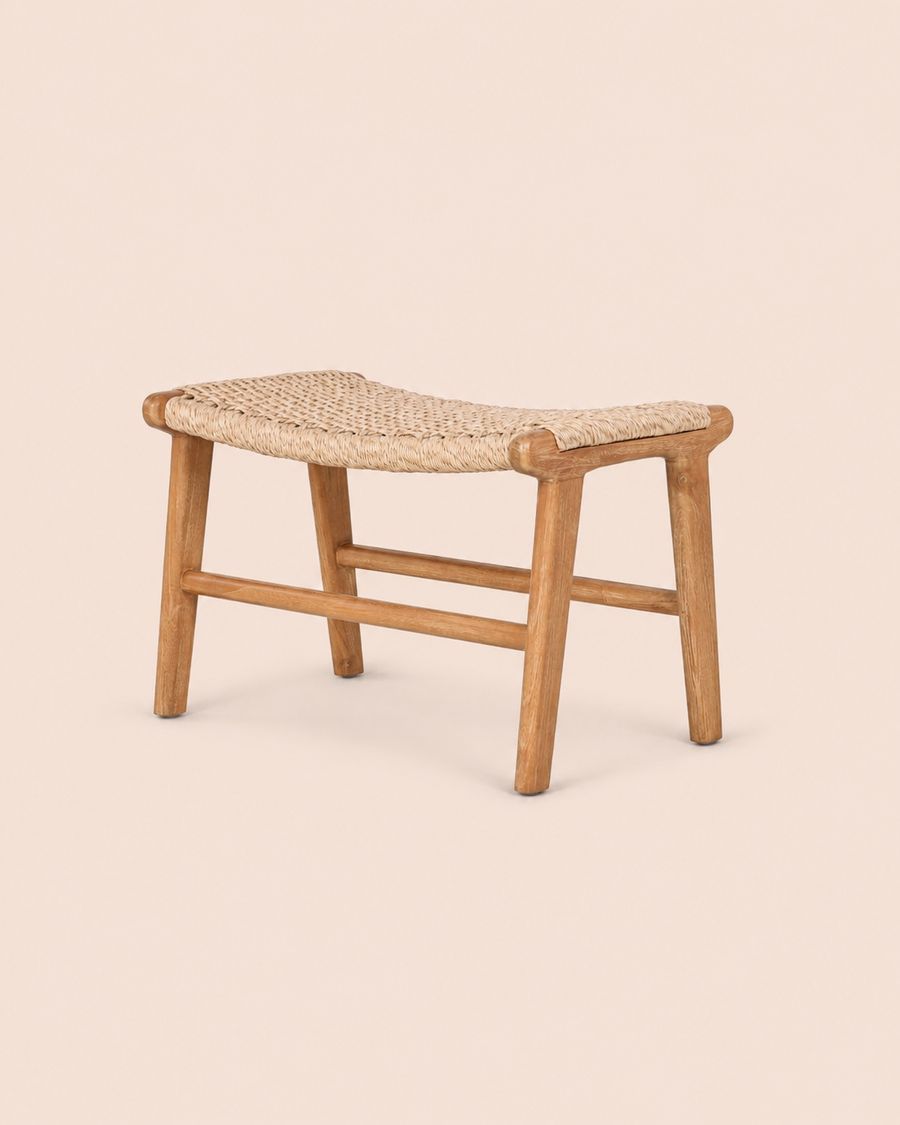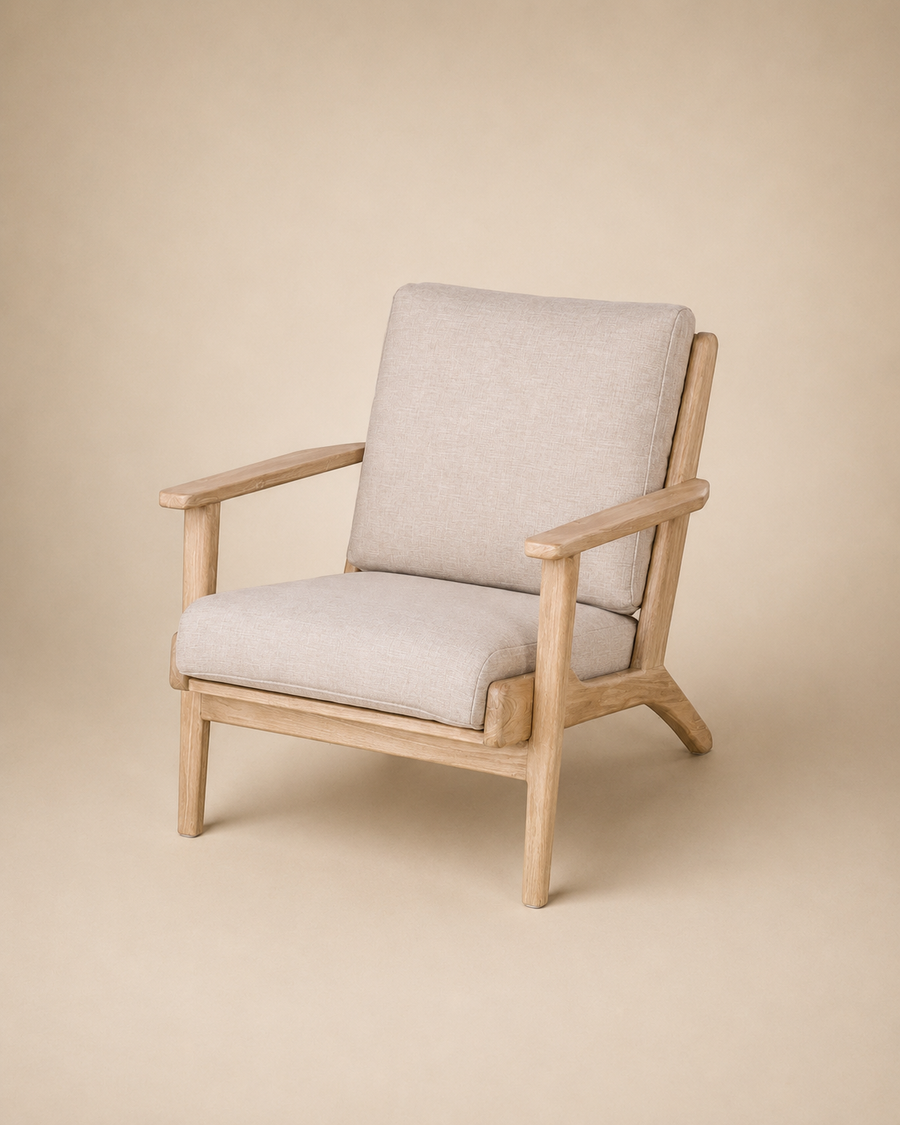
LembutLounge chair
Teak, fabric
In the UK, upholstered seating for hotels and restaurants is usually specified to BS 7176 Medium Hazard: resistant to a cigarette, a match and Crib 5, set by the premises' fire risk assessment rather than a direct law. In Spain, the building code requires EN 1021-1 and -2 only for fixed seats in cinemas, theatres and auditoria.
Crib 5 is ignition source 5 in the British standard BS 5852: a small stack of wooden sticks lit on the test sample. It is harder to pass than the cigarette and match tests, and it defines the Medium Hazard level of BS 7176. No UK law requires it directly for non-domestic furniture.
According to FIRA's guide, non-domestic furniture is regulated indirectly. In England and Wales, the Regulatory Reform (Fire Safety) Order 2005 makes the responsible person for the premises carry out a fire risk assessment, and that assessment sets the level the furniture must meet. The Furniture and Furnishings (Fire) (Safety) Regulations 1988 cover domestic furniture, not contract seating.
BS 7176 is the specification for non-domestic upholstered seating. It does not give a level per type of furniture but per hazard of the premises. FIRA gives these typical examples:
| Level | Ignition sources | Typical premises |
|---|---|---|
| Low | Cigarette and match | Offices, schools, universities, museums |
| Medium | Cigarette, match and Crib 5 | Hotel bedrooms, restaurants, pubs and bars, casinos |
| High | Cigarette, match and Crib 7 on the components | Offshore installations, sleeping areas in some hospital wards and hostels |
| Very high | Cigarette, match and Crib 7 on the components and the complete item | Prison cells, locked psychiatric units |
The risk assessment can move a product up or down from these examples, so the specifier or the responsible person for the premises should confirm the level before you order, and write it into the specification. The guide to contract furniture covers what else a specification for hotel furniture usually asks for.
They test whether a cover and filling together ignite from two small sources: a smouldering cigarette (part 1) and a flame equivalent to a match (part 2). They do not measure how a whole sofa burns in a developed fire.
The test uses a rig that copies the angle between seat and back, built with the fabric and the foam. The Belgian laboratory Centexbel summarises it like this:
Because the combination is tested, the result holds for that fabric over that filling. Change the foam and the result may change. That is why a certificate for the fabric alone does not prove an upholstered piece passes. BS 7176 uses these two tests for its low level, and BS 5852 for Crib 5 and above.
| Standard | Origin | What it tests | Where it is required or asked for |
|---|---|---|---|
| EN 1021-1 | European | Cover and filling against a smouldering cigarette | BS 7176 at all levels; Spain's CTE for fixed seats in auditoria |
| EN 1021-2 | European | Cover and filling against a match-equivalent flame | As part 1 |
| BS 5852 | British | Test method for seating with several ignition sources, including Crib 5 | Used by BS 7176 from Medium Hazard up |
| BS 7176 | British | Hazard-based specification for non-domestic seating | UK, following the fire risk assessment |
| M1 (UNE 23727) | Spanish, older than the European system | Reaction to fire of the material; in textiles, mainly curtains | Trade use; not cited in Spain's current CTE |
| EN 13773, Class 1 | European | Curtains and drapes | Spain's CTE, curtains in places of public assembly |
Spain's building code, the Código Técnico de la Edificación, sets an upholstery test in one case only: fixed upholstered seats in cinemas, theatres, auditoria, assembly halls and similar venues. It sets none for the loose chairs, armchairs and sofas of a hotel or restaurant.
The rule is in the fire safety basic document (DB SI, March 2025 version), section SI 1, paragraph 4. For buildings in public assembly use, fixed upholstered seats must pass EN 1021-1 and EN 1021-2 (the annex cites the 2015 editions of both), and curtains must be Class 1 to EN 13773:2003.
A hotel counts as residential public use under the CTE. If it has an auditorium or assembly hall with fixed upholstered seats, that area may fall under the rule above; check with the project's architect. For everything else the CTE sets no level, so it is best set in the specification, which may come from the project brief, the interior designer, the hotel brand or the insurer. Check too whether any regional or municipal rule, or the insurance policy, asks for a specific test.
M1 and M2 are reaction-to-fire classes in the Spanish standard UNE 23727, which runs from M0 to M4: the lower the number, the better the material performs. They are not an upholstery test.
The standard was written for building and interior materials. In the textile trade it is used mainly for curtains and decorative fabrics, which is why many Spanish data sheets say 'M1'. But an M1 fabric does not show that a seat upholstered in it passes EN 1021: they are different tests on different things. Spain's current DB SI does not use M classes either; for curtains it asks for Class 1 to EN 13773.
It depends on how the fabric gets its fire performance. Inherently fire-retardant fabric is woven from fibres or yarns that already resist ignition; treated fabric has a finish added afterwards, such as a back-coating. A finish can be weakened by washing or dry cleaning.
The standards allow for this. FIRA notes that when a cover or fire barrier has been treated, it must go through a 30-minute water soak before testing, as set out in EN 1021-1, EN 1021-2 and BS 5852. An inherently fire-retardant fabric with no added treatment does not need the soak.
BS 7176 sets no requirements for covers sold as washable or dry-cleanable, but it warns that treatments may deteriorate and recommends testing after a number of cleaning cycles. In a hotel, where covers are cleaned often, ask whether the fabric is inherent or treated, how many wash cycles came before the test, and which cleaning method keeps the result valid.
A laboratory test report for the combination your piece will actually use, not a sales data sheet. Check these points:
Rule of thumb: a certificate covers the combination that was tested. Ask for the one for your fabric over your filling, not just the fabric's.
In a custom furniture order, the fabric and filling are fixed on the technical drawing you approve before production, which is the moment to ask for the report on that combination: which standard the fabric passed (EN 1021-1 and -2, or BS 7176 with Crib 5), over which filling it was tested and which laboratory issued it. Fabrics and finishes can be compared at the Madrid showroom.
It is fabric sold as passing the Crib 5 test, almost always when tested over a specified foam. The pass belongs to that combination, so check which filling was used.
Both are wooden-crib ignition sources in BS 5852, and Crib 7 is the larger one. BS 7176 asks for Crib 5 at Medium Hazard and Crib 7 at High and Very High Hazard.
No. BS 5852 is the test method and covers several ignition sources; Crib 5 is one of them. 'BS 5852 Crib 5' tells you which source was used.
No. They are the same European standard, EN 1021, adopted in each country: BS EN in the UK and UNE-EN in Spain. A report with any of these prefixes describes the same test.
They have their own standards: EN 597-1 (cigarette) and EN 597-2 (match) for mattresses and upholstered bed bases, and in the UK BS 7177, with hazard levels that mirror BS 7176.
According to FIRA, BS 7176 treats furniture that meets the UK domestic regulations as meeting Low Hazard. Medium Hazard, the level typical of hotel bedrooms and restaurants, needs the combination tested with Crib 5.