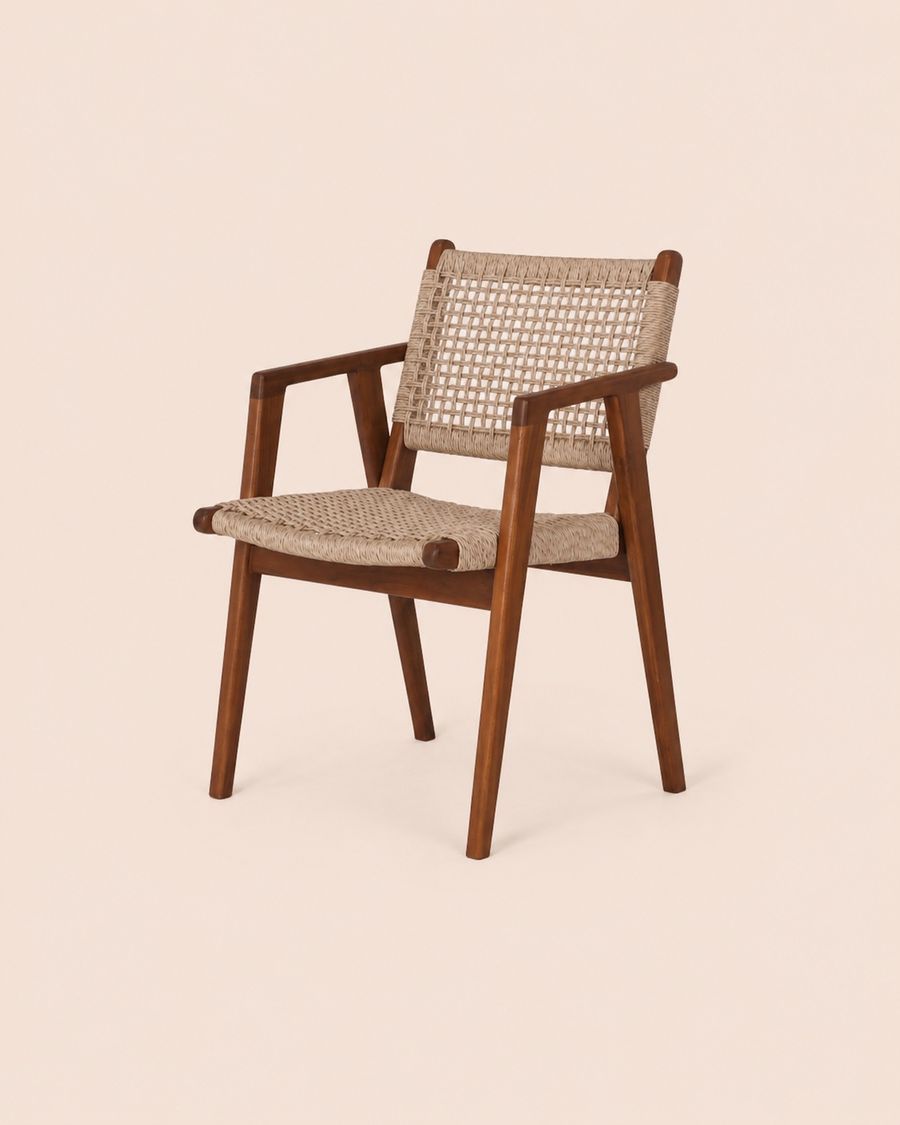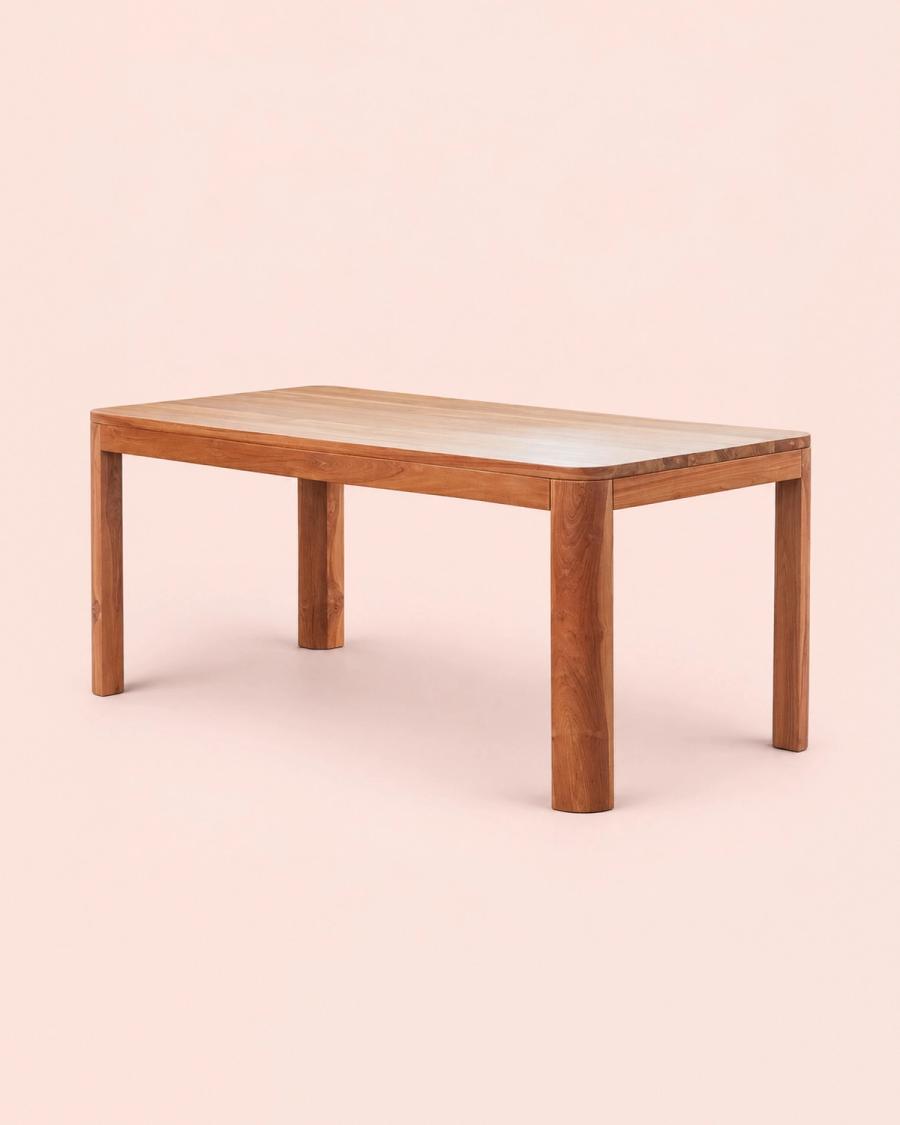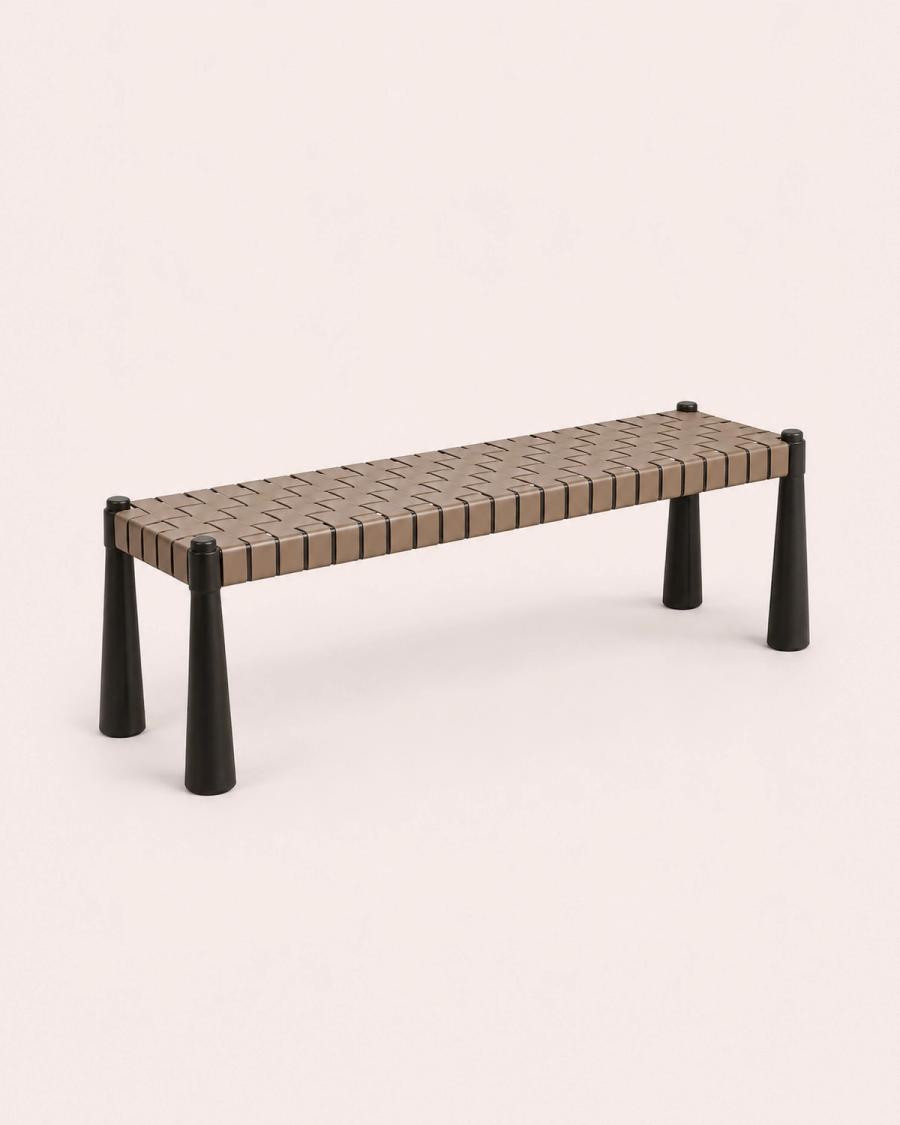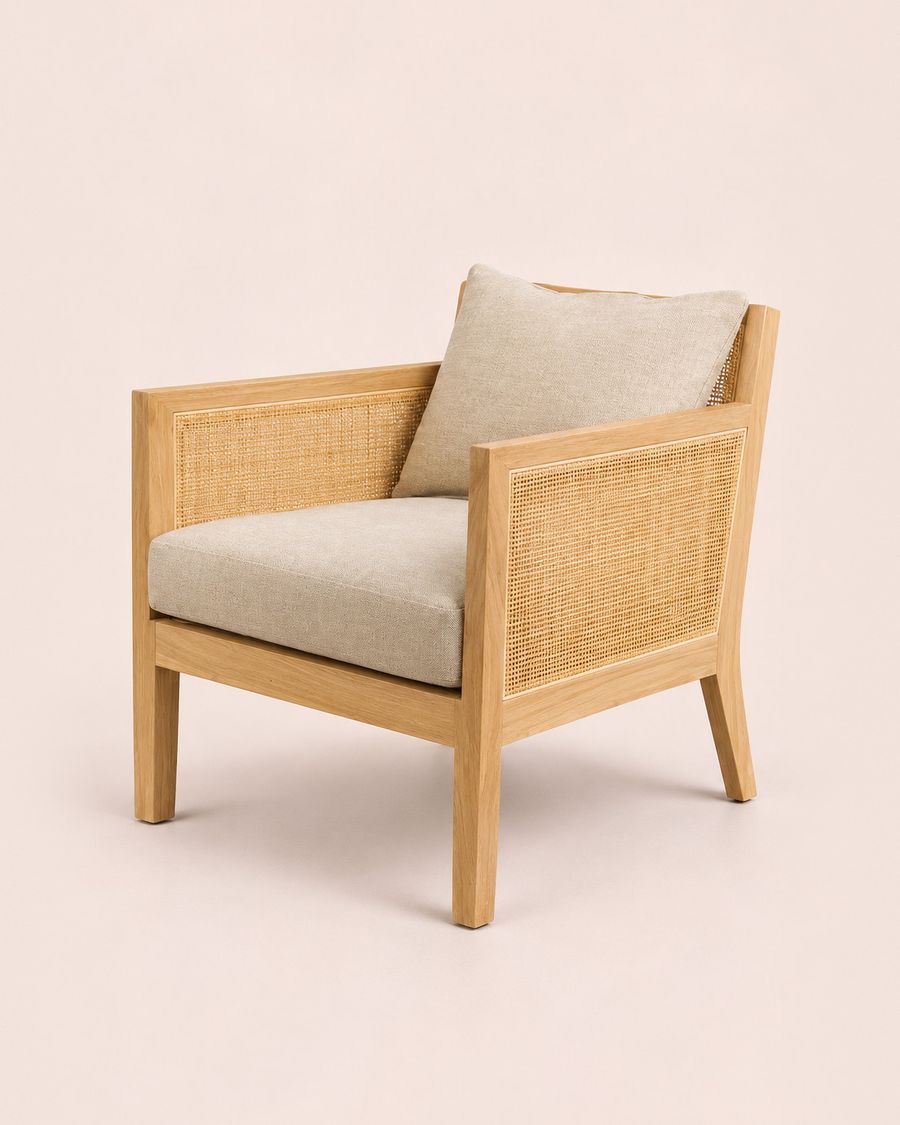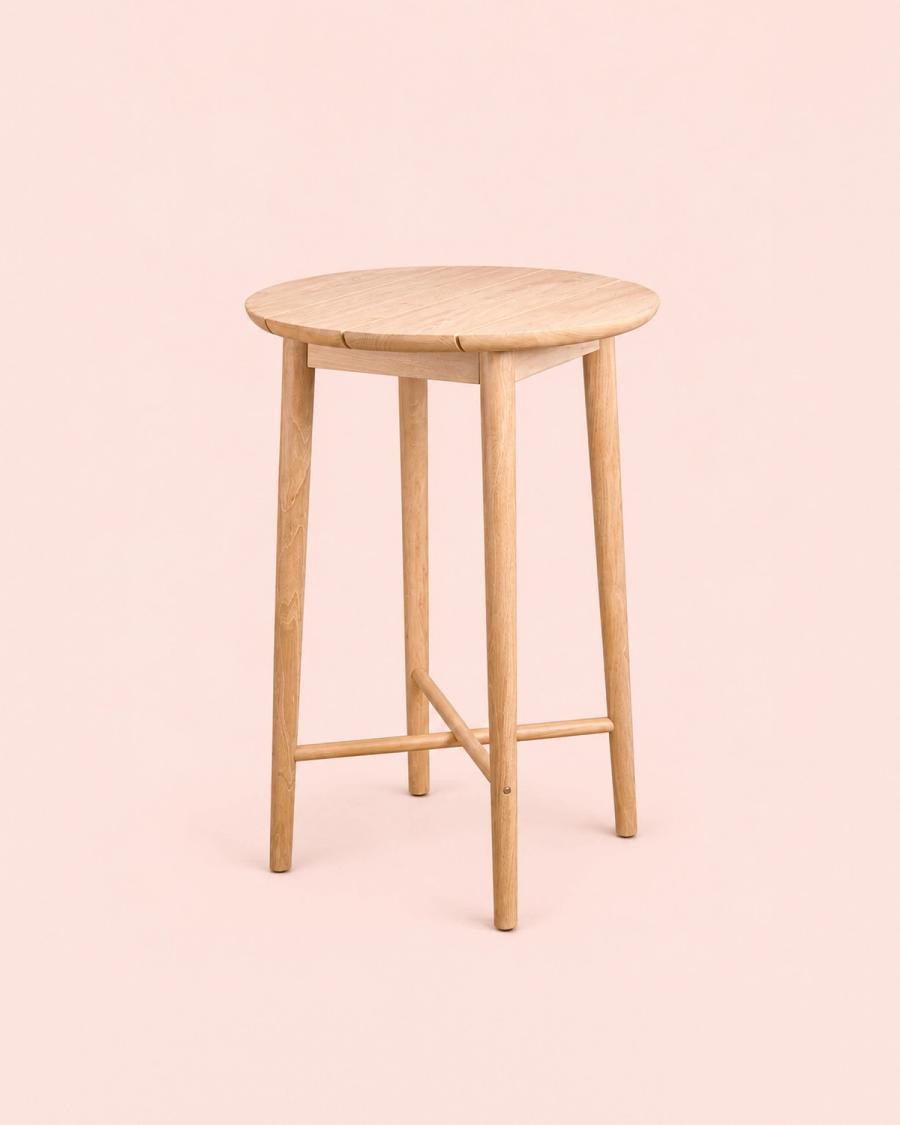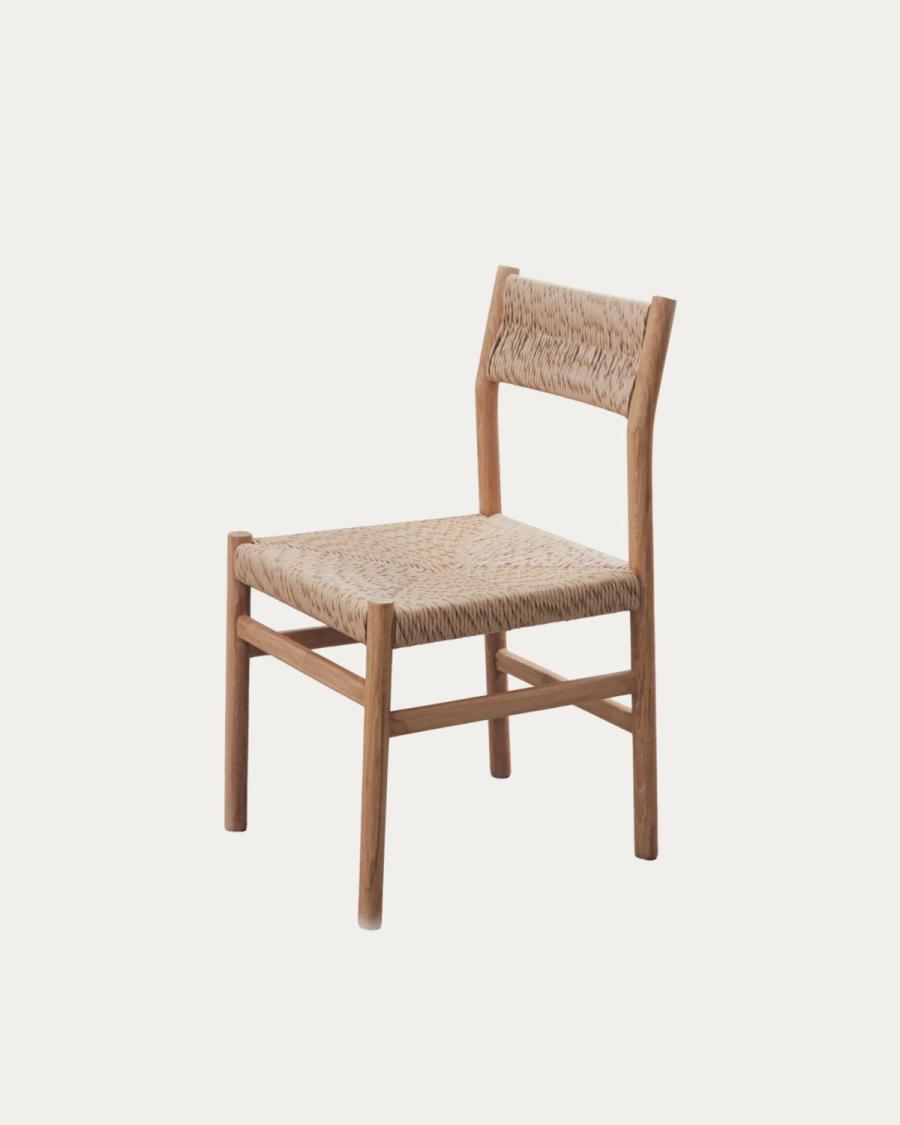
AwanDining chair
Teak, synthetic weave
Contract furniture is furniture made for commercial and public spaces, such as hotels, restaurants and offices, where every piece is used daily for years. It differs from domestic furniture in the tests it passes, such as EN 16139 for seating, and in what a project needs: technical drawings, samples, written lead times and spares.
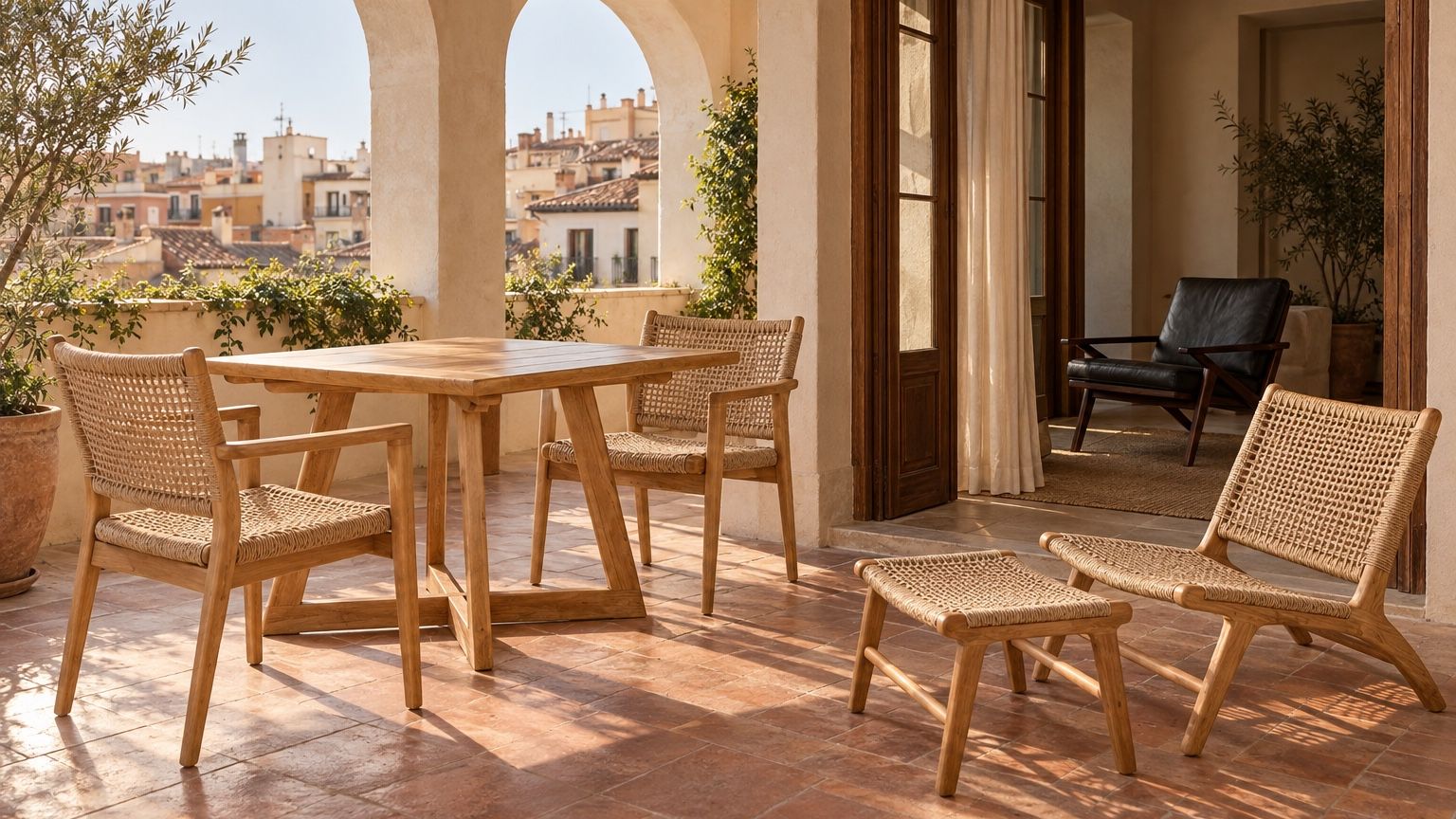
It is furniture made for public and commercial spaces, such as hotels, restaurants, cafés, bars and offices, where every piece is used daily for years. It needs hard-wearing materials, solid joints and the ability to repeat the same piece in large quantities.
The name comes from how it is bought: the furniture is supplied for a specific project, under a contract, rather than sold piece by piece in a shop. The trade calls it contract, hospitality or commercial furniture, and the whole chain of designers, makers and installers that fits out these spaces is the contract sector.
What makes a piece contract grade is not its style but three things: it passes strength tests written for non-domestic use, its upholstery meets the fire tests the project sets, and its maker can document it, repeat it and support it. In a hotel that applies from the guest room to the terrace, as our page on hotel furniture shows.
In how hard it is used, and in everything that follows from that: testing, quantities, sizes and support after delivery. A chair at home is used by one family for a few hours a day; a restaurant chair is used by hundreds of different people, who sit sideways, drag it and lean back on it.
| Aspect | Domestic | Contract |
|---|---|---|
| Use | One household, a few hours a day | Hundreds of people, all day, cleaned daily |
| Strength testing | Written for domestic use | EN 16139 for seating and EN 15372 for tables, non-domestic |
| Fire | Depends on the product and country | Upholstery tests set by the project, such as EN 1021 or BS 7176 |
| Quantities | One or a few pieces | The same piece repeated tens or hundreds of times, identically |
| Sizes | As in the catalogue | Fitted to the project drawings |
| Paperwork | A product sheet | Technical drawing, approved sample and test reports |
| After delivery | The piece is replaced | Spares, reupholstery and the same piece years later |
Outdoor furniture is a special case: the EN 581 series covers outdoor seating and tables for domestic and contract use together, so for a terrace it is worth asking which use the piece was tested for, not just whether it ‘meets EN 581’.
In Europe, strength and durability are tested to EN standards: EN 16139 for non-domestic seating, EN 15372 for tables and EN 581 for outdoor furniture. Upholstery is tested separately for fire.
EN 16139 sets the safety, strength and durability requirements for non-domestic seating. It replaced EN 15373, which has been withdrawn, so a report that cites EN 15373 as current is out of date. The current edition is EN 16139:2025, which replaced the 2013 edition. The 2013 edition had two test levels; always ask which edition the report cites and which level was tested. Reports may also cite EN 1728, the test-method standard for seating.
EN 15372 covers non-domestic tables. Outdoors, the EN 581 series has three parts: EN 581-1:2017, EN 581-2:2015 and EN 581-3:2017, according to a summary by the Italian test lab CATAS.
EN 1021-1 and EN 1021-2 test upholstery against a cigarette and a match. In the UK, BS 7176 classifies non-domestic upholstered seating by hazard level, from low to very high; medium hazard is the level known as Crib 5. In Spain, the CTE DB-SI requires the EN 1021 tests, in buildings for public assembly, for fixed upholstered seats that form part of the project in cinemas, theatres, auditoria, assembly halls and similar spaces. Our guide to fire-retardant upholstery goes further.
A standard is not a badge, it is a test. Ask for the report: which lab ran it, which edition of the standard, which level, and on exactly which model.
That last point matters in bespoke work. If you change the dimensions or materials of a tested chair, ask whether the report still covers the modified piece or whether it needs testing again.
For proof of what they claim, in writing and before production: test reports, drawings, samples, lead times and after-sales terms. This list lets you compare manufacturers on the same basis:
The drawing and the sample are the two documents that prevent most problems. At Kadek Living, for example, the technical drawing with dimensions and finishes and a sample of the piece or finish are approved before production starts, including for new pieces made from the client's own drawing.
There is no standard figure: it depends on the pieces, the quantities and whether they come from a collection or are new. What helps is knowing what the lead time is made of, and planning it backwards from the opening date.
Pieces in stock can ship quickly; bespoke pieces are made once the quote is approved. At Kadek the lead time depends on the pieces and quantities and is confirmed with each quote. Always get the lead time in writing, and ask what happens if approval is delayed on your side.
That you can repair, reupholster or repeat a piece years later without starting from scratch. Agree it before you order, not when something breaks.
Keep the approved technical drawing and the finish and fabric codes for every piece: they are what lets the maker repeat it exactly. Ask whether the upholstery can be changed without taking the frame apart, and whether loose spares such as glides, fittings or cushions are available. Consider ordering a few extra units of the pieces most likely to be damaged.
Think about how the material ages, too. Teak left outdoors turns silver-grey within months, so a new chair next to others with years on the terrace will look different until it catches up. If the whole terrace should match, replace by complete table settings. If you are fitting out guest rooms, how to furnish a hotel room shows how to plan those spares, and what FF&E means in a hotel how their replacement is budgeted.
It is a sales label, not a standard. To know whether a piece will stand up to contract use, ask for the test report naming the standard, such as EN 16139, and the level tested.
Largely, yes. Hospitality furniture is the part of contract furniture made for hotels, restaurants and bars; contract also covers offices and other public spaces.
Usually the concept, the layouts, the choice of materials and finishes, and the furniture schedule with quantities. In a hotel, that schedule is part of the project's FF&E.
Yes. It is built for heavier use than domestic furniture, so in a home it simply works with room to spare.
It depends on the maker, especially for bespoke pieces. Kadek Living has no minimum order, new pieces included.