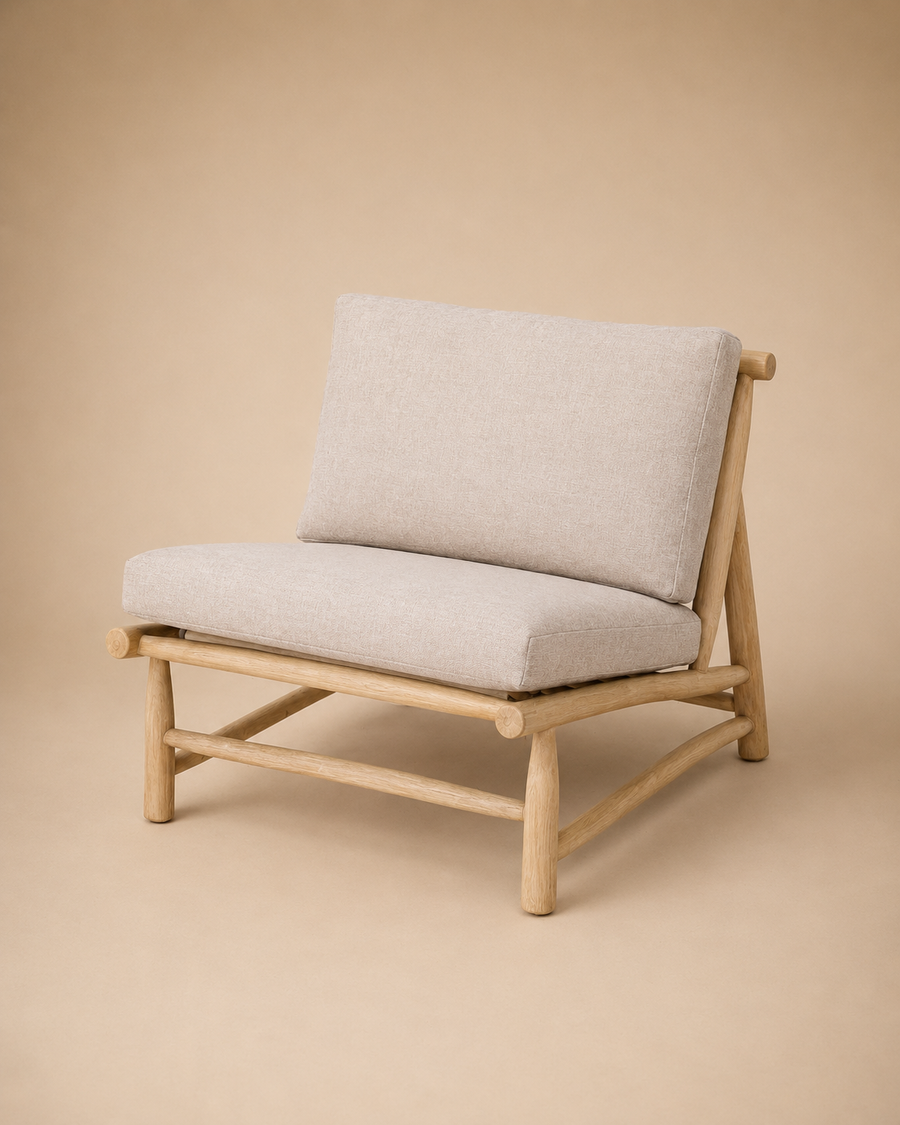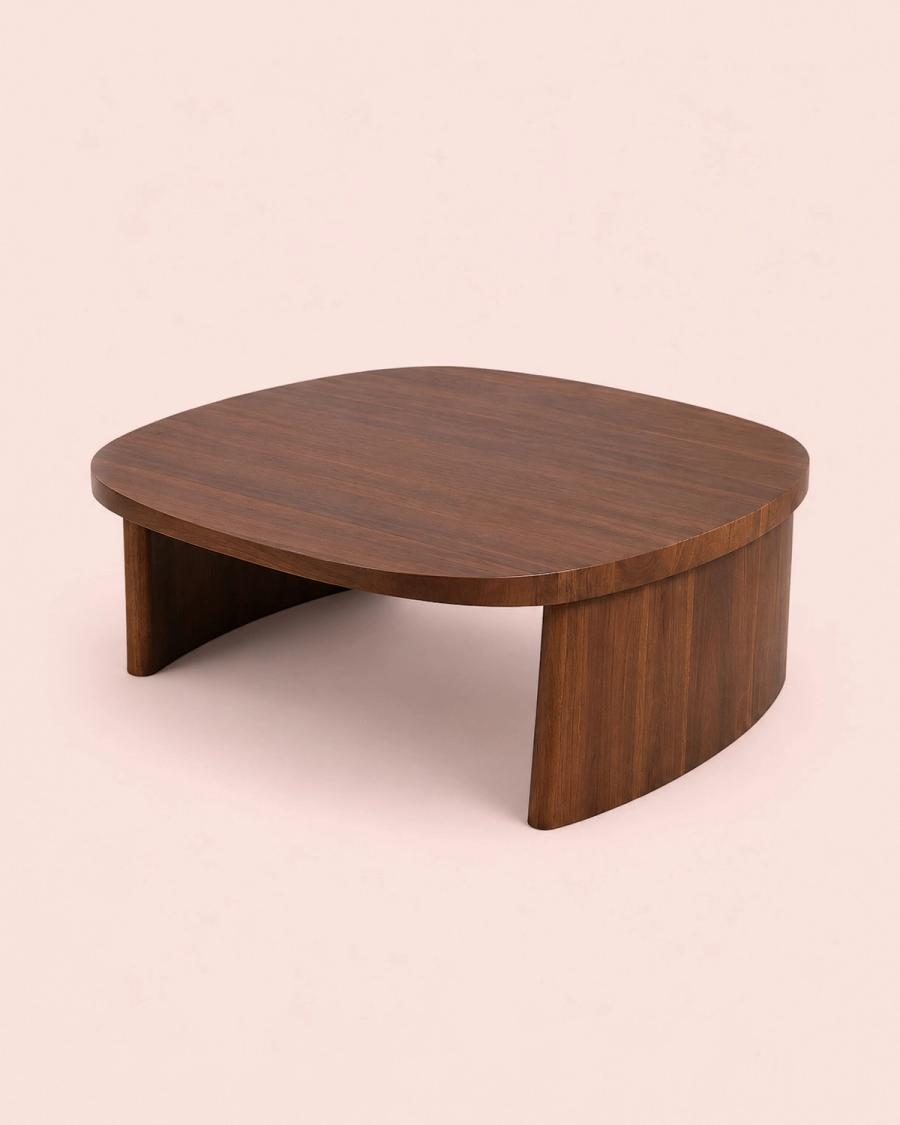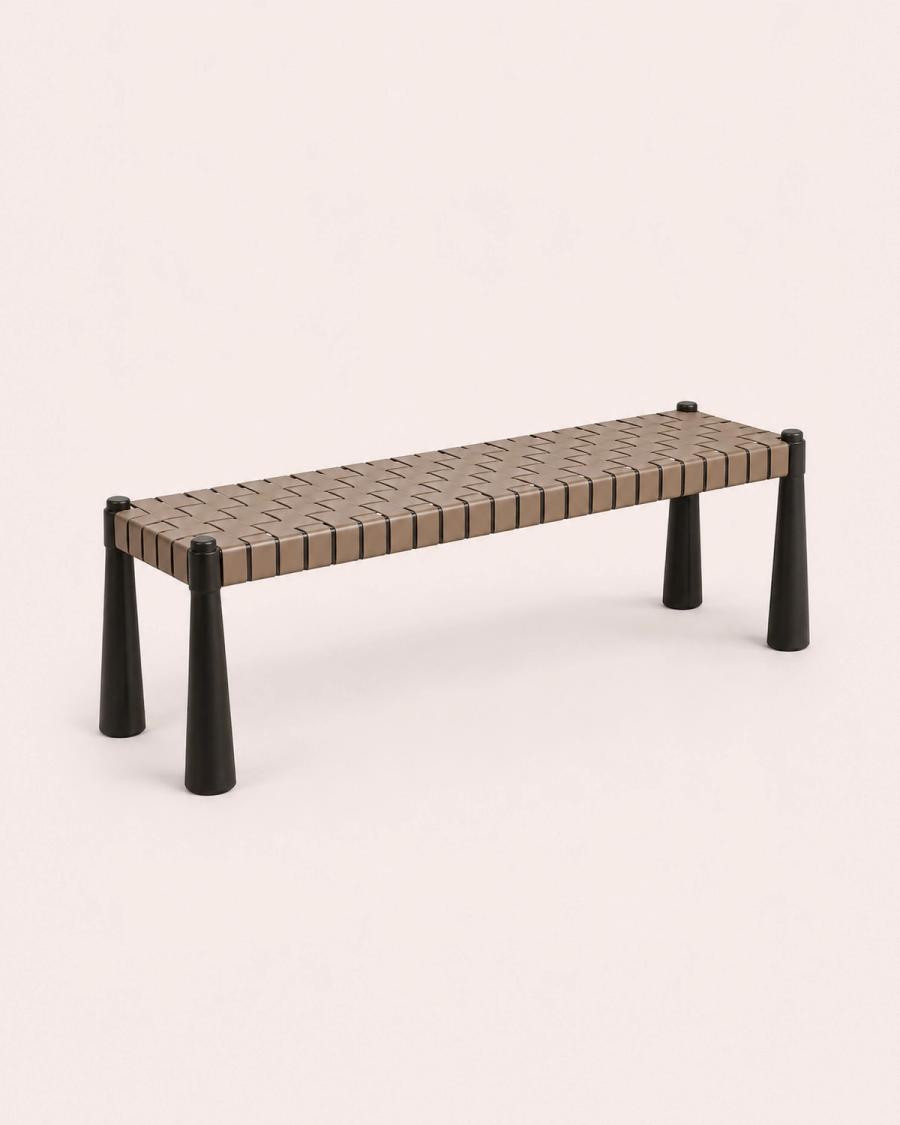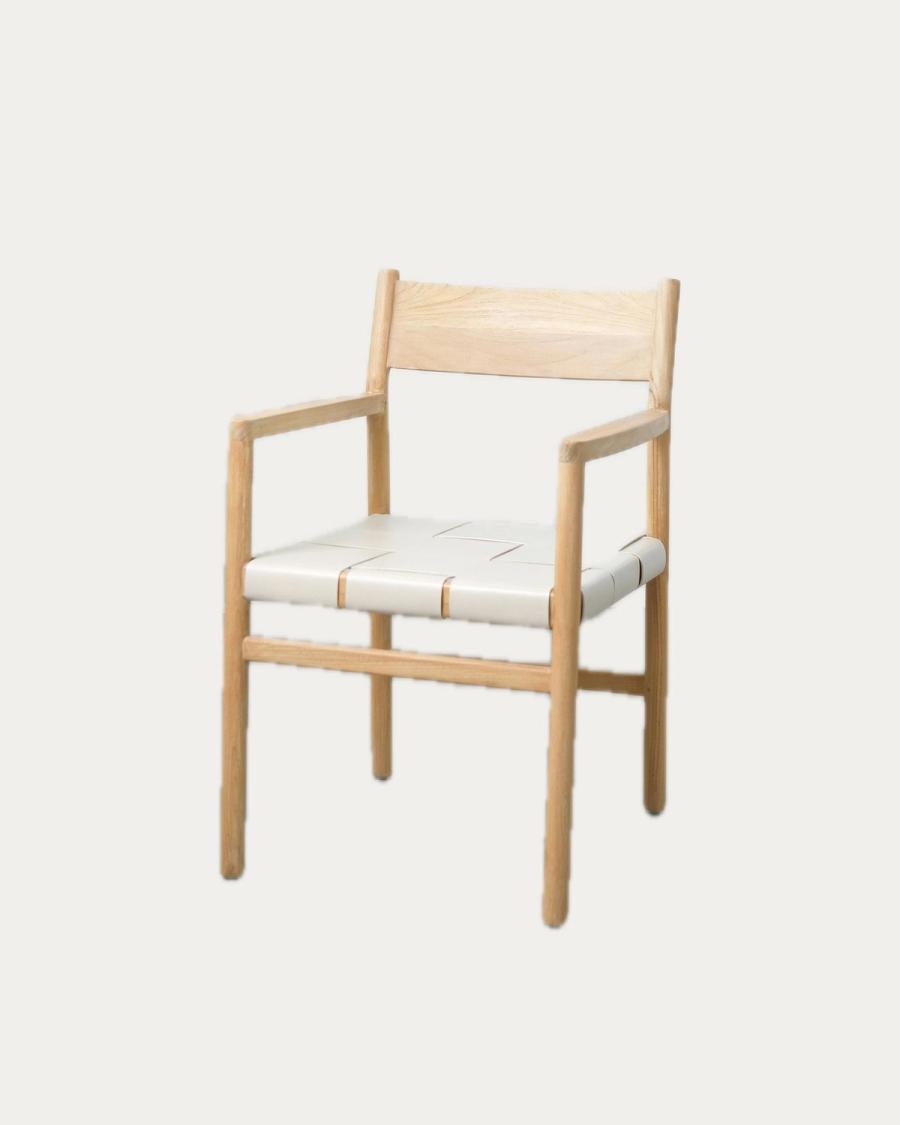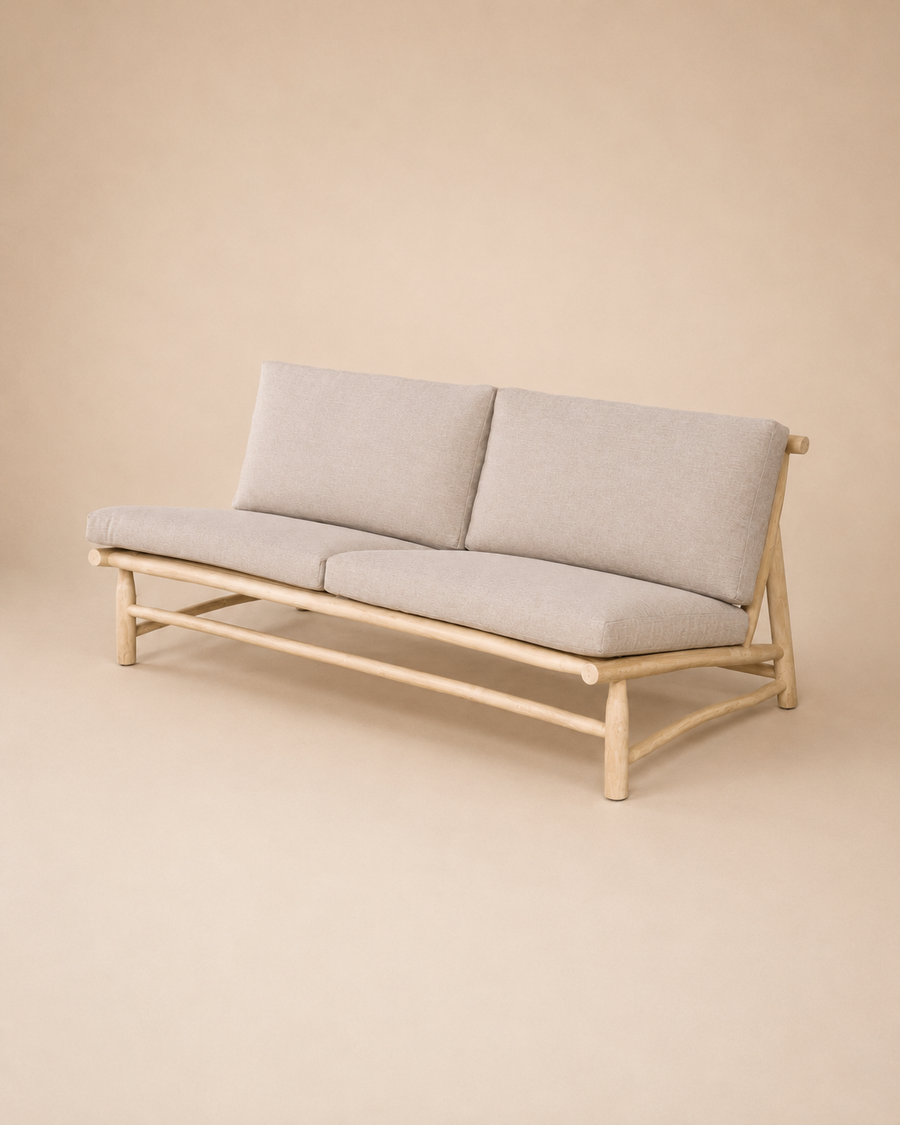
SantaiSofa
Teak branch, fabric
FF&E stands for furniture, fixtures and equipment: the movable furnishings and equipment that are not a fixed part of the building, such as beds, chairs, tables, lamps and curtains. On a new hotel it accounts for 10 to 15% of the construction budget, according to OCCA. It excludes OS&E: towels, bed linen and crockery.
FF&E stands for furniture, fixtures and equipment. It is the industry's term for everything specified for the interior of a project that is not a fixed part of the building.
In a hotel budget it is a line of its own, kept apart from the building works, because different people buy it, from different suppliers, on a different timetable.
The consultancy OCCA puts it in one image: if you could turn the building upside down and give it a shake, everything that fell out would be FF&E. Walls, ceilings, doors and windows stay put, so they are not. The rule is not exact in every case, since some fitted joinery is included too, but it settles most questions.
The furniture and decorative items in every part of the hotel, plus some of the equipment: sofas, chairs, tables, beds, headboards, decorative lighting and curtains, among others. OCCA adds spa furniture, office desks, accessories, lighting, appliances, audio-visual and IT equipment, and specialist joinery.
| Area | Examples of FF&E |
|---|---|
| Guest rooms | Beds, headboards, bedside tables, desk, chairs, armchairs, curtains and lamps |
| Lobby and lounge | Sofas, lounge chairs, coffee tables and decorative lighting |
| Restaurant and bar | Chairs, tables, bar stools, banquettes and lamps |
| Terrace and pool | Outdoor chairs, tables, sun loungers and sofas |
| Spa | Spa furniture |
| Back of house | Office desks and IT equipment |
| Specialist joinery | Joinery made to measure for the project |
In a hotel, much of the FF&E sits in the guest rooms, because every piece is multiplied by the number of keys. That is why planning quantities by room type is the basis of the whole budget, as we explain in how to furnish a hotel room.
OS&E stands for operating supplies and equipment. According to OCCA, OS&E is typically made up of products that do not need to be installed, whereas FF&E is specified, made or bought, and put in place in the project.
| Budget line | What it is | Examples | Installed |
|---|---|---|---|
| FF&E | The interior's furniture, fixtures and equipment | Beds, chairs, tables, lamps, curtains | Yes, in most cases |
| OS&E | Supplies and equipment for running the hotel | Towels, bed linen, crockery, glassware, irons, hairdryers | Usually not |
OS&E also covers what the staff use: uniforms, office equipment and cleaning equipment. Keeping the two apart matters for three reasons. They come from different suppliers, they are budgeted separately, and they follow different schedules: since OS&E is not installed, it does not depend on progress on site, whereas FF&E has to arrive once the room is finished and before opening.
The project's interior designer specifies it, often with an FF&E designer or consultancy. The result is a set of documents that fixes every piece before it is bought.
OCCA describes that documentation as scheduling up the final design elements. It typically includes:
Before that documentation is final, OCCA splits the sourcing of each piece into five steps: research, product development, testing, budgeting and scheduling. Research finds who can make the piece; development fits it to the design; testing checks that it stands up to use and meets what the project requires; budgeting and scheduling fix its price, quantity and date.
Each piece gets a code and a specification sheet. A good sheet says where the piece goes, how many are needed, its dimensions, the timber and finish, the fabric and its fire tests, the strength standards it must pass, such as EN 16139 for non-domestic seating, and the lead time. What to ask the maker of each piece is covered in our guide to contract furniture.
Bespoke pieces need one more step: a technical drawing and a sample approved before production. That is also how Kadek Living handles its custom furniture: it adjusts dimensions, finish, upholstery and colour, or makes a new piece from the designer's drawing.
On a new hotel, FF&E accounts for 10 to 15% of the overall construction budget, according to OCCA. Treat that as an order of magnitude: the hotel's category, how much is made to measure and where each piece comes from push it towards one end or the other.
FF&E is depreciated. OCCA puts its useful life at 3 to 7 years, which is why it recommends an FF&E reserve from the first day of trading, to replace whatever wears out or dates. Its advice is to start low, at around 2%, while the furniture is new, and raise the percentage each year as it ages. OCCA does not say what the 2% is a percentage of; agree the basis in the financial model with whoever will operate the hotel.
Budget FF&E in packages and start with the one that multiplies: the furniture for each room type, times the number of keys.
Two decisions move the budget more than the price of any single piece. The first is durability: a piece that can be reupholstered or refinished lasts longer and reduces what you need to set aside. The second is the number of suppliers: each one adds another shipment, another lead time and more coordination.
There are two main routes, which can be combined: a procurement agent or company that handles all the FF&E, or buying directly from each manufacturer. They can also be combined: an agent for the package as a whole, with the biggest items bought direct.
Once the pieces are approved and scheduled, the procurement team prices, negotiates, purchases and delivers them to site. That is how OCCA describes its own procurement service. It makes sense when there are many small suppliers to coordinate, because orders, lead times and deliveries all go through one contact.
Buying from the manufacturer removes a layer and puts the project in touch with the people who make the piece, which helps with bespoke work, where technical questions go back and forth. In exchange, the project takes on the coordination of lead times and deliveries. Kadek Living, for example, sells at factory-direct prices, and one person in Madrid follows each order until delivery to site; finishes can be seen first at its Madrid showroom.
Whichever route you take, lead time, the time it takes to make a piece, sets the schedule. Order the bespoke pieces and those coming from furthest away first, and get every lead time in writing before you fix the opening date. For an overview of furnishing a whole hotel, from the rooms to the terrace, see hotel furniture.
Yes. They are the same abbreviation, with or without the ampersand, and both mean furniture, fixtures and equipment.
The loose pieces and decorative items specified for an interior, such as sofas, tables, lamps and curtains. They are the first two letters of FF&E.
In a construction budget, FF&E is the line for furniture, fixtures and equipment, kept apart from the building itself and its services. It is bought and delivered at the end, once the spaces are finished.
Yes, and it is usually split into packages: guest rooms, public areas, restaurant and outdoor. Each package then has its own supplier and lead time, and the slowest can be ordered first.