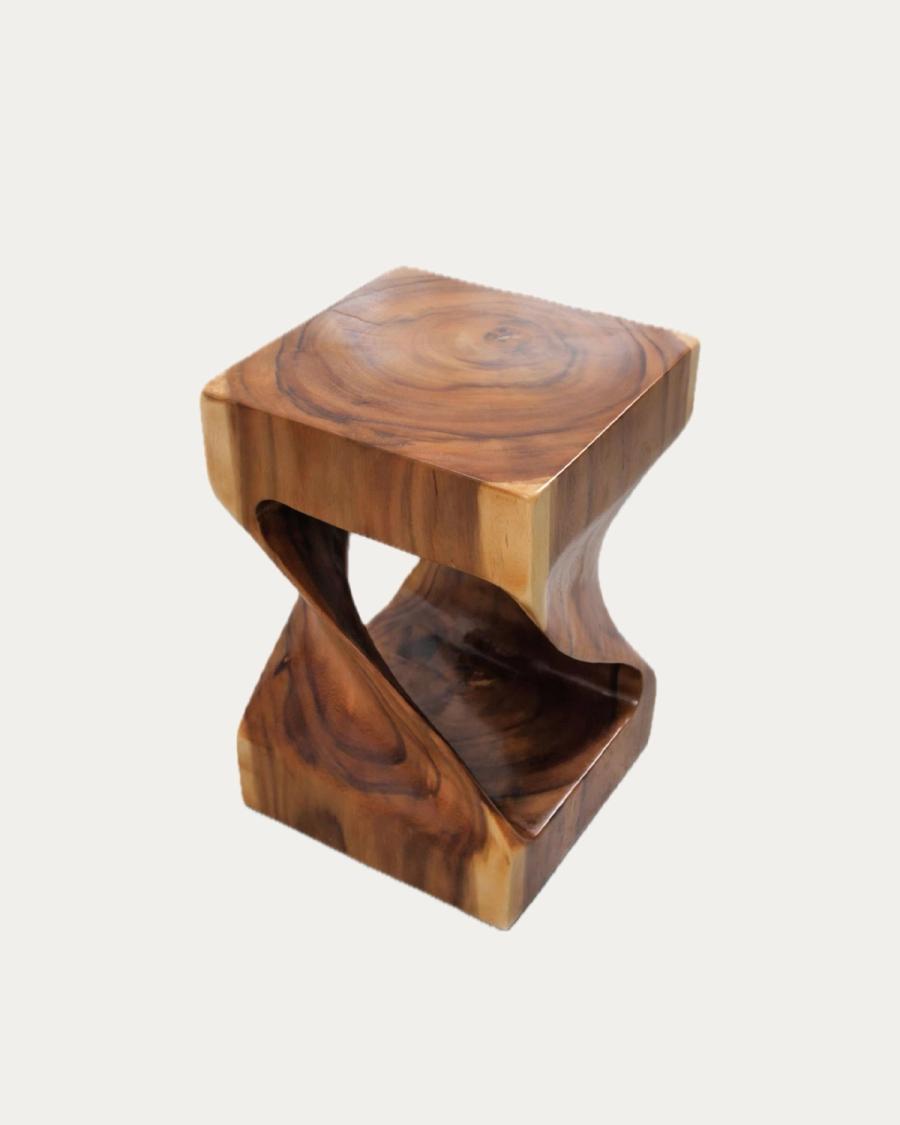
IramaSide table
Suar wood
Suar is the wood of the rain tree (Albizia saman), with a wide trunk and bold grain, used in Indonesia for single-slab tables and carving. Sungkai (Peronema canescens) is a pale, lighter wood that resembles teak and is used for chairs. Both are best kept indoors, where teak is the one that also lives outside.
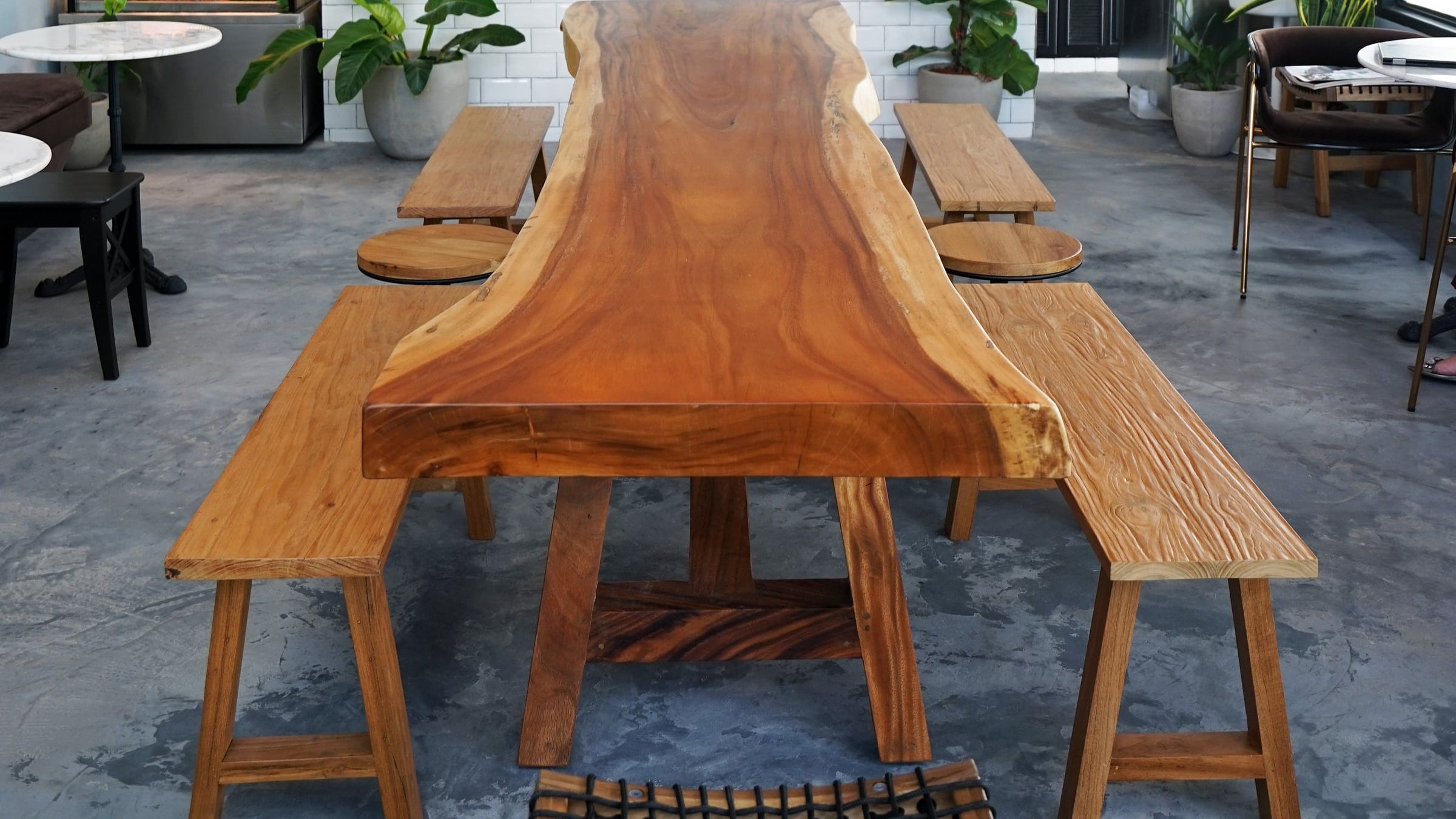
The wood of the rain tree, Albizia saman, also known as Samanea saman. The tree is native to northern South America and is now grown across the tropics, Indonesia included, where it is called trembesi, and ki hujan in Sundanese, according to the PROSEA handbook of South-East Asian plant resources. The furniture trade knows it as suar; in English it is also called monkeypod or raintree.
Its most useful trait for furniture is size: the tree has a very wide crown and a thick trunk, which yields broad single-piece slabs. The heartwood runs from dark walnut to chocolate brown, with pale sapwood that contrasts at the edges, and the grain forms bold figures.
PROSEA notes that suar shrinks very little as it dries, so little that it can be carved green without warping or splitting. That is why it is used so much for carvings, bowls and single-slab tables with a live edge, the natural edge of the trunk.
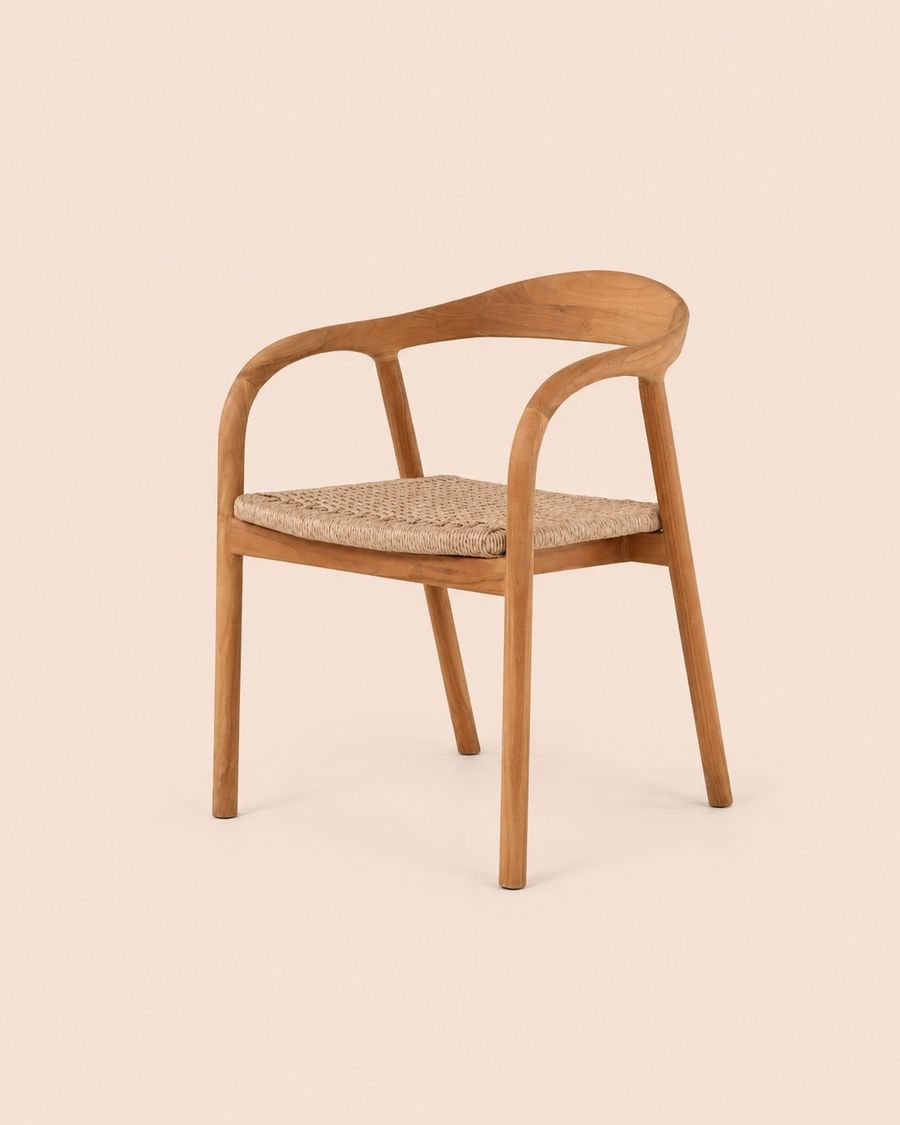
The wood of Peronema canescens, a South-East Asian tree that grows naturally in Sumatra, West Java and Kalimantan and is planted in Indonesia, Malaysia and Thailand. In Java it is called jati sabrang or jati londo, and jati means teak in Indonesian: PROSEA records that it resembles teak.
It is cream to light brown, with distinct straight lines on the quarter-sawn face and a moderate sheen. It weighs 520 to 730 kg/m³ at 15% moisture content, light to medium, and is moderately hard. It works easily and sands well, although its silica content blunts saws. It is used for furniture, cabinets and decorative veneer.
Above all in how they last outdoors. Teak is one of the most durable woods there is outside; suar and sungkai do best under a roof.
| Teak | Suar | Sungkai | |
|---|---|---|---|
| Scientific name | Tectona grandis | Albizia saman | Peronema canescens |
| Colour | Golden to medium brown | Dark walnut to chocolate, pale sapwood | Cream to light brown |
| Density | About 655 kg/m³ | About 600 kg/m³ (550 to 700 per PROSEA) | 520 to 730 kg/m³ |
| Outdoor durability | Very durable | Sources disagree | Moderate |
| Typical use | Indoors and outdoors | Single-slab tables, carvings, side tables | Chairs and indoor furniture |
Better not. For suar, the sources contradict each other: The Wood Database rates it durable to very durable against decay, while PROSEA describes it as not durable, although resistant to dry-wood termites. For sungkai, PROSEA calls it moderately durable, with an average life of about three years in ground contact.
Given that, Kadek uses suar and sungkai only for indoor pieces. For a terrace, a pool or a garden, the wood is teak, as the guide on whether teak furniture can stay outside in winter explains.
Because the tree yields wide boards and the wood moves little as it dries. A single-slab table keeps the shape of the trunk, and no two are alike.
Like any solid wood indoors. Dust with a dry cloth, clean with a barely damp cloth and dry it straight away, and keep it out of direct sun and away from heat sources, which dry it out and make it crack. Exact care depends on the finish, oil or lacquer, which the maker will specify.
They follow the same rules as teak. All timber leaving Indonesia needs the documents of its legality system, SVLK, and the EU Deforestation Regulation, EUDR, applies to wooden furniture whatever the species. The Wood Database notes that Albizia saman is not listed in the CITES appendices or on the IUCN Red List. Which documents to ask for is covered in the guide to EUDR, SVLK and FSC.
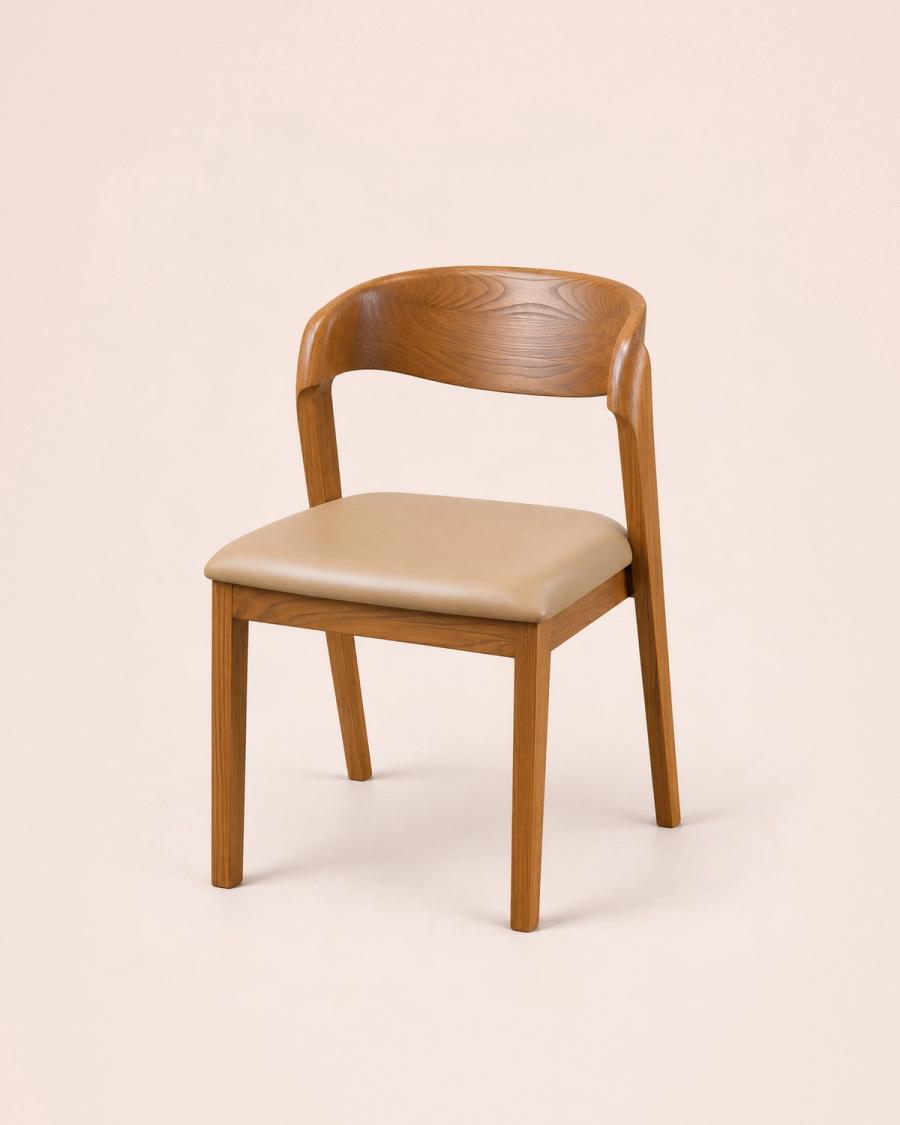
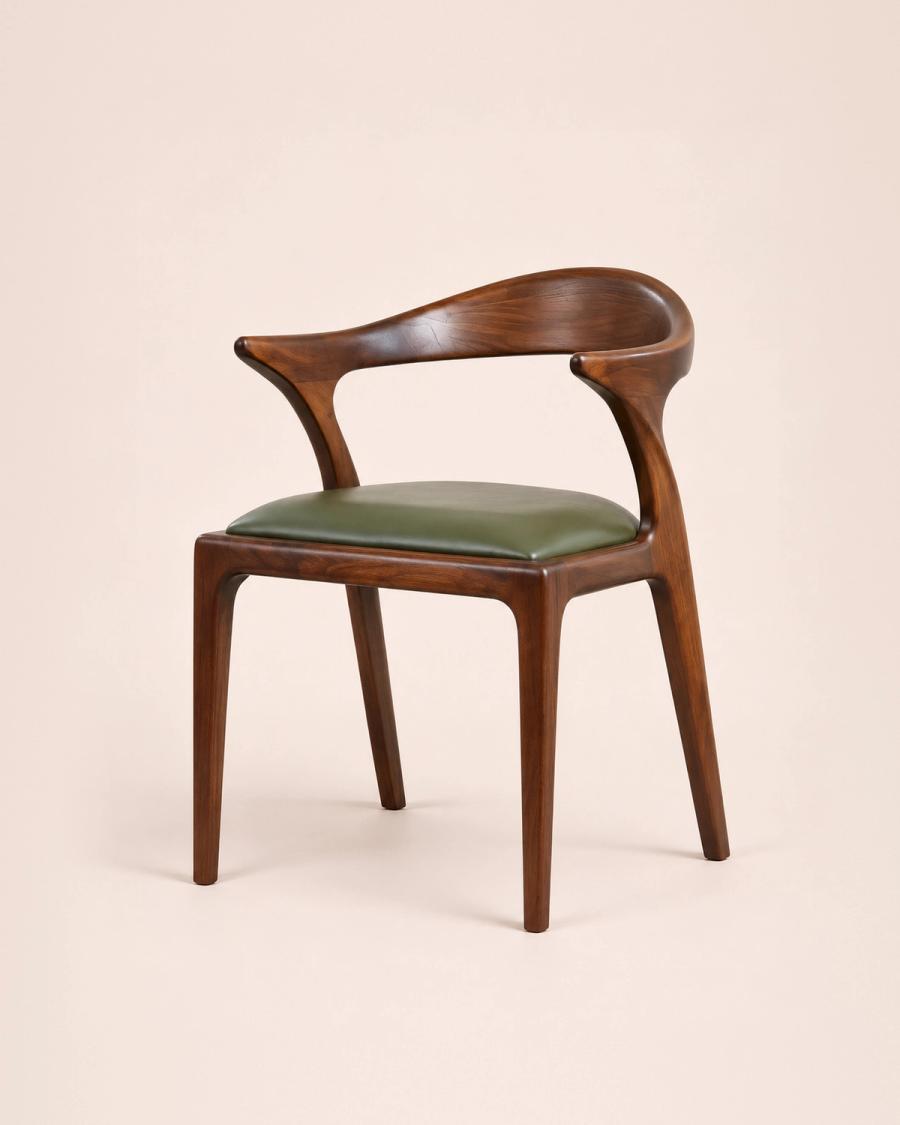
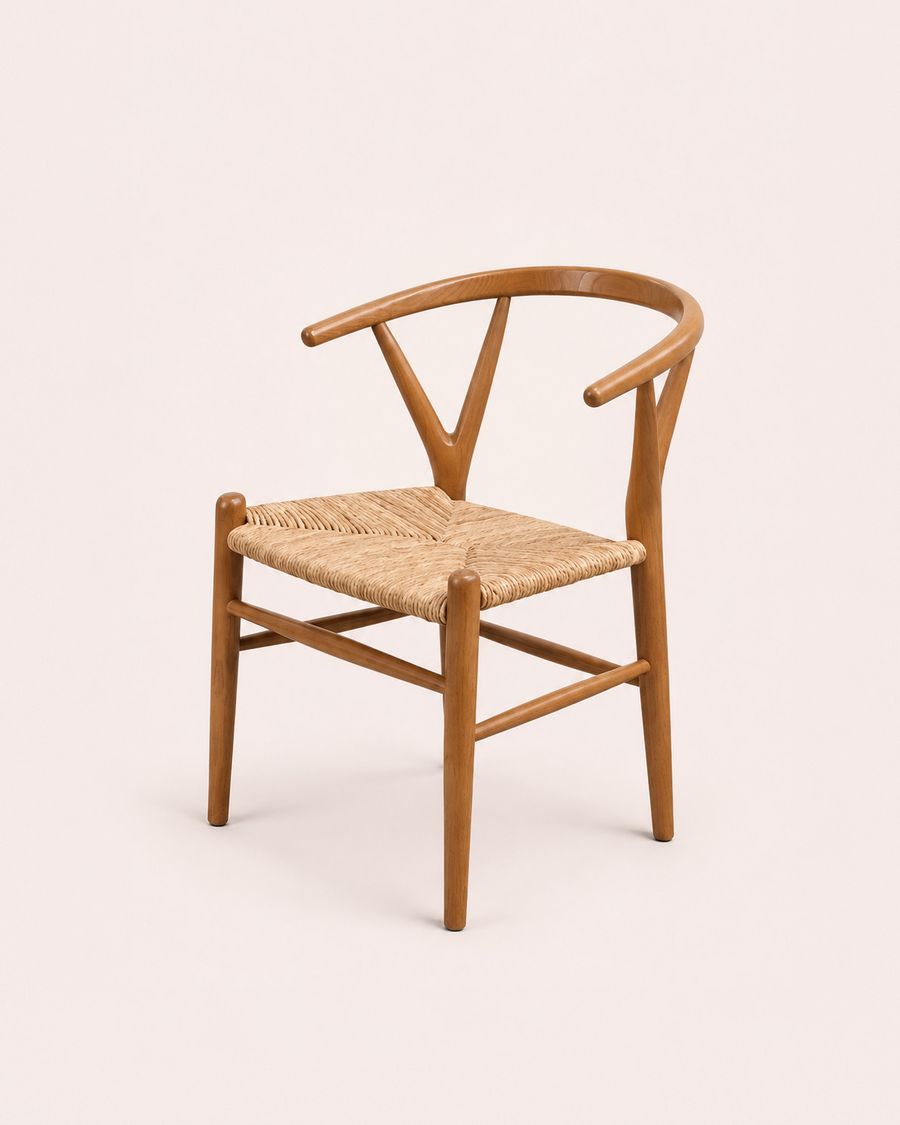
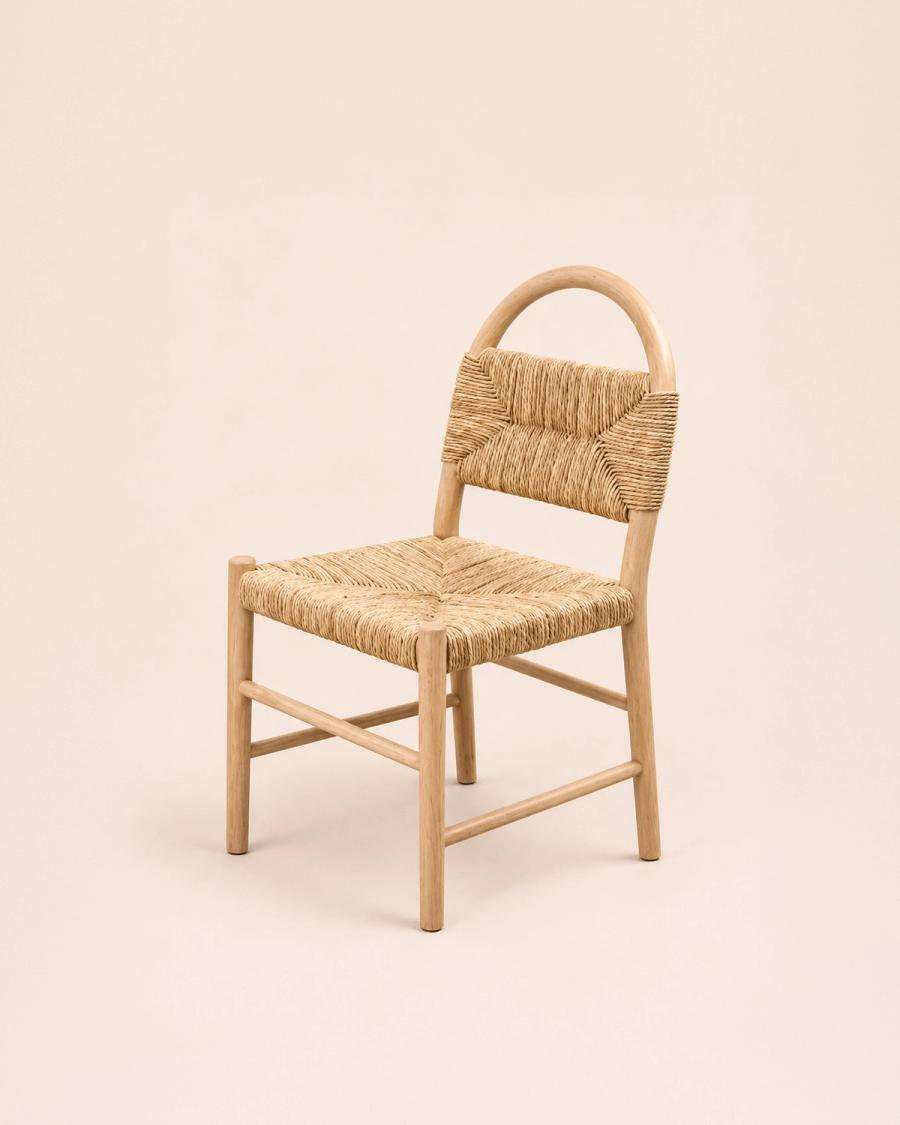
The Irama side table, carved from solid suar, and several indoor chairs in sungkai: the Bayu, Embun, Kirana, Terik, Sinar and Mentari dining chairs, the Purnama armchair and the Danau bar chair. The rest of the collection, and all the outdoor furniture, is made in teak, covered on the page about Java teak.
The pieces can be seen at the Madrid showroom, by appointment on weekdays, and the full collection is under teak and solid wood furniture.
No. Suar is the wood of the rain tree, Albizia saman, darker and more boldly figured, and less dependable outdoors. Teak is Tectona grandis, more golden and very durable outside.
Because jati means teak in Indonesian, and sungkai looks like teak in its grain. It is a different species, Peronema canescens, paler and less durable outdoors.
It can open small checks, mostly at the ends and when it moves from a humid climate to a dry, heated room. Suar shrinks little as it dries, which lowers the risk, but it is worth asking how the slab was dried.
Indoors, yes: it is a moderately hard wood that works and sands well. As with any hospitality chair, the quality of the joints matters most.