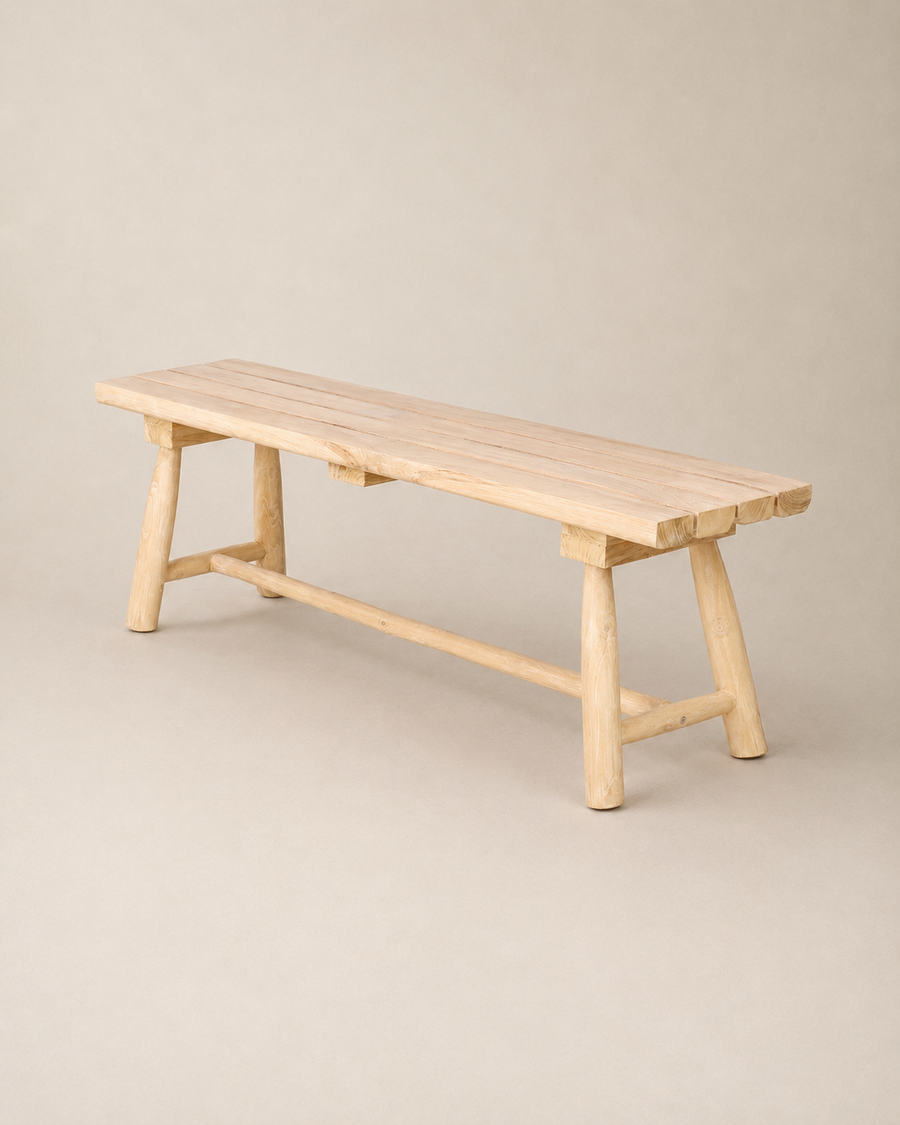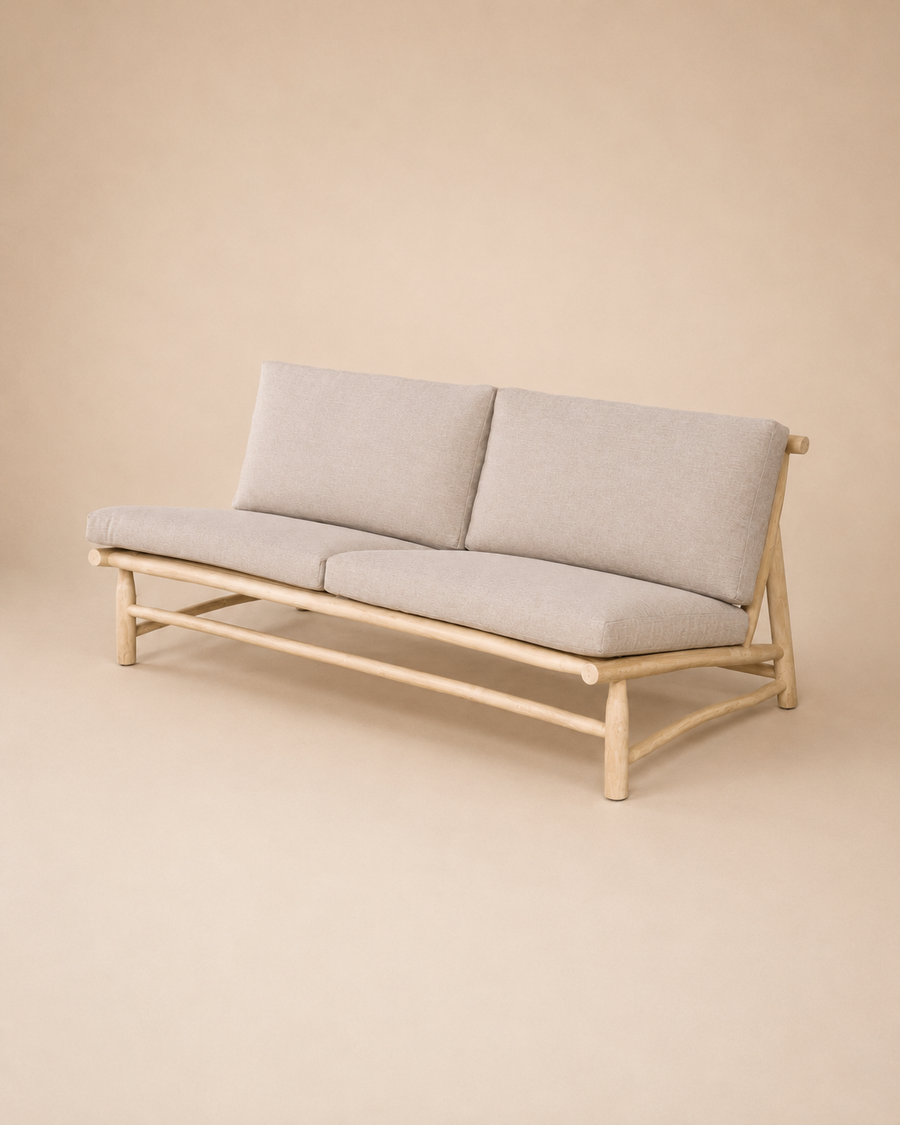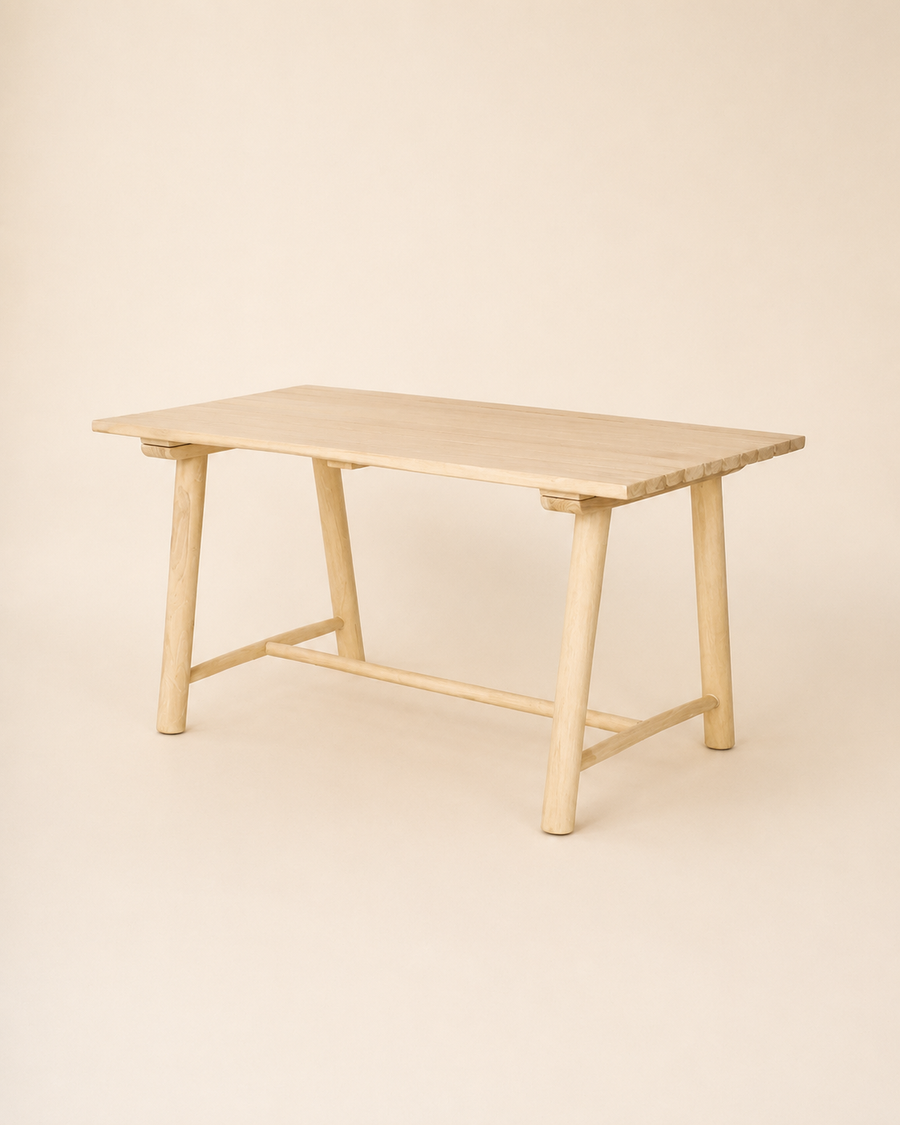
PendopoDining table
Teak branch, iron
Yes. Solid teak can stay outside all year: it is dense, carries natural oils and barely moves with humidity. In winter, store the cushions somewhere dry, keep the feet out of standing water, use only breathable covers and wash it two or three times a year with mild soap, never with a pressure washer.
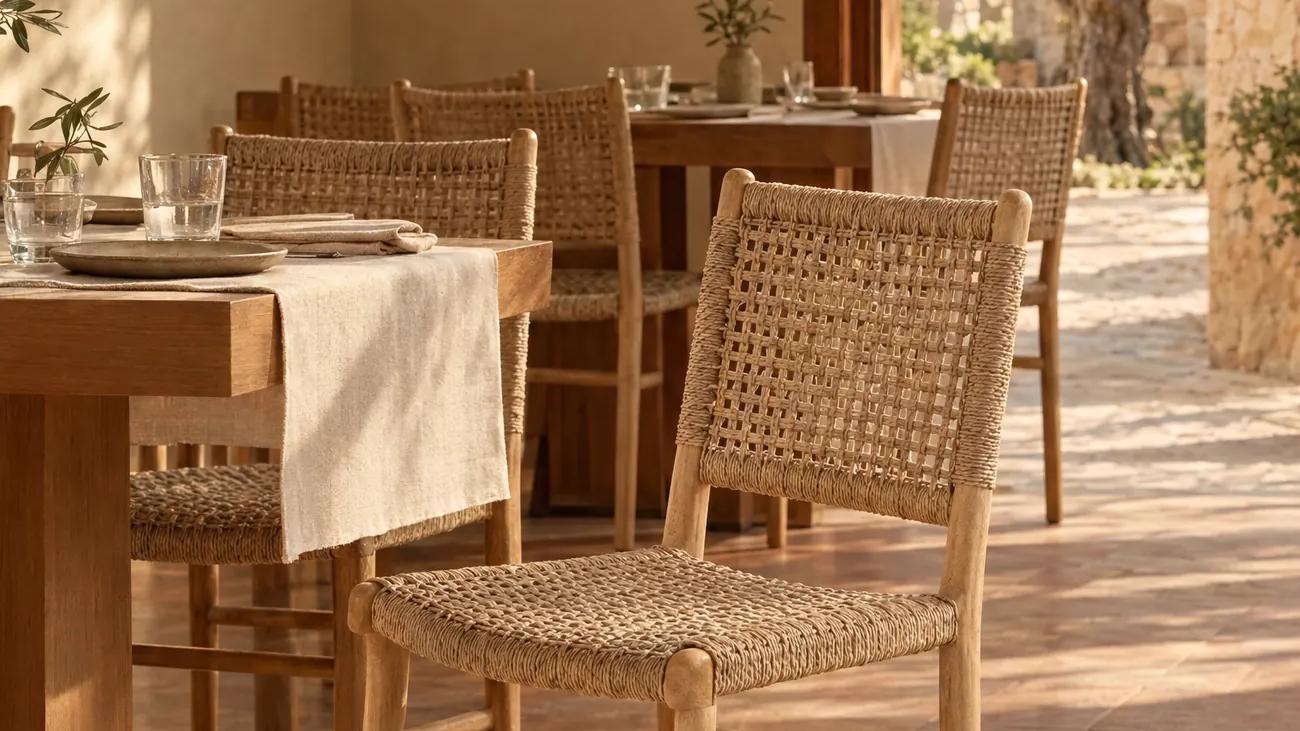
Yes. Solid teak gets through winter outdoors without special protection. What needs attention in those months is not the timber but everything around it: the cushions, the metal fittings and the ground it stands on.
The reason lies in the wood itself. Teak (Tectona grandis) is dense, about 655 kg/m³ once dried, and carries natural oils and silica in its grain. The Wood Database rates its heartwood as very durable and gives it low shrinkage: 2.6% radially and 5.3% tangentially. Put simply, when it goes from November rain to March sun it swells and shrinks very little, which puts less strain on the joints.
What does change is the colour. In sun and rain, teak loses its honey tone and turns silver-grey within a few months. It is a change on the surface, not decay. The page on teak furniture explains why it happens and how to bring the colour back if you prefer it.
Yes, and it comes to no harm as long as the water can drain away. Rain is not the problem; water that stays is: puddles under the feet, piles of wet leaves, or a cover that traps moisture.
Frost, whether in inland Spain or a British garden, does not harm solid teak in itself. In cold, damp weather, what suffers is any fabric left wet and any corner where water cannot run off, so those are the places to check after a cold spell.
You don't have to. A cover is optional: it keeps off dust, leaves and bird droppings, but it does not make teak last longer. If you use one, make it breathable.
A cover that cannot breathe traps moisture between the fabric and the timber, which is where mould and dark spots appear. The RHS mentions heavy-duty waterproof covers for the worst of the winter weather; the two pieces of advice meet in a cover that sheds rain from above and lets air move underneath.
Almost always the cushions and the metal parts. Teak copes with winter better than whatever sits on it or is screwed into it.
Store them somewhere dry and ventilated from the end of the season. A damp cushion on the timber holds moisture against the surface for days. If the covers come off, wash and dry them before putting them away.
Check screws, reclining-back mechanisms and lounger wheels when you close the season, and tighten anything that has worked loose. By the sea, salt air attacks even stainless steel: Sinergia Contract, in its guide to outdoor hospitality materials, notes that it needs special coatings in coastal areas. Rinsing the fittings with fresh water now and then helps.
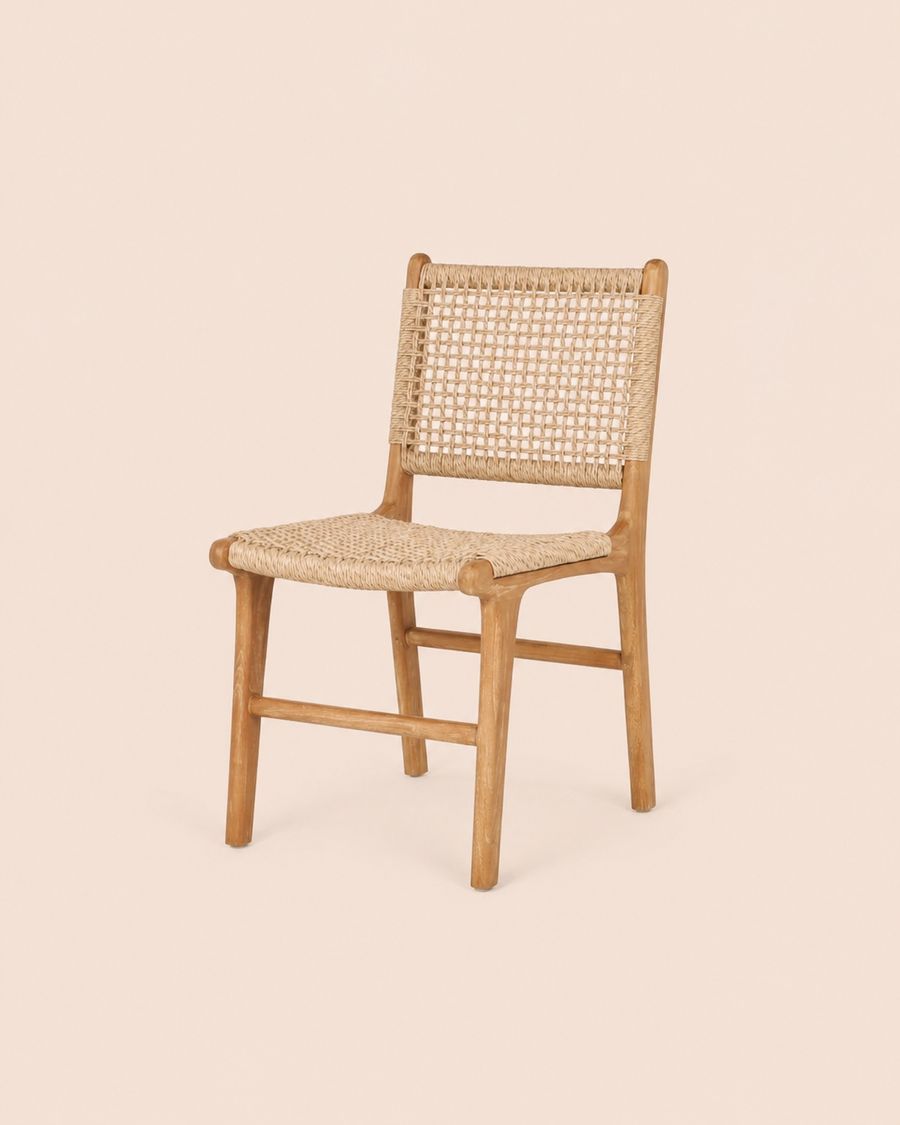
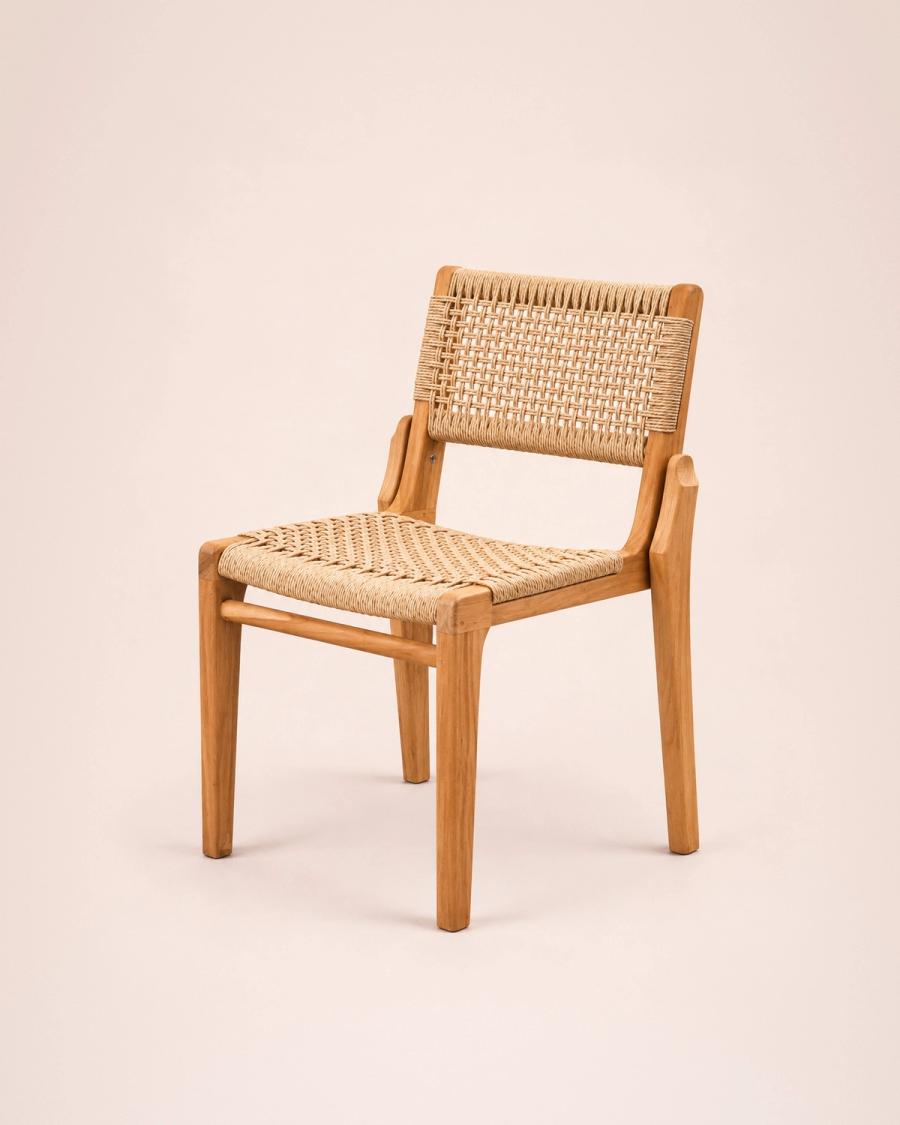
If the teak is combined with woven rope or rattan, the fibre sets the care routine for the whole piece. Each one behaves differently outdoors, as the guide to rattan, wicker and rope explains.
With warm water, mild soap and a soft brush, always along the grain, two or three times a year. Then rinse with water and let it dry in the air. A dry, mild day is best, so the timber is not covered or stacked while still damp.
The RHS settles for one wash a year for garden furniture, enough to remove algae and lichen. On a hotel or restaurant terrace, with more use, food and drink, two or three makes sense: one when the season closes, one when it opens and, if needed, one in between.
Avoid bleach, solvents and pressure washers. They raise the grain and leave the surface rough, and rough timber gets dirty faster. If you also want to keep the honey tone, the guide to teak oil explains when it is worth it and when it is not.
| When | What to do | Why |
|---|---|---|
| End of season, autumn | Wash, let dry, store the cushions and check the fittings | The timber goes into the wet months clean and dry |
| Winter | Watch for puddles under the feet and air the covers | Water that cannot drain is the only thing that can harm the timber |
| Start of season, spring | Wash, tighten screws and, for a honey tone, clean and oil | Pieces look their best before guests arrive |
| Summer, in use | Wipe spills with a damp cloth | Stops grease and drinks from leaving marks |
Rule of thumb: clean and dry before winter, cushions indoors, feet out of the water. With that, solid teak needs nothing else to get through the cold months.
Clean, dry and somewhere ventilated. A closed, damp storeroom with the pieces wrapped in plastic can be worse for teak than leaving it outside.
If you have no storeroom, leave the pieces outside, grouped together, with their feet dry and, if you like, under a breathable cover. Teak takes it in its stride.
Decades, if it is solid heartwood teak and gets basic care. Some British teak retailers quote 30 to 50 years or more. These are sales figures, not test results, but they fit the long use of this timber on boat decks. The RHS puts it more cautiously: good-quality teak can last for many years with no treatment at all.
What shortens a piece's life is rarely the timber. It is usually a loose joint that nobody tightens, or feet that spend the winter in a puddle. If you are weighing teak against other options for a terrace, the guide to outdoor wood for furniture compares it with iroko, acacia and pine.
No. Oil does not protect teak from cold or rain: it only keeps the honey tone. If you want that tone, it is better applied at the start of the season, on clean, dry timber and in dry weather.
Wash the area with warm water, mild soap and a soft brush along the grain. If the mark stays, sand it lightly with fine paper and, if the piece is oiled, oil it again.
Not in itself. Brush settled snow off tabletops and seats so that, as it melts, the water does not sit there for days.
Teak copes with both. By the coast, salt and sand settle on the timber, so rinse it with fresh water more often; inland, watch for damp cushions and standing water on frosty days.
It slows the change a little, because the timber gets less sun and rain, but it does not stop it. Keeping the honey tone takes oil or a teak protector, and the RHS warns that a protector removes the natural patina.