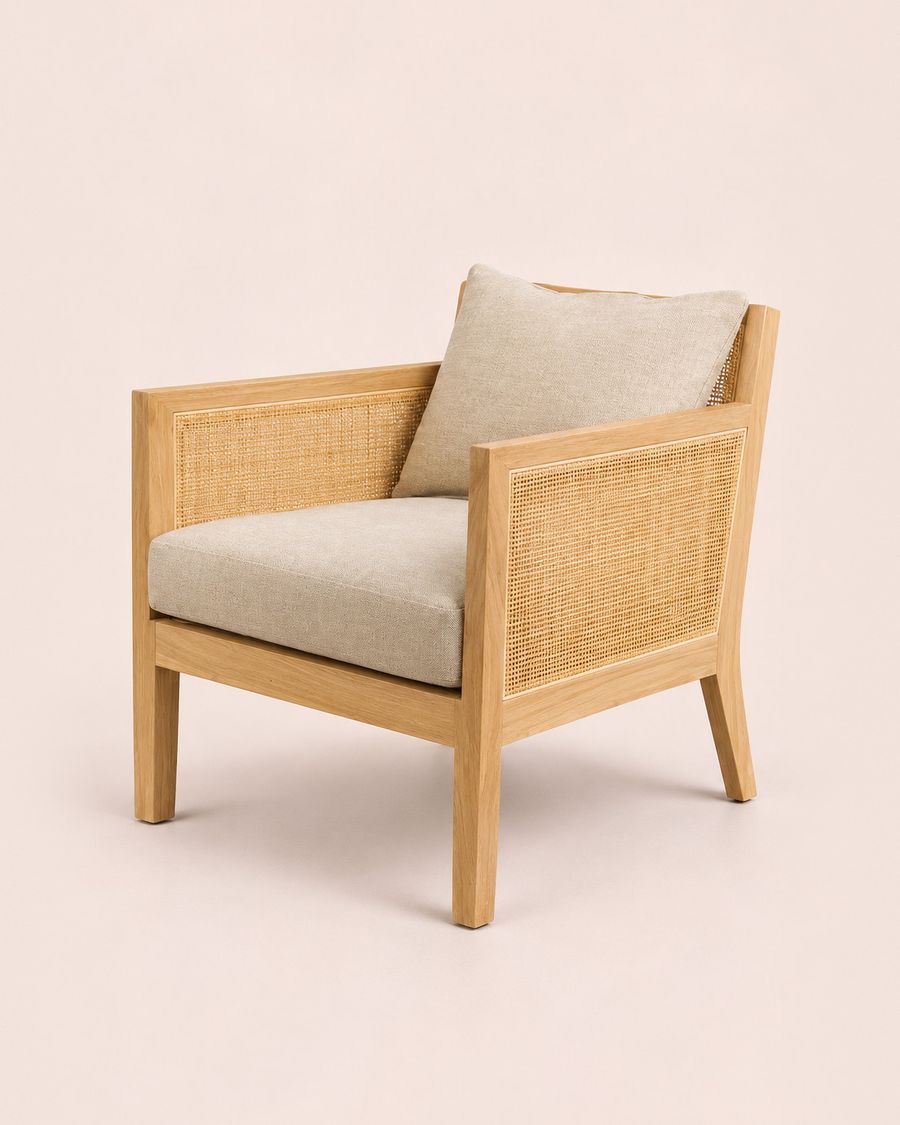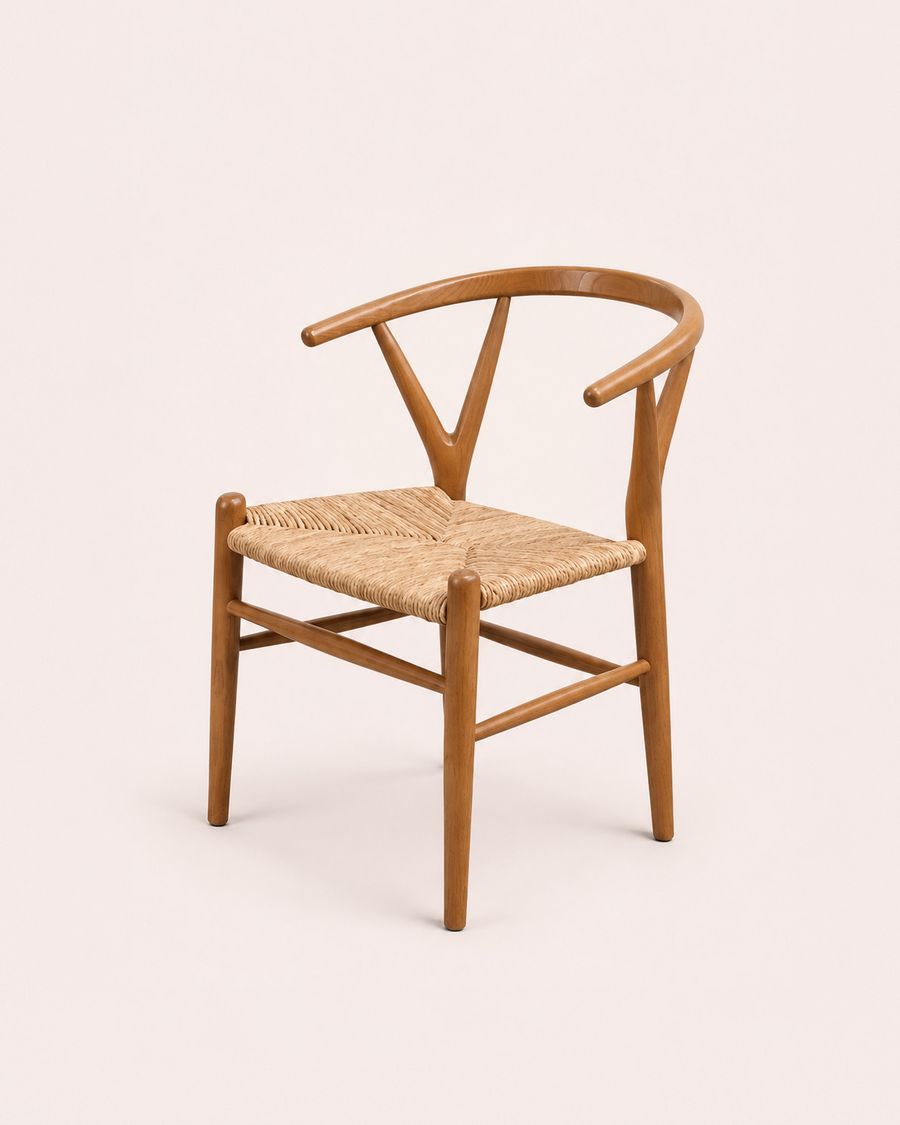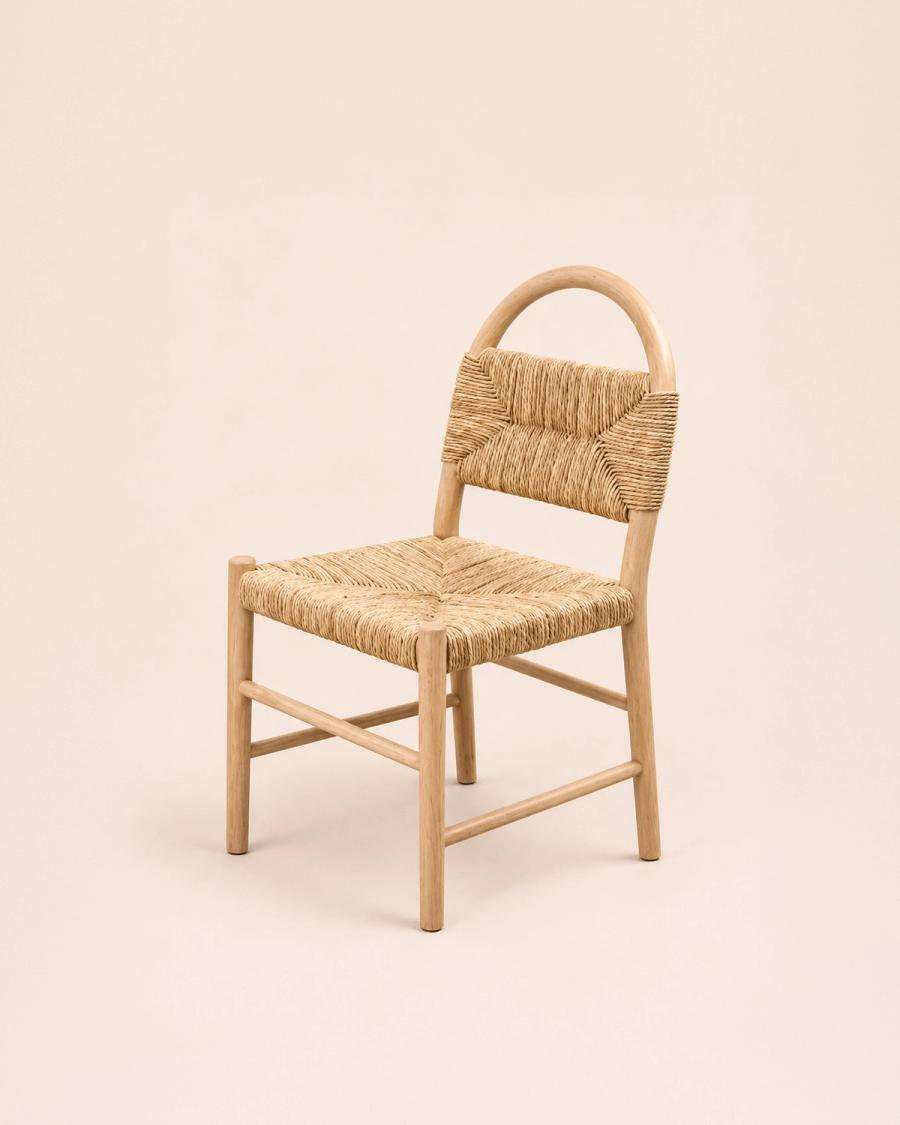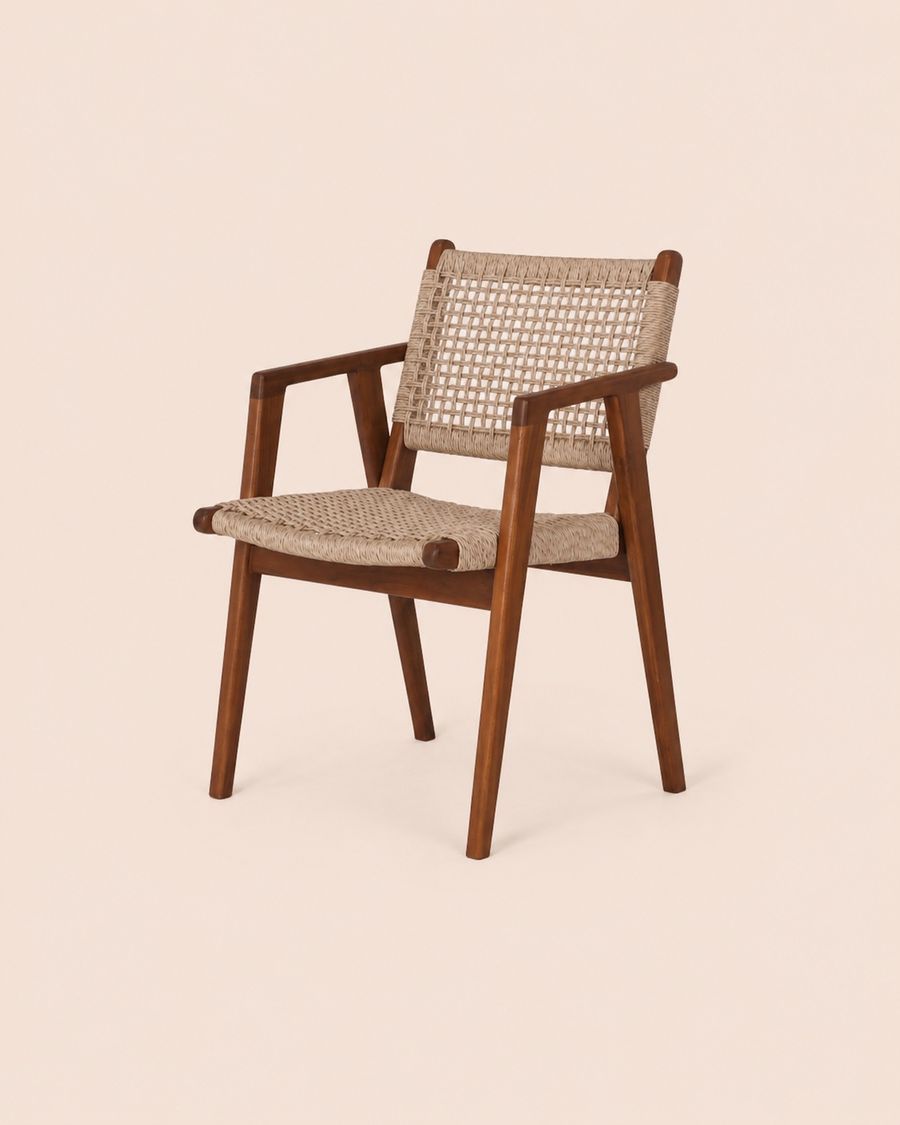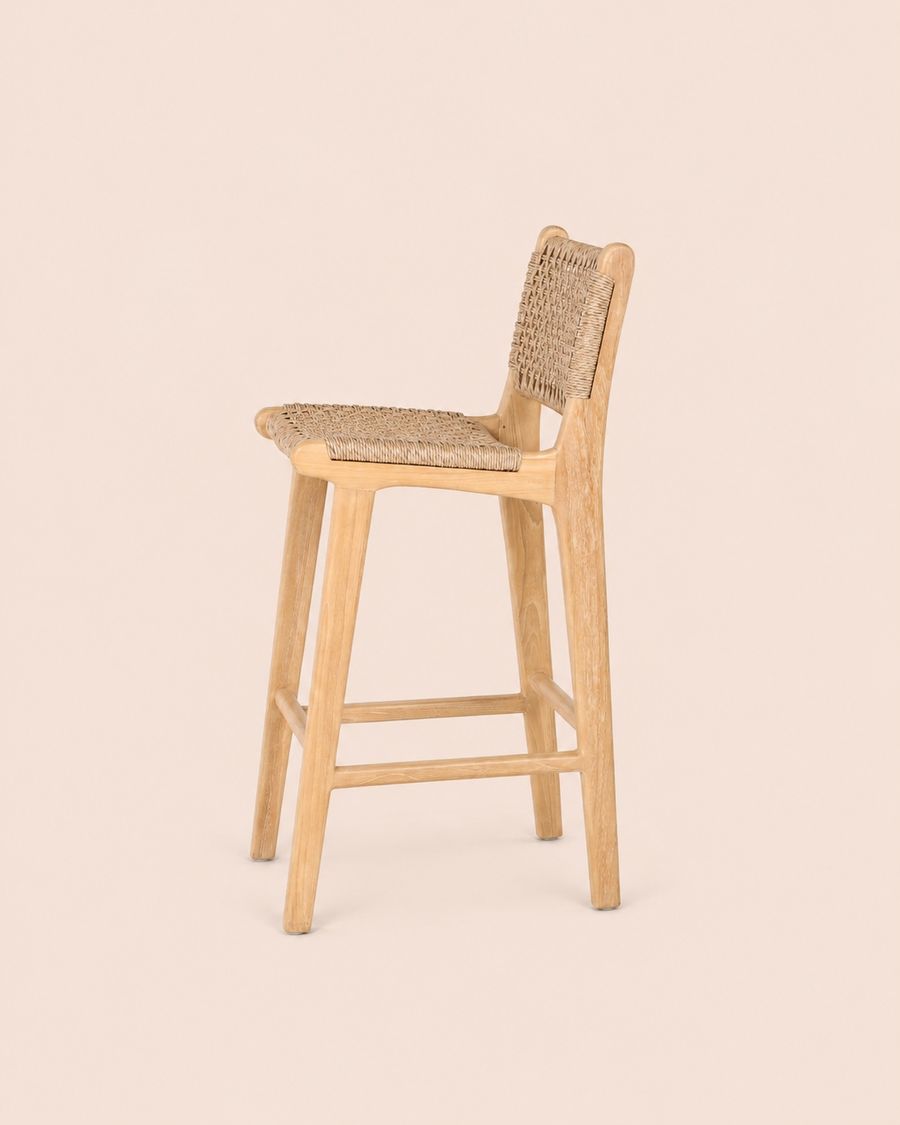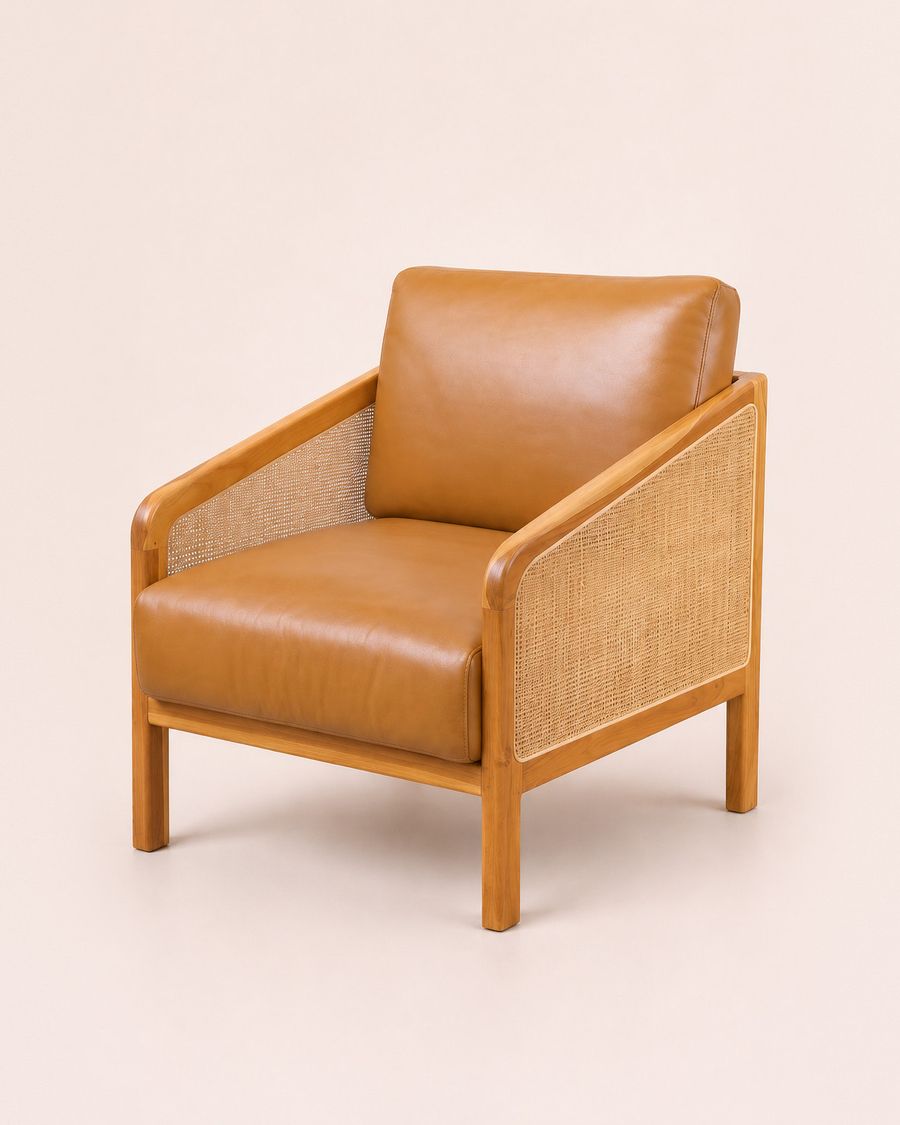
LepasLounge chair
Teak, rattan, leather
It depends on whether rain can reach it. Natural rattan and willow wicker are plant fibres: they belong indoors or under cover, because damp invites fungi and insects. Synthetic rattan and synthetic rope do not absorb water and can stand an open terrace. Indoors, on a sound wooden frame, all four work.
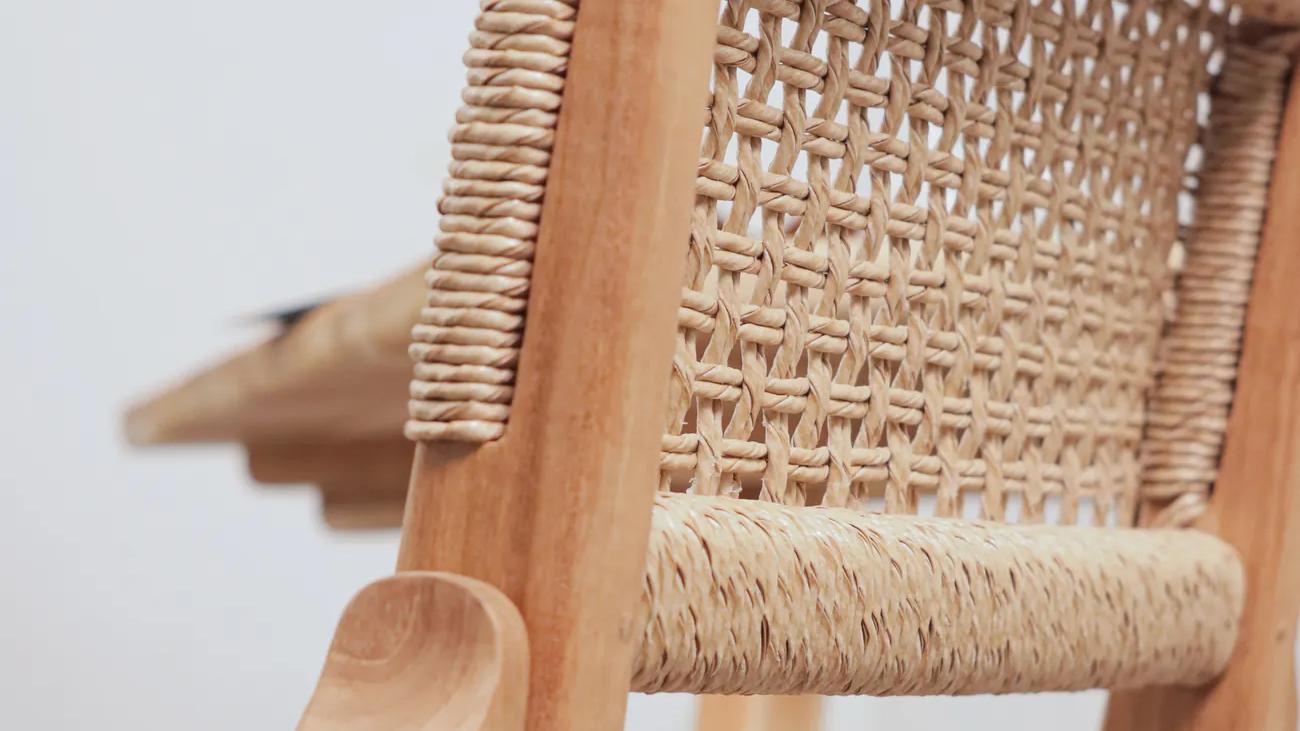
Rattan is the stem of a tropical climbing palm. According to the FAO there are some 600 species, in 13 genera of the subfamily Calamoideae, growing mainly in the rain and monsoon forests of South East Asia. Indonesia is the main supplier of the rattan traded worldwide.
Unlike bamboo, which is hollow, a rattan stem is solid. That mix of strength and flexibility is what makes it useful for furniture: the FAO notes that few materials other than true rattan have the strength and flexibility furniture needs.
One stem yields several materials:
Before it is worked, rattan is washed, bleached, dried and graded. That step matters: the FAO warns that, because of its high starch content, rattan is very prone to fungi and insects and needs treating after harvest.
For furniture in daily use, rattan is usually the better choice: it is thicker, stronger and can be bent into frames. Willow, the material Spanish speakers call mimbre, is a different plant and suits baskets, woven panels and light pieces better.
Willow wicker is made from the young, pliable shoots of several willows, mainly Salix viminalis, a temperate plant. Rattan is a tropical palm. Both are plant fibres, and they share the same weakness: moisture.
In a hotel, willow suits pieces that carry little weight: baskets, panels, headboards or side tables. For a chair or lounge chair used dozens of times a day, a rattan seat on a solid wood frame is more dependable: the wood gives the structure and the fibre gives the weave.
The confusion is a matter of language. In English, wicker describes the weave itself, whether it is willow, rattan or plastic fibre, so “wicker furniture” tells you little about the material. If a catalogue says wicker, ask which fibre it is made of.
It is an extruded plastic fibre made to look like rattan, usually polyethylene (PE) or PVC, woven over an aluminium, steel or wooden frame. It does not absorb water, so it copes with rain; its weak point is the sun.
How well it stands up to UV depends on the polymer and the UV stabilisers in it. Makers agree in ranking PE ahead of PVC in sunlight, but there is no common standard or test that lets you compare brands. Ask the supplier three things: which polymer it is, whether it is UV-stabilised, and what guarantee covers fading.
In return, up close it looks less natural than rattan and feels more uniform. On an open terrace it usually earns its place; in a lobby or guest room, natural rattan brings a warmth it cannot match.
Natural rattan, no. Synthetic rattan, yes, as long as the frame and cushions are made for outdoors too.
Natural rattan and willow absorb water, and repeated wetting invites fungi and insects. On a covered terrace they work if rain does not reach them directly and air can move around them. If a piece gets wet, dry it in the shade with good airflow before covering it again.
With synthetic rattan the fibre is not the issue. Look at what is underneath: an aluminium frame will not rust, a steel one needs a good coating, and a wooden one must be a durable species, as our guide to outdoor wood explains. Store the cushions somewhere dry when they are not in use.
A braided synthetic rope, in polypropylene, polyester or acrylic. Cotton or jute rope belongs indoors: it soaks up water and is slow to dry.
Much furniture rope resembles marine rope: braided, synthetic, made to get wet and dry quickly. What sets one apart from another is how it takes its colour. In solution-dyed fibres the pigment goes into the polymer before it is spun, so the colour runs right through and holds up to sun better than in surface-dyed rope. As with synthetic rattan, ask for UV data.
Rope has clear advantages in hospitality: it is comfortable without a cushion, lets water through, dries fast and lightens the look of a piece. Clean it with water and mild soap, rinse and let it dry in the air. Kadek Living pieces pair teak with rattan and hand-braided rope. If the piece will live outdoors, ask what fibre the rope is and whether it is solution-dyed.
With water, mild soap and a little patience: none of the four needs special products. What changes is how much water each one can take.
In a hotel or restaurant, wear concentrates where people touch the piece: the front edge of the seat, the arms and the ends of the weave. Check those spots at the start and end of each season. A loose strand or a slack binding is easy to fix if caught early; left alone, the weave opens up.
Direct rain sets the rule: plant fibres where it cannot reach, synthetic fibres where it can. Sun then decides which synthetic suits.
| Area | Natural rattan | Willow wicker | Synthetic rattan | Synthetic rope |
|---|---|---|---|---|
| Lobby, guest rooms, indoor restaurant | Yes | Yes | Yes | Yes |
| Covered terrace, no direct rain | Yes, with airflow | With care | Yes | Yes |
| Open terrace and pool | No | No | Yes, UV-stabilised | Yes, ideally solution-dyed |
The frame decides a piece's lifespan as much as the fibre does. A solid teak frame works in all three areas, so one collection can run from the lobby to the terrace with only the fibre changing. You can see wood, rattan and rope together in our lounge chairs and sofas and our terrace and pool furniture.
Rule of thumb: natural rattan where it never rains, synthetic rattan or rope where it does. And under both, a frame of durable wood.
If the piece has cushions or upholstery, fire requirements apply to the fabric and filling, not to the fibre. Our guide to fire-retardant upholstery covers them.
Because almost all of it is gathered in natural forest rather than grown on plantations, according to the FAO, and it goes through several stages before use: washing, bleaching, drying, finishing and grading. Then the weave of a seat or back is done by hand, strand by strand.
Bamboo looks alike at a glance, but it is hollow and worked differently. Willow is woven in a similar way, though it is finer. And synthetic rattan copies the look with a plastic fibre that copes with rain.
From the Malay rotan, the name for these palms in South East Asia. Spanish spells it ratán, so you will see both forms in catalogues sold in Spain.
There is no reliable figure: the ones in circulation come from sellers. What shortens its life most is damp for natural rattan and sun for synthetic, so it lasts longest in the area the table in this guide gives it.
Kadek Living adjusts the dimensions, timber finish, upholstery and colour of any piece, or makes one from your drawing. If you want a different fibre, rope instead of natural rattan for example, ask when you request the quote: before production you receive a technical drawing and a sample to approve.