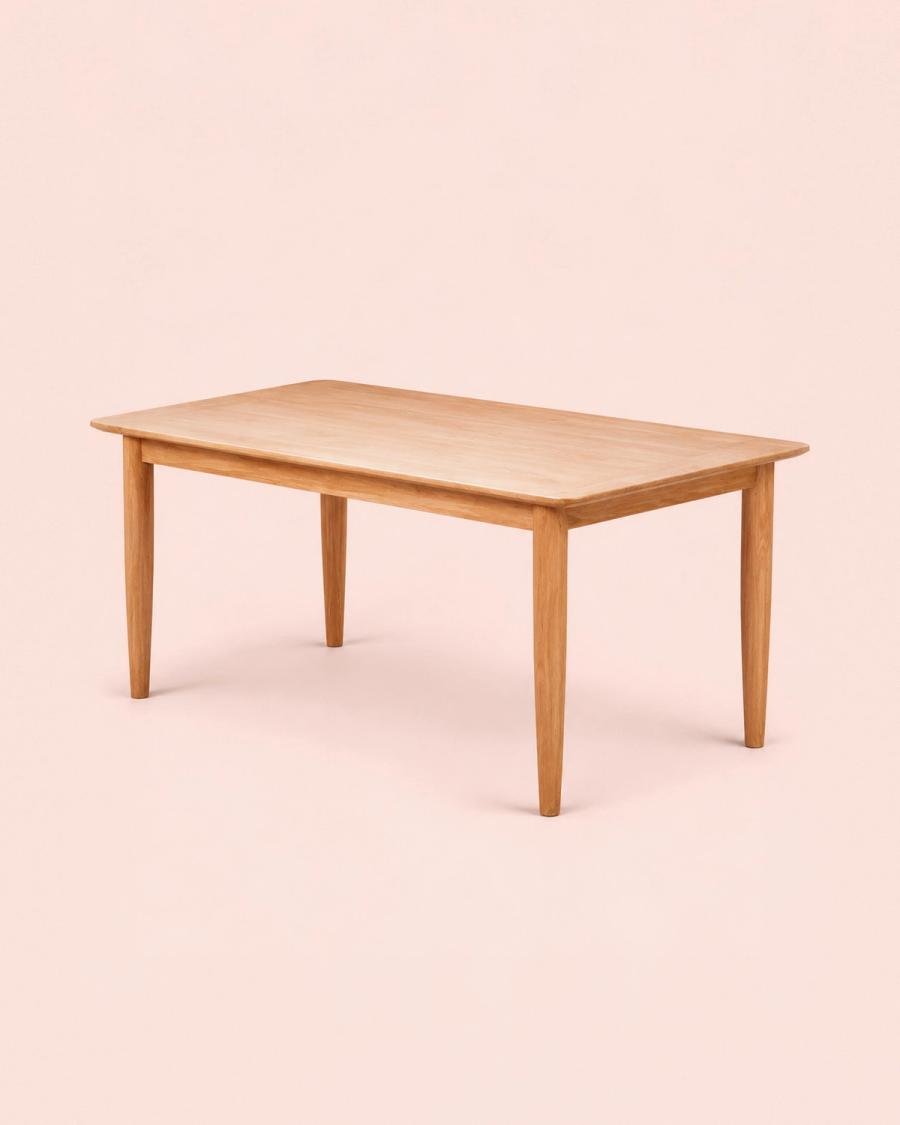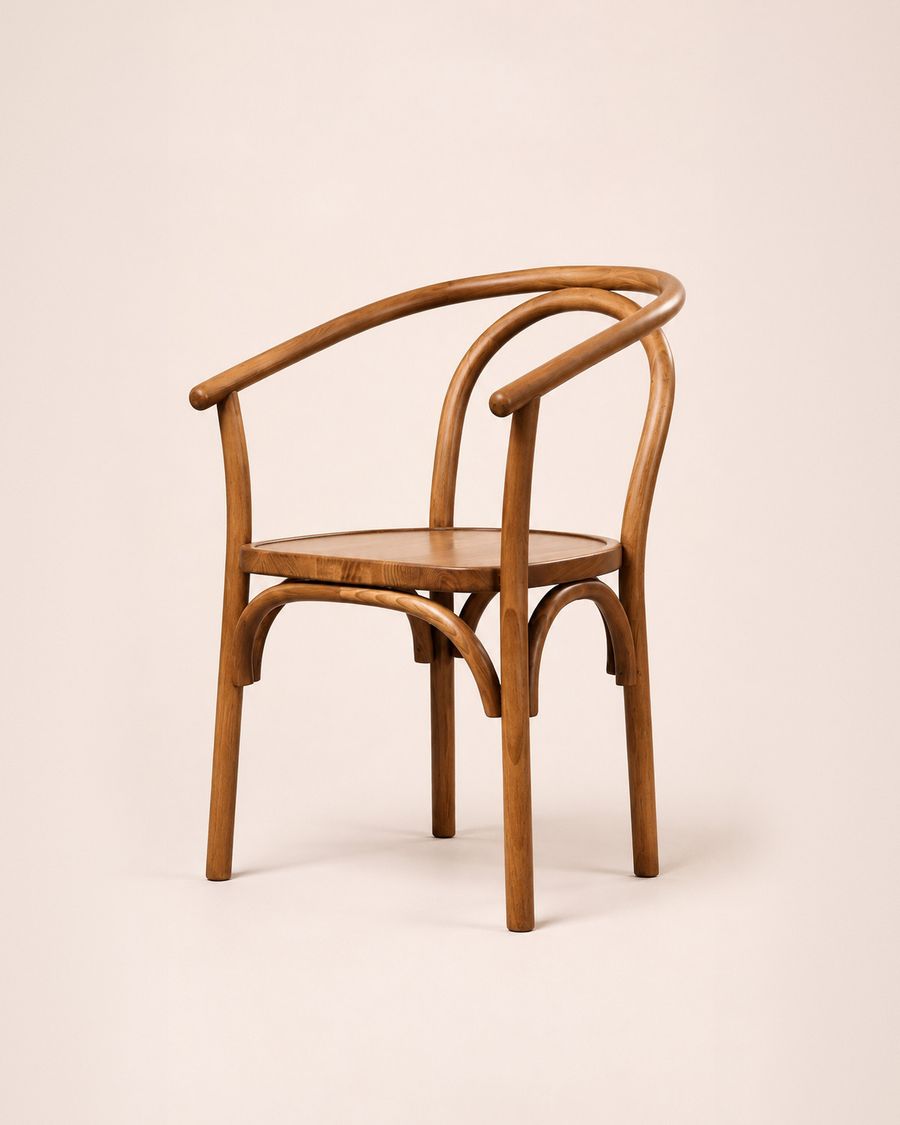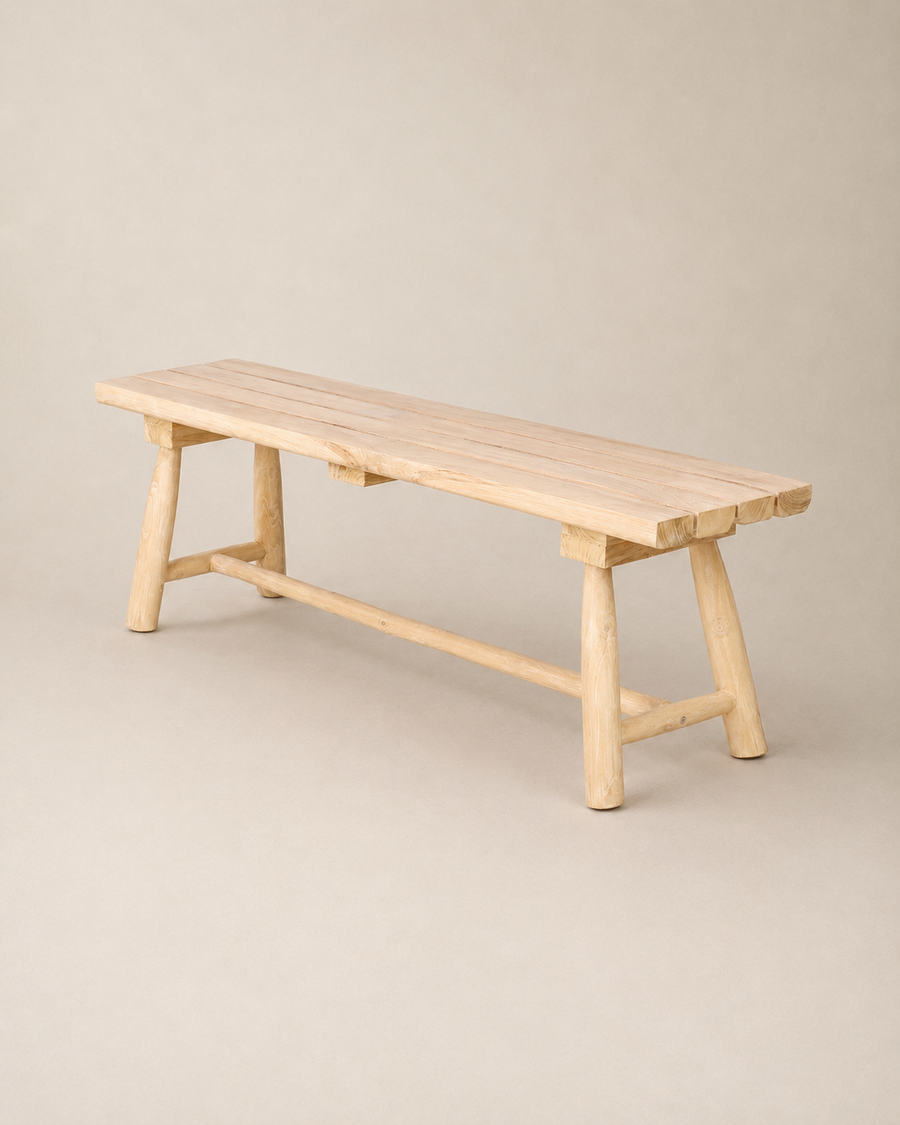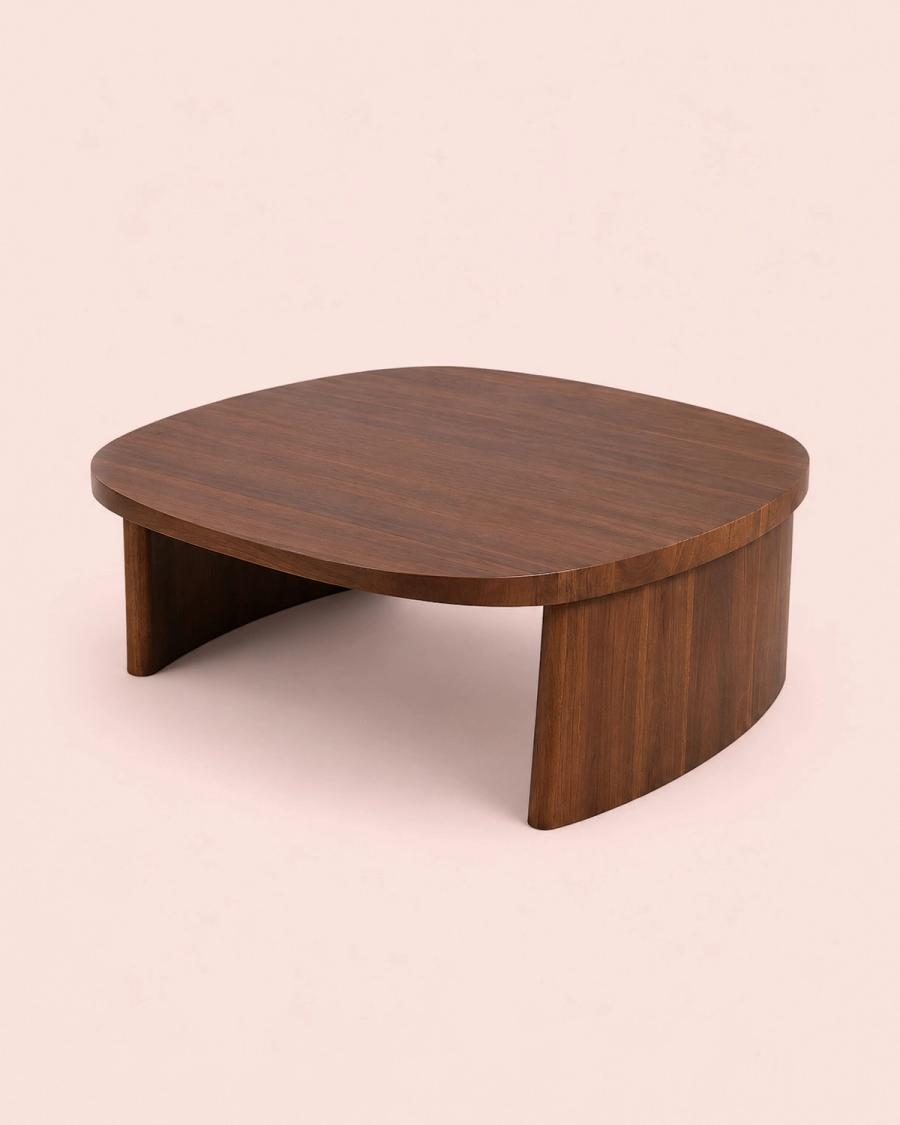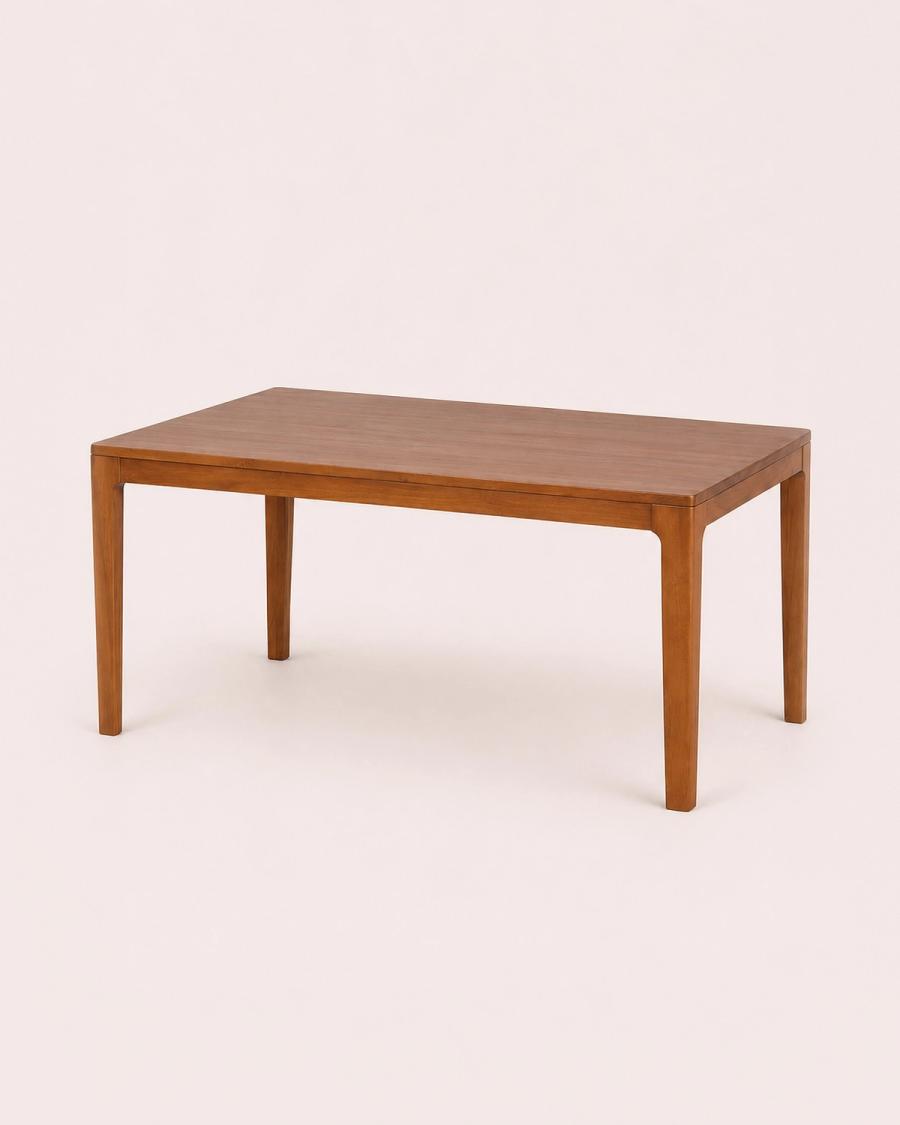
RimbaDining table
Teak
No. Solid teak weathers without oil thanks to its own natural oils and silica; teak oil only keeps the honey colour. If you want that colour, apply a thin coat to clean, dry wood once or twice a year. Left unoiled, teak turns silver-grey within a few months outdoors and stays just as strong.
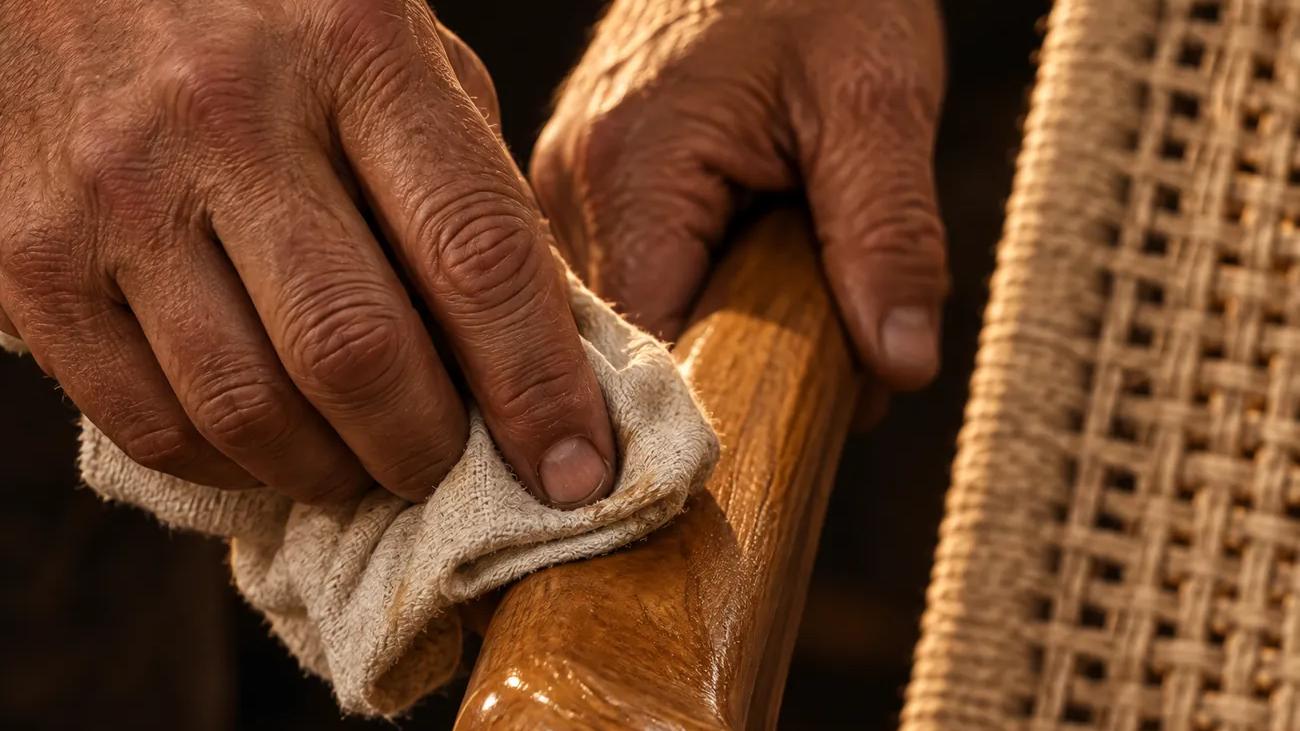
Not to make it last. Solid teak copes with the weather on its own; oil only changes the colour, keeping the honey tone of new timber. That is also what our teak page says.
Teak's resistance lies in the wood itself. It holds natural oils, which make it feel oily, and up to 1.4% silica, according to The Wood Database. CIRAD's technical data sheets rate its heartwood durability class 1 to 3 against fungi, depending on the origin and age of the trees, and say it needs no preservative treatment even when it gets wet from time to time. None of those figures depends on oiling.
Other woods are a different matter. Acacia and pine have far less durable heartwood and do need treatment and a finish that is kept up, as our guide to outdoor wood explains.
Because each side is talking about something different: people who sell oil talk about colour, and people who make teak furniture talk about durability. Both positions have a logic.
In Spain, almost every page explaining teak oil comes from a paint shop or an oil maker, and they take it as given that teak must be oiled. Lyssolen, for example, presents its oil as protection and maintenance for tropical timber outdoors, with a UV filter. In the UK, Furniture Clinic, which also sells teak oil, recommends a coat in spring and another in autumn to stop teak losing its colour and, it says, drying out and cracking.
British teak furniture makers take the opposite view. Barlow Tyrie told Gardens Illustrated that oil is not necessary outdoors, will not extend the life of the furniture and is purely cosmetic. Westminster Teak does not recommend teak oil for furniture kept outside, because it raises the risk of mildew.
The technical data sides with the second view on what matters for lifespan: teak gains no durability from oil. The cracking argument has little support, since teak is among the most stable woods, with tangential shrinkage of 4.7% on CIRAD's sheet. What oil does achieve is keeping the colour, and that is a design choice, not essential maintenance.
It is a finish for hardwoods, not oil that comes from teak. Most products blend drying oils such as linseed or tung with solvents and sometimes resins; Lyssolen's, for example, is based on linolenic acid and includes a UV filter.
It soaks into the wood rather than forming a film, so it does not flake like varnish. It does three things:
It does not make teak last longer, and it is no substitute for cleaning.
Teak protectors and sealers are a different family of products: they aim to slow the change to grey without the frequent upkeep oil needs. Barlow Tyrie, for example, suggests two coats of its colour protector, repeated once a year. Westminster Teak says a sealer can help preserve the look but is not essential for durability. The same principle again: appearance, not strength.
It turns grey, and that is all. In sun and rain it loses its honey tone within months and becomes silver-grey. The change is on the surface: Westminster Teak points out that it affects neither the integrity nor the lifespan of the wood.
The grey is not dirt, although dust, pollen or lichen can build up on it over time. Washing with warm water, mild soap and a soft brush, along the grain, is enough. If your teak will spend the winter outside, our guide to teak in winter covers it.
On most terraces, letting the teak silver. Oil commits you to redoing every piece every season, and a coat that wears unevenly looks worse than evenly grey teak.
| Option | Look | Upkeep | Risks |
|---|---|---|---|
| Grey patina, no finish | Silver-grey within months | Wash with water and mild soap | None to the wood; it comes down to taste |
| Teak oil | Honey tone, slightly darker | Once or twice a year, more often in full sun | Mildew and dark marks if moisture or excess oil is left; patchy colour as it wears |
| Teak protector or sealer | Slows the change to grey | As the maker says, often once a year | Each product has its own method; follow its data sheet |
Think about volume. With 200 terrace chairs, every round of oiling means cleaning, drying, applying and wiping off piece by piece, with the terrace out of use meanwhile. Westminster Teak reckons a fully exposed piece would need oiling every two to three months to hold its colour.
On tables, daily use wears the oil away first where hands, plates and glasses rest, leaving the top in patches of different tone. If the scheme calls for honey-coloured teak, it usually pays to keep it for covered or indoor areas and let the open terrace go grey.
Rule of thumb: if you cannot commit to oiling every season, don't start. Evenly grey teak ages better than half-oiled teak.
On clean, dry wood, in a thin coat, always wiping off the excess. Timings vary from product to product, so the maker's data sheet has the last word.
For quantities, Lyssolen gives about 8 m² per litre over two coats, depending on how porous the wood is. Furniture Clinic adds that the first time may take three coats.
Clean it thoroughly, then oil it. The grey sits only on the surface, so the original tone is still underneath.
At Kadek Living the timber finish is chosen with each piece, and before production we send a sample of the finish for you to approve. If you are torn between the two looks, browse our teak furniture and compare finishes at the Madrid showroom.
It is not advisable. Varnish grips poorly on oil, and teak already contains oleoresins: CIRAD advises gluing only on freshly sanded surfaces. To varnish, sand back to clean wood and follow the varnish's data sheet; Westminster Teak considers varnish better suited to indoor use.
Yes, a little. It saturates the surface and leaves a deeper honey tone than bare wood. If you want a particular shade, test it first somewhere out of sight.
With warm water, mild soap and a soft brush. If they persist, Westminster Teak suggests a rinse of salt and water in a 1:2 ratio, or a teak cleaner; as a last resort, a light sanding along the grain.
No. Indoors it gets no direct sun or rain, so its colour barely changes; a damp cloth, with mild soap and water now and then, is enough. If you want a finish, Westminster Teak considers oils and varnishes better suited to indoor pieces than outdoor ones.
Yes, it is sold for tropical hardwoods in general; Lyssolen recommends its oil for tropical timber outdoors. It does not replace the treatment that less durable woods, such as pine, need.