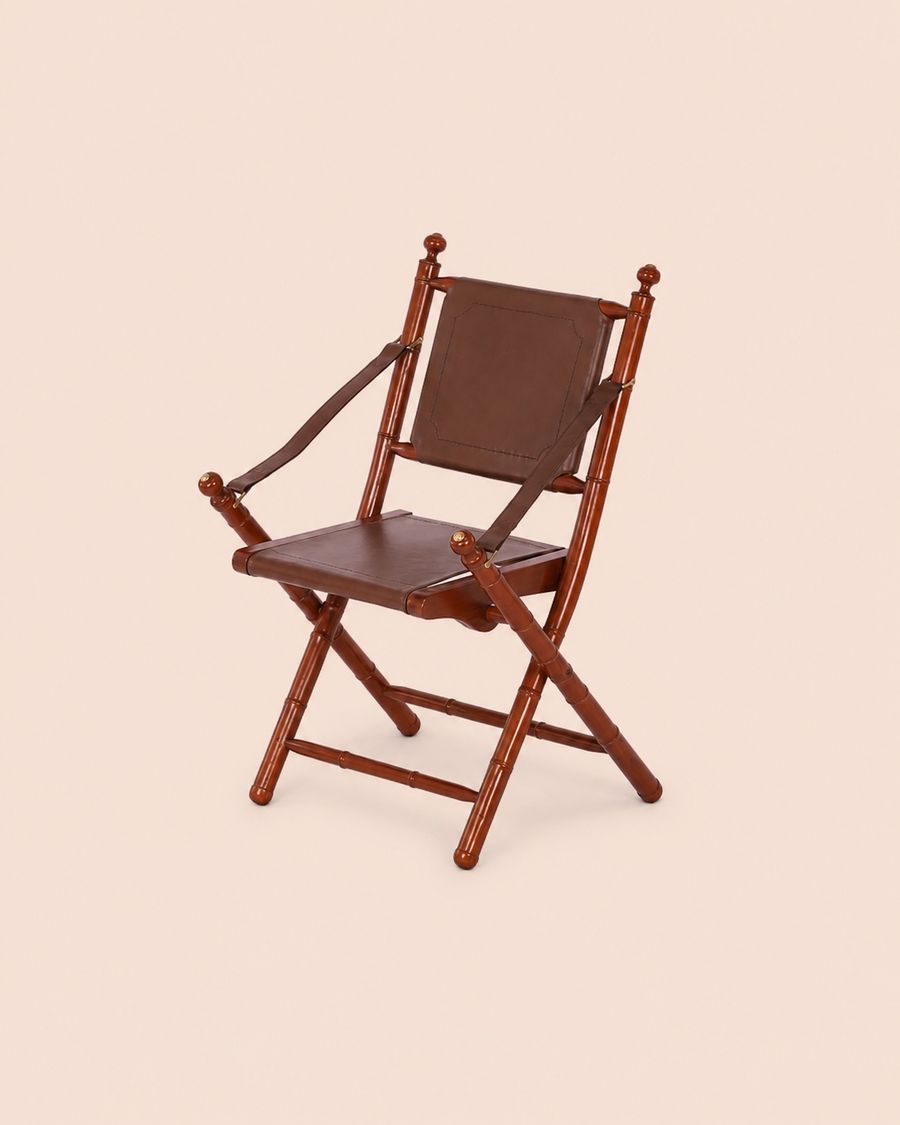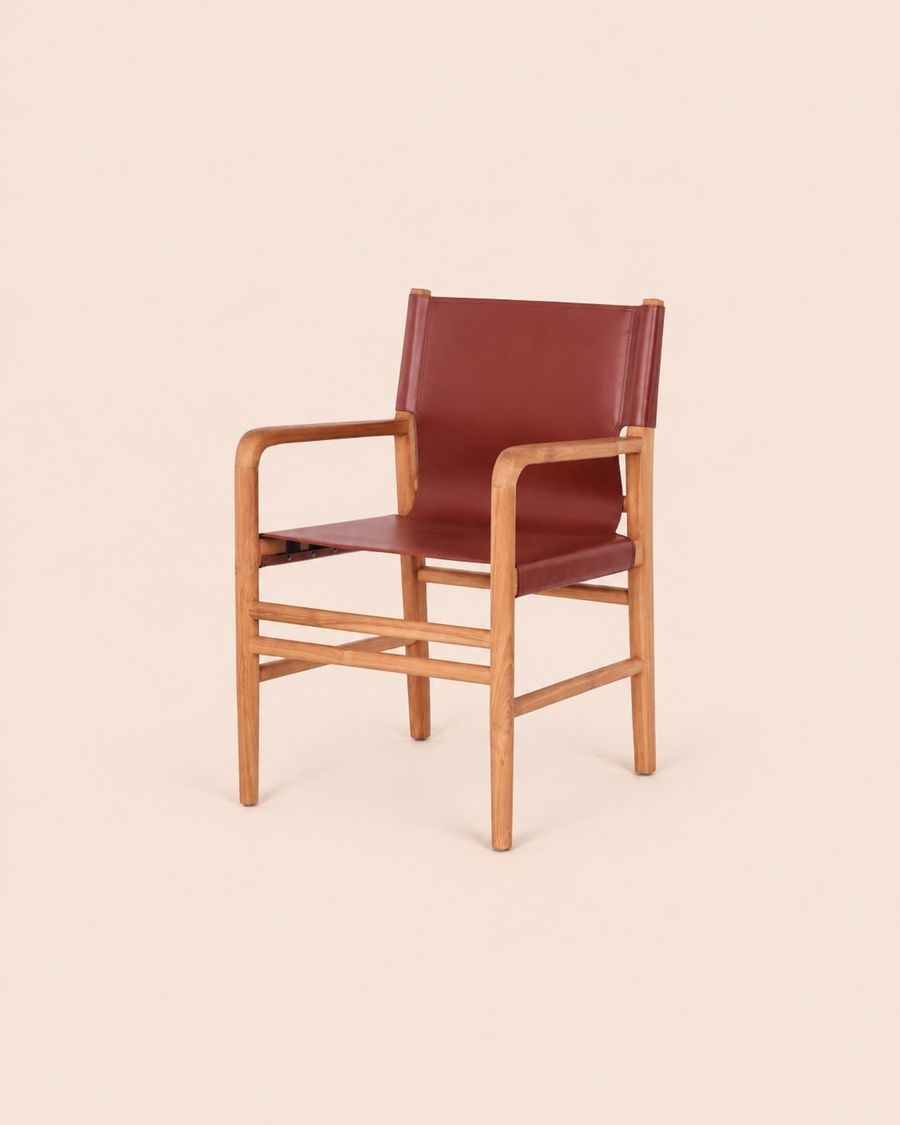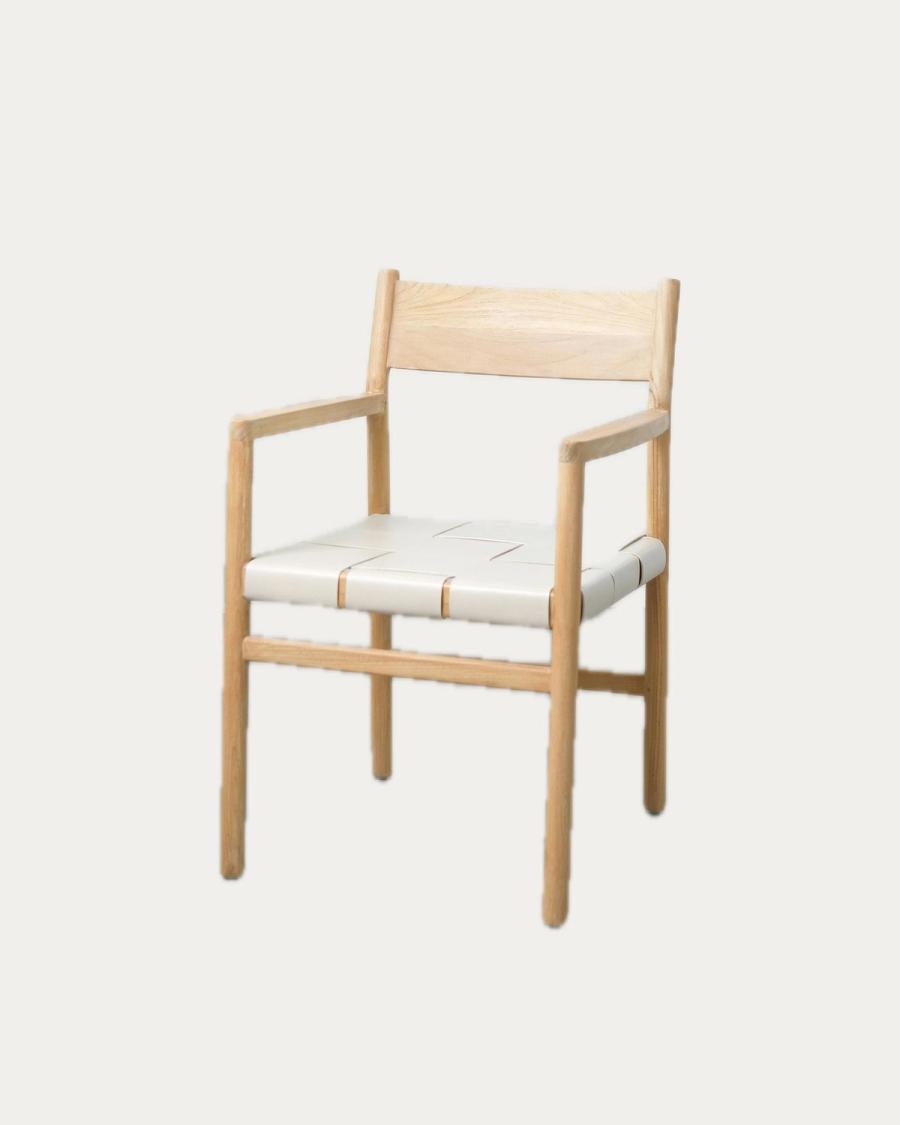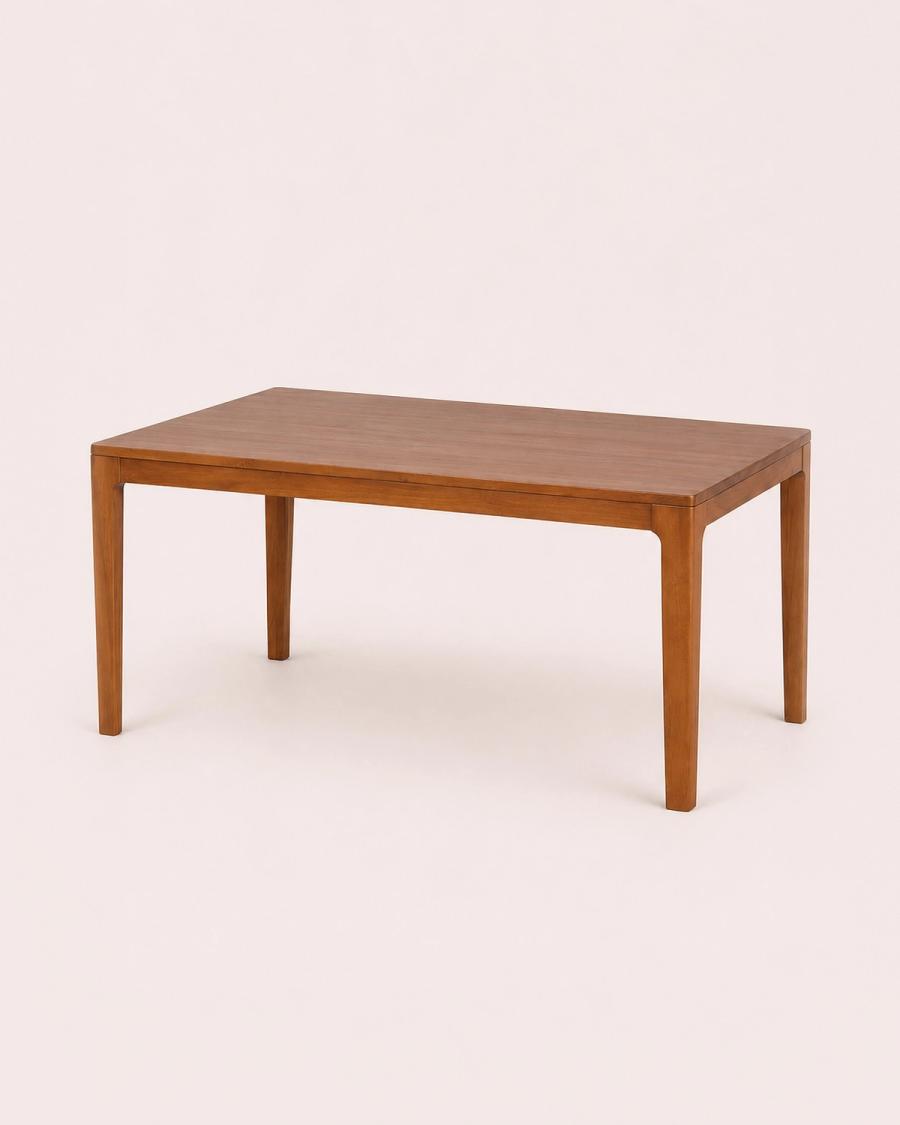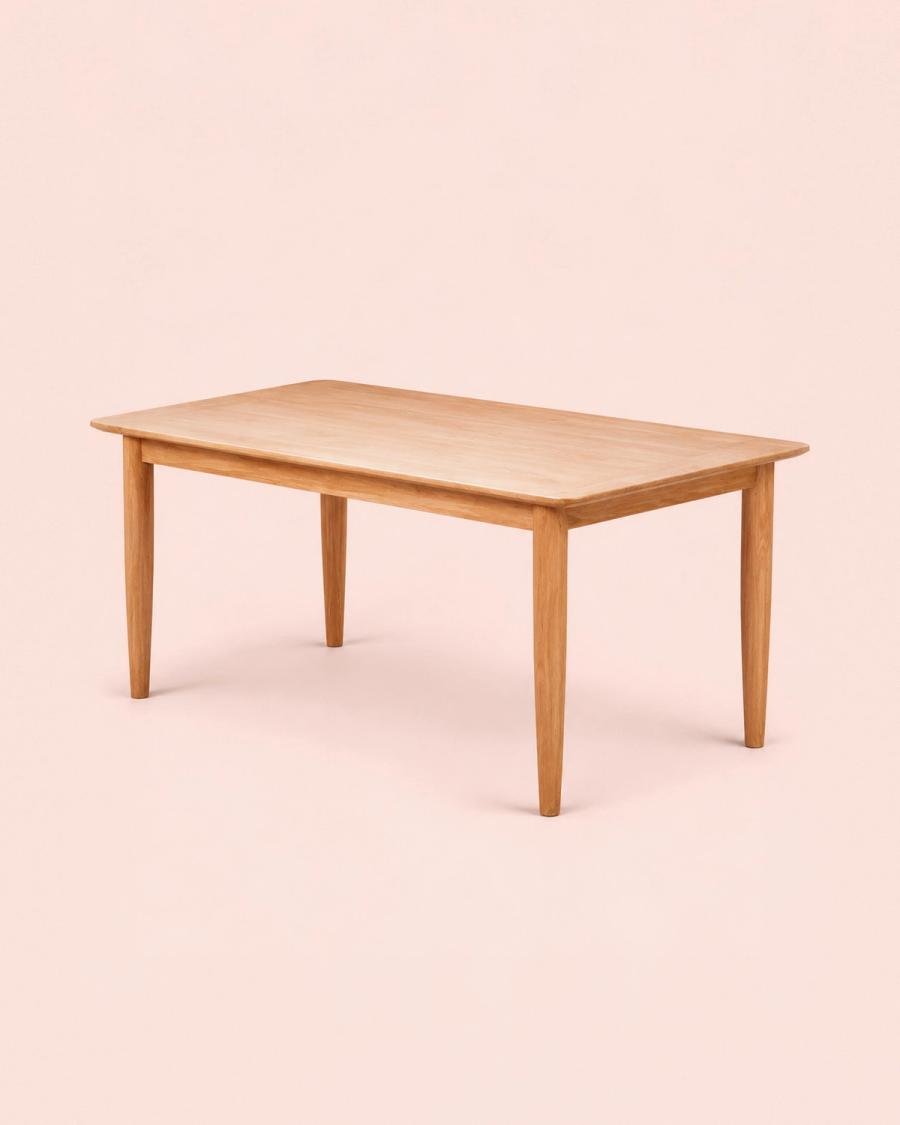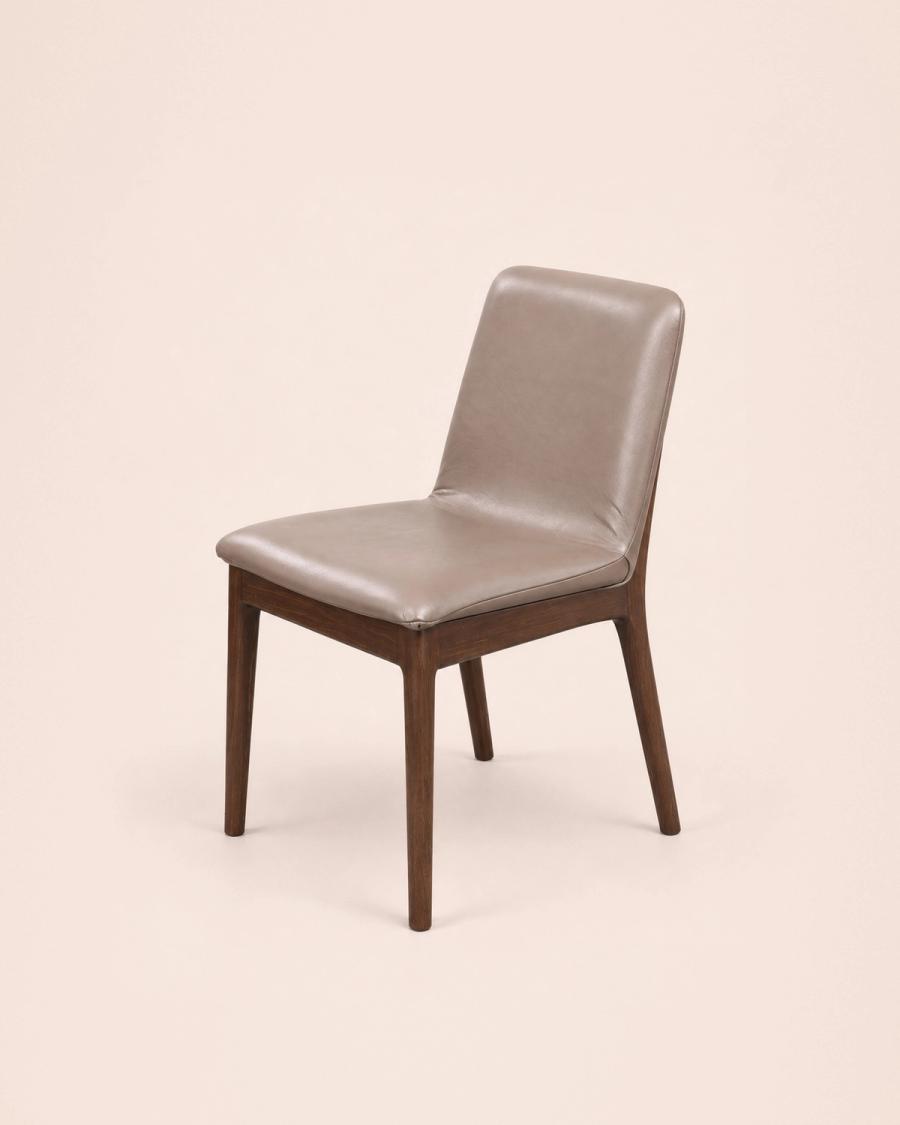
BiruDining chair
Teak, leather
A dining or restaurant table stands 71 to 76 cm high, and the chair that goes with it has a seat height of 43 to 48 cm. What matters most is the gap between the two: 25 to 30 cm, so legs fit under the top and elbows rest at a comfortable height.
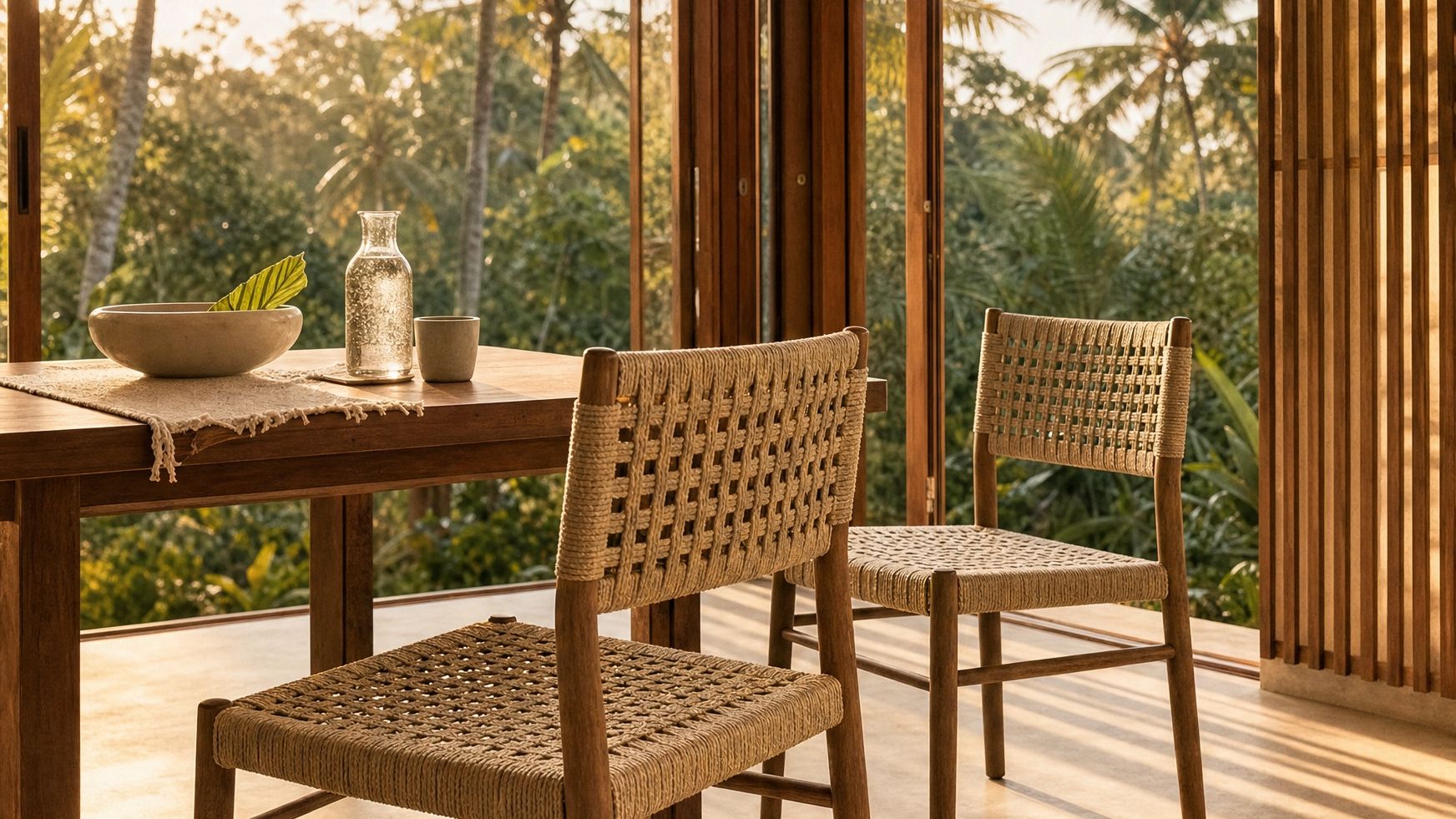
A dining table stands 71 to 76 cm from the floor to the top. Restaurants tend to work at the upper end: Mity-Lite, a US maker of hospitality tables, puts the standard restaurant table at about 76 cm.
The figures shift a little depending on who you ask. Demarques, which publishes one of the fuller Spanish guides, gives 71 to 76 cm; other retailers give 74 to 76 or 75 to 77 cm; the mathematician Claudi Alsina, writing in the Spanish journal SUMA, recommends 75 cm. All of them fall between 71 and 77 cm. The differences depend mostly on the chair the table is meant for, which is why a table is never chosen on its own.
| Piece | Height | Source |
|---|---|---|
| Dining table | 71 to 76 cm | Demarques |
| Restaurant table | about 76 cm | Mity-Lite |
| Recommended table | 75 cm | Claudi Alsina, SUMA |
| Chair seat | 43 to 48 cm | Demarques |
| Chair seat | 45 to 50 cm | UK chair makers |
| Chair seat | 45 cm | Claudi Alsina, SUMA |
| High table | 90 to 110 cm | Demarques |
| Low table | 35 to 50 cm | Demarques |
The seat should sit 25 to 30 cm below the table. With a 75 cm table, that means a seat of about 45 to 48 cm.
That gap matters more than either height on its own. Demarques measures it from the seat to the underside of the top, and Alsina asks for about 25 cm between seat and table to leave room for the legs. With less than 25 cm, thighs touch the table. With more than 30 cm, the plate sits high and elbows ride up.
| Table height | Seat height |
|---|---|
| 71 cm | 43 to 46 cm |
| 73 cm | 43 to 48 cm |
| 75 cm | 45 to 50 cm |
| 76 cm | 46 to 50 cm (Demarques suggests 46 to 48 cm) |
The table applies the rule to the top surface and keeps within the usual seat range of 43 to 50 cm. If the top is thick or has an apron, check the clear height to its underside as well: that is the space legs actually get. Bar counters follow the same logic at other heights, as the guide to bar and stool heights explains.
An upholstered seat compresses by 2 to 4 cm when someone sits down, according to UK chair makers. Measure with the cushion compressed, or choose an upholstered seat slightly higher than a timber one for the same table.
Only if the arm clears the underside of the top or the apron. Compare two measurements, the arm height of the chair and the clear height under the table, and leave a little to spare, because upholstery and uneven floors shift things by a few centimetres.
If the arm hits, the chair stops a hand's width from the table. The diner leans forward to eat, and every place takes up more floor depth, which shows when you count how many tables fit. Demarques also notes that chairs with arms need more room at the sides and in height.
If the armchair you want does not fit, there are several ways round it:
Four legs at the corners keep a large table steady, but on a small table for four they get in the way of the knees of whoever sits beside them. A pedestal leaves all four sides free, although it needs a wide, heavy base so the table does not rock or tip when someone leans on the edge.
On a made-to-measure piece, the height of the arm, the seat or the top is set for the project. With custom furniture, Kadek sends a technical drawing with every dimension to approve before production, so you can check that the arm clears the table on paper first.
Allow about 65 cm of width by 35 cm of depth per person. That is the rectangle Alsina considers necessary to eat comfortably, with room for cutlery, plate and glasses.
If the room is tight you can squeeze a little, but every centimetre multiplies: 5 cm of width per diner, at a table with four diners down each side, is 20 cm of length.
| Diners | Table size | Source |
|---|---|---|
| 2 | 60 to 76 cm across, square or round | Mity-Lite |
| 4 | 91 to 122 cm across, square or round | Mity-Lite |
| 6, rectangular table | about 195 cm long | Calculated: 3 diners a side at 65 cm |
A table needs room around it as much as on top. Alsina gives three distances, measured from the table edge:
These are the figures behind table spacing and aisle widths, which the guide to restaurant table spacing works through.
The heights are not: the 25 to 30 cm rule holds in both. What changes is the size of the top, the type of seat and the space left around it.
Measure table and chair together, not one at a time, and try the pairing sitting down.
The dining chairs in the collection can be tried alongside their tables at Kadek's Madrid showroom, by appointment on weekdays.
It is above the usual 71 to 76 cm. It works if the seat rises to 48 to 50 cm to keep the 25 to 30 cm gap; with 45 cm chairs the table will feel high.
According to Alsina, a seated person's knees reach about 35 cm in under the table, measured from the edge, and their feet 40 to 45 cm. Legs, rails and the base of the table should keep clear of that zone.
Alsina cites a model with the seat at 45 cm high, 45 cm wide and 50 cm deep, with the back reaching at least 80 cm. A very deep seat pushes the diner away from the table.
In Europe, the safety, strength and durability of non-domestic seating are tested to EN 16139, which replaced EN 15373. Ask the maker for the test results for each model, and check which edition of the standard they cite.
Between 90 and 110 cm, according to Demarques. It takes stools rather than chairs, with the seat 25 to 30 cm below the top.