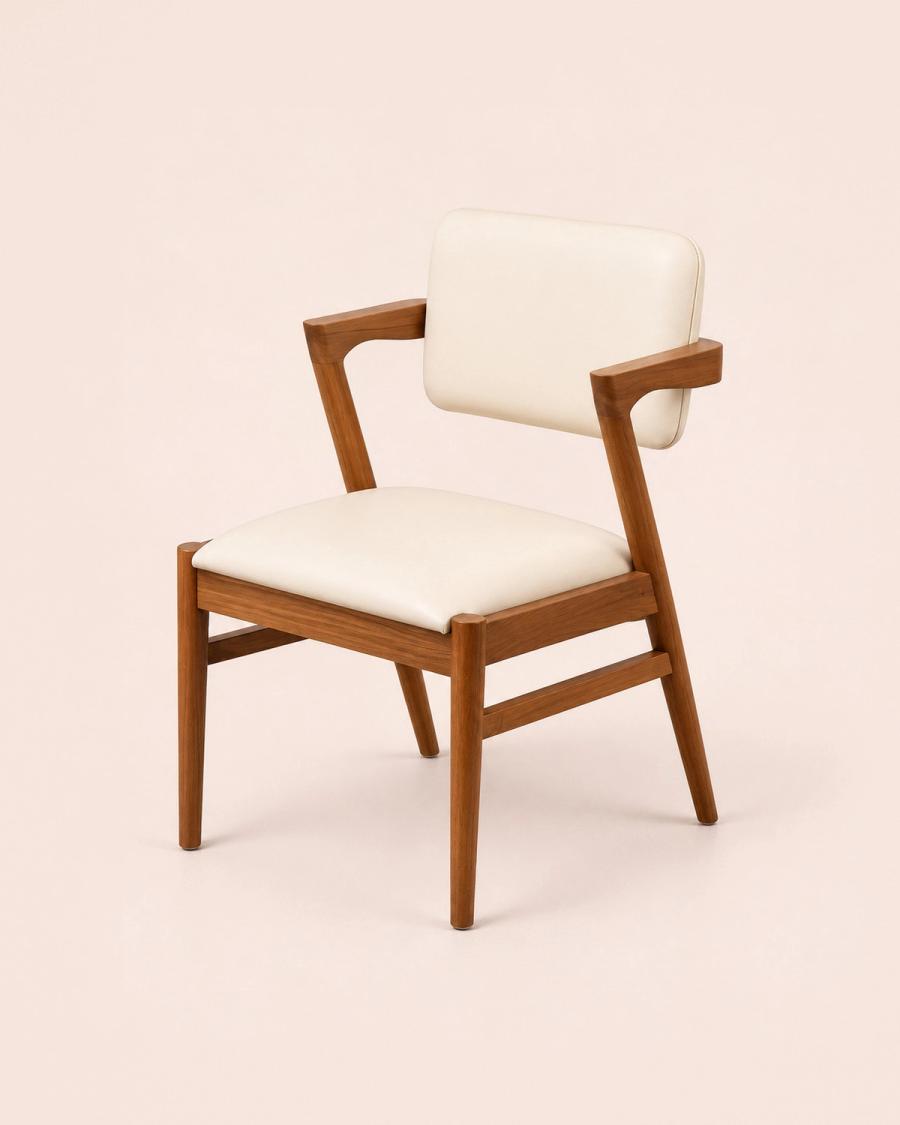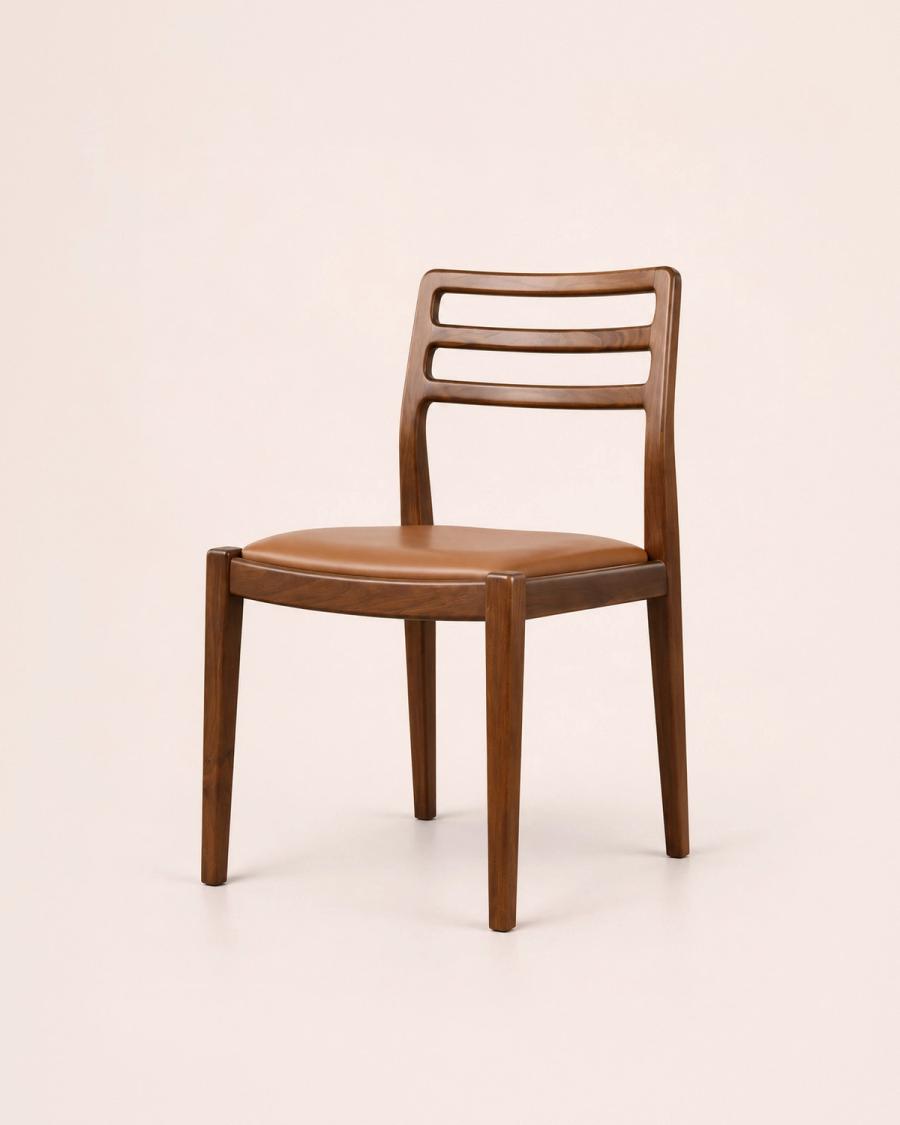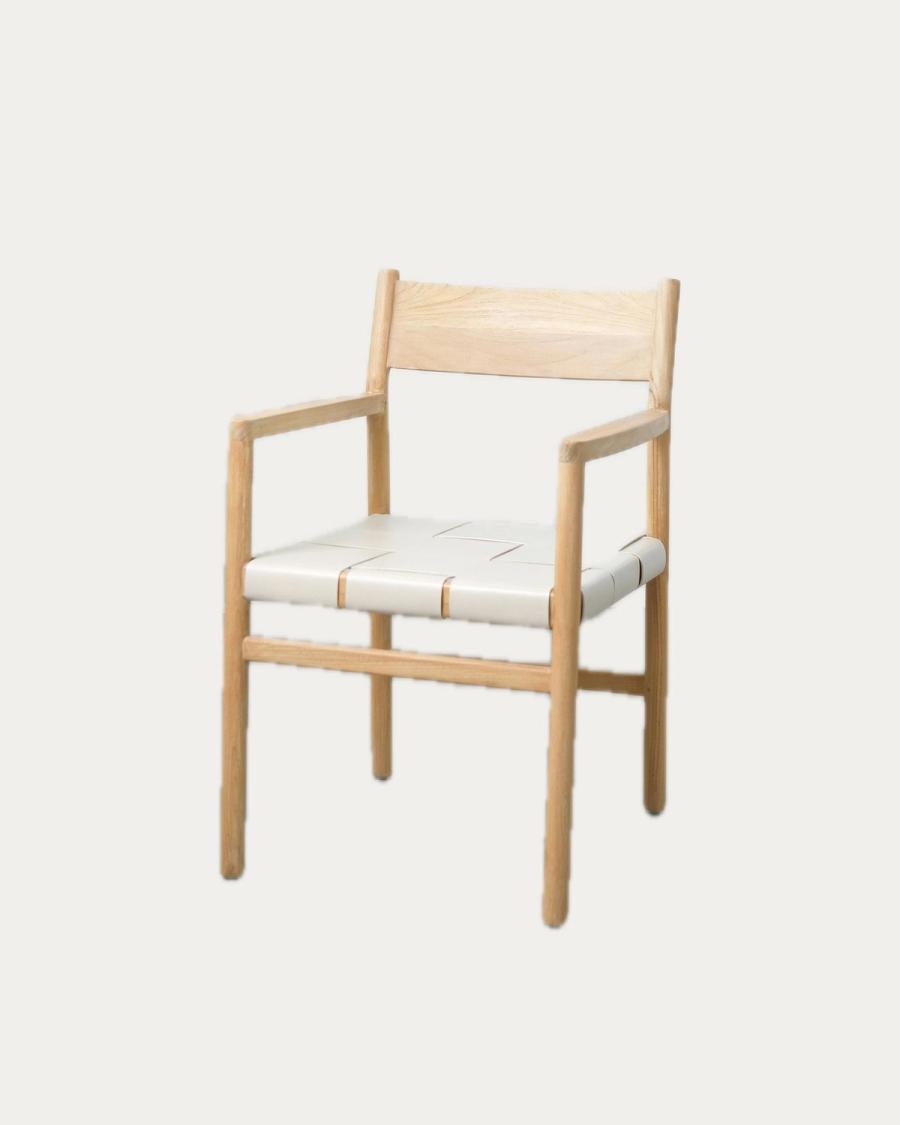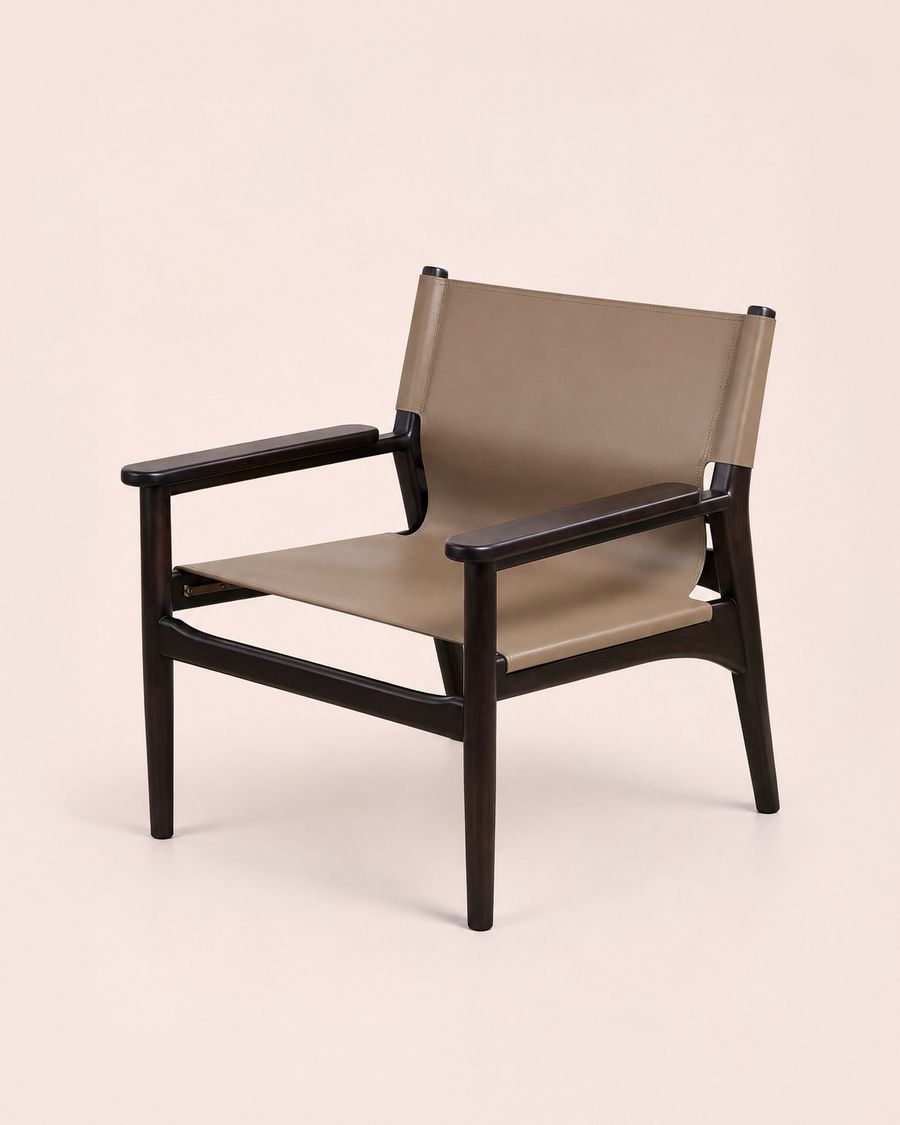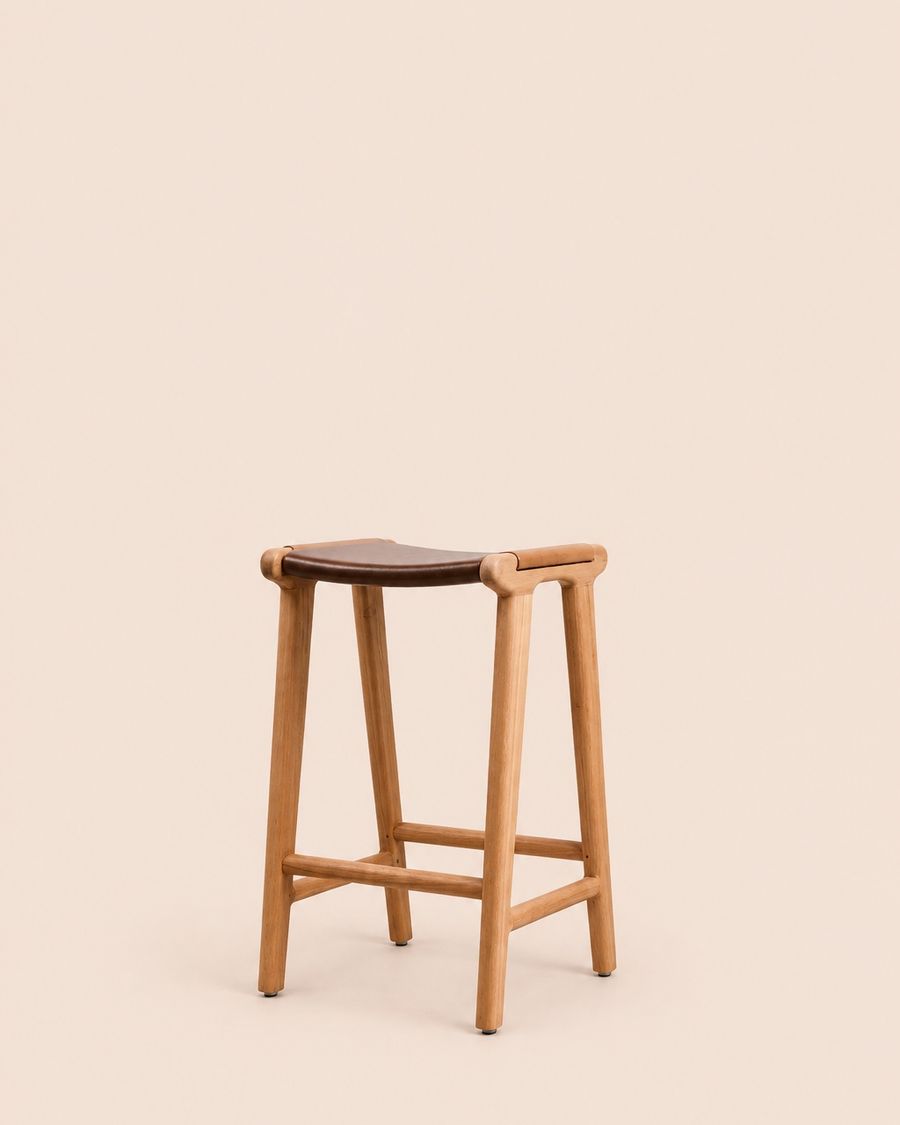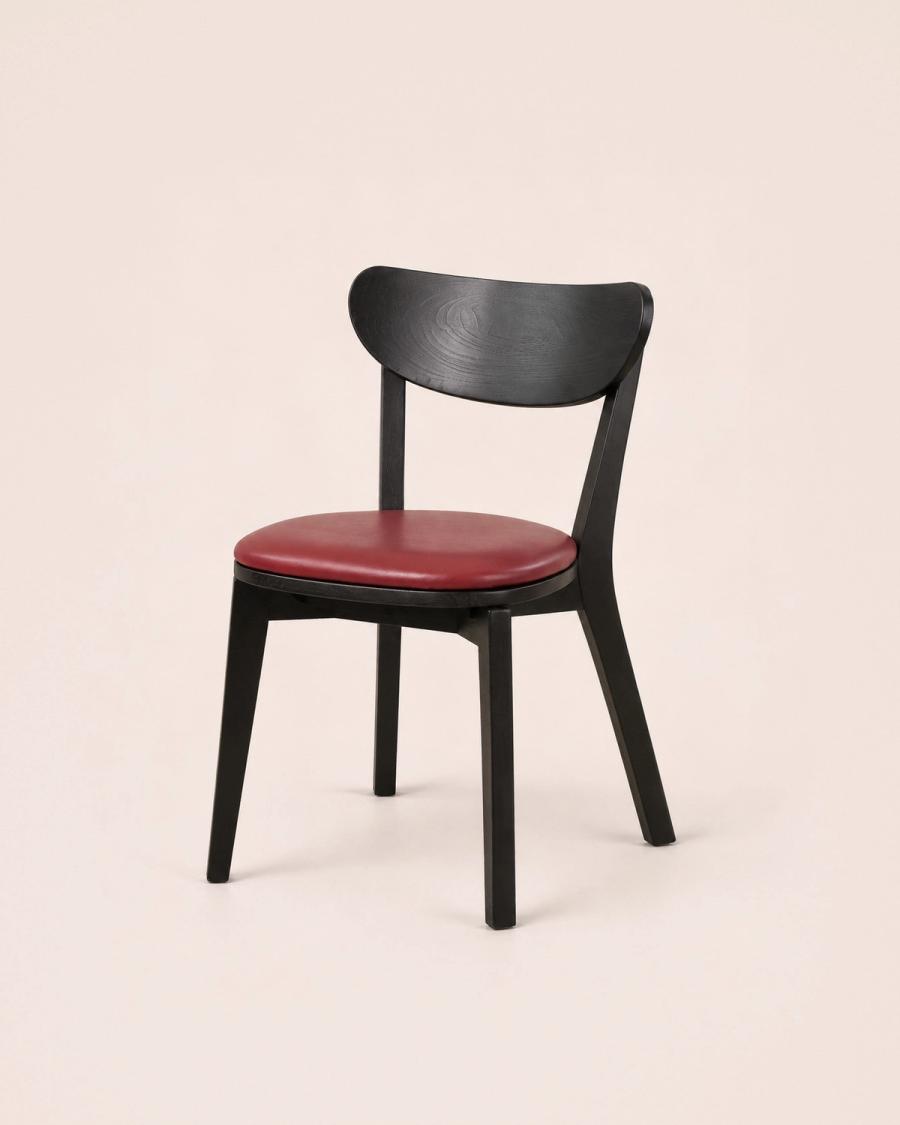
BulanDining chair
Teak, leather
Natural leather is one of the seats that age best in a restaurant or hotel: it wipes clean, does not fray and gains a patina with use. For hospitality, choose leather with a protective finish, semi-aniline or pigmented, kept away from direct sun and heat. Faux leather costs less, but it is not leather and ages worse.
Yes, if it is natural leather with the right finish. It is one of the most forgiving seats in hospitality: it wipes clean with a damp cloth, does not gather crumbs and lint like fabric, does not fray at the edge and, over the years, gains a patina many people look for. What it does not forgive is direct sun, heat from a radiator and sharp objects, such as jeans rivets or keys in a pocket.
So rather than asking whether leather lasts, ask which leather it is and how it is finished.
The European standard EN 15987 sets the terms of the leather trade. Under it, full-grain leather keeps its whole grain, the outer layer of the hide, without sanding or correction; and a material whose grain has been removed entirely cannot simply be called leather, but split. On top of the grain, the finish decides how it behaves day to day.
| Type | What it is | Stains and light | In hospitality |
|---|---|---|---|
| Aniline | Drum-dyed, with no coating over it | Stains and fades easily | Only with light use and good care |
| Semi-aniline | Dyed like aniline, with a thin clear coat | More resistant, keeps a natural feel | A good balance for restaurants and hotels |
| Pigmented | With an opaque coloured coat over the grain | Best at resisting stains and light; less patina | Heavy use |
| Split | The lower part of the hide, separated from the grain | Less strong and less supple | Not advisable for seats |
| Bonded leather | Leather fibres pressed with a binder | Peels and cracks | Avoid |
| Faux leather | Fabric with a polyurethane or PVC coat | Easy to clean, but peels over time | Tight budgets and a short service life |
According to PIB's guide to leather types, aniline is the most sensitive to liquids, grease, UV and rubbing, and pigmented the most resistant, at the cost of a less natural feel and less patina. For a dining room in daily use, semi-aniline or a good pigmented leather are the safe choices.
They are two ways of working leather, and they behave differently.
Kadek's collection has all three: padded seats such as Pelita and Mentari, taut leather as on the Sepi lounge chair, sling leather or wide strips on Larasati and Awan, and braided strips on the Tirta stool.
Natural leather if the chair has to last; faux leather only if the budget decides and you accept replacing it sooner. Faux leather is fabric with a plastic coating: at first it looks even and cleans easily, but with use and cleaning products the coating cracks and peels, and it cannot be repaired. Natural leather marks, but it can be cleaned, nourished and re-covered.
Watch the wording: if a supplier talks about synthetic leather, eco-leather or bonded leather, it is not selling leather in the sense of EN 15987.
Little, but often.
Test any new product first on a hidden spot, such as the back of the seat.
Not on an open terrace. Rain, sun and swings in humidity dry it out, fade it and crack it. On a covered terrace closed in winter it can work, but outdoors teak with synthetic fibre or outdoor fabrics is the better choice, as the guide to terrace and pool furniture explains.
If the seat has a filling, yes: the EN 1021-1 and 1021-2 ignition tests are made on the leather and filling together, and that is what a hotel usually asks for. Ask the maker for the report on the whole assembly, not just the leather. The guide to fire-retardant upholstery explains which standard applies in each country.
Kadek's leather dining chairs, in teak or sungkai, can be seen and touched at the Madrid showroom, by appointment on weekdays.
Natural leather cracks when it dries out: from sun, heating or alcohol-based products. With gentle cleaning and an occasional conditioner it stays supple for years. The one that peels and crazes beyond repair is faux leather.
Leather that keeps its grain, the outer layer of the hide and the densest, strongest part. If it is kept whole, unsanded, it is full grain; if it is sanded to correct marks and then coated, it is corrected grain.
It depends on the type of leather, the finish and the care more than on a fixed figure. Semi-aniline or pigmented leather on a sound frame lasts for years, and when it wears it can be re-covered without replacing the chair.
On leather with a protective finish, if cleaned quickly, nearly always. On aniline, with no protective coat, grease soaks in and can leave a mark. Blot without rubbing and check with the maker before using a stain remover.