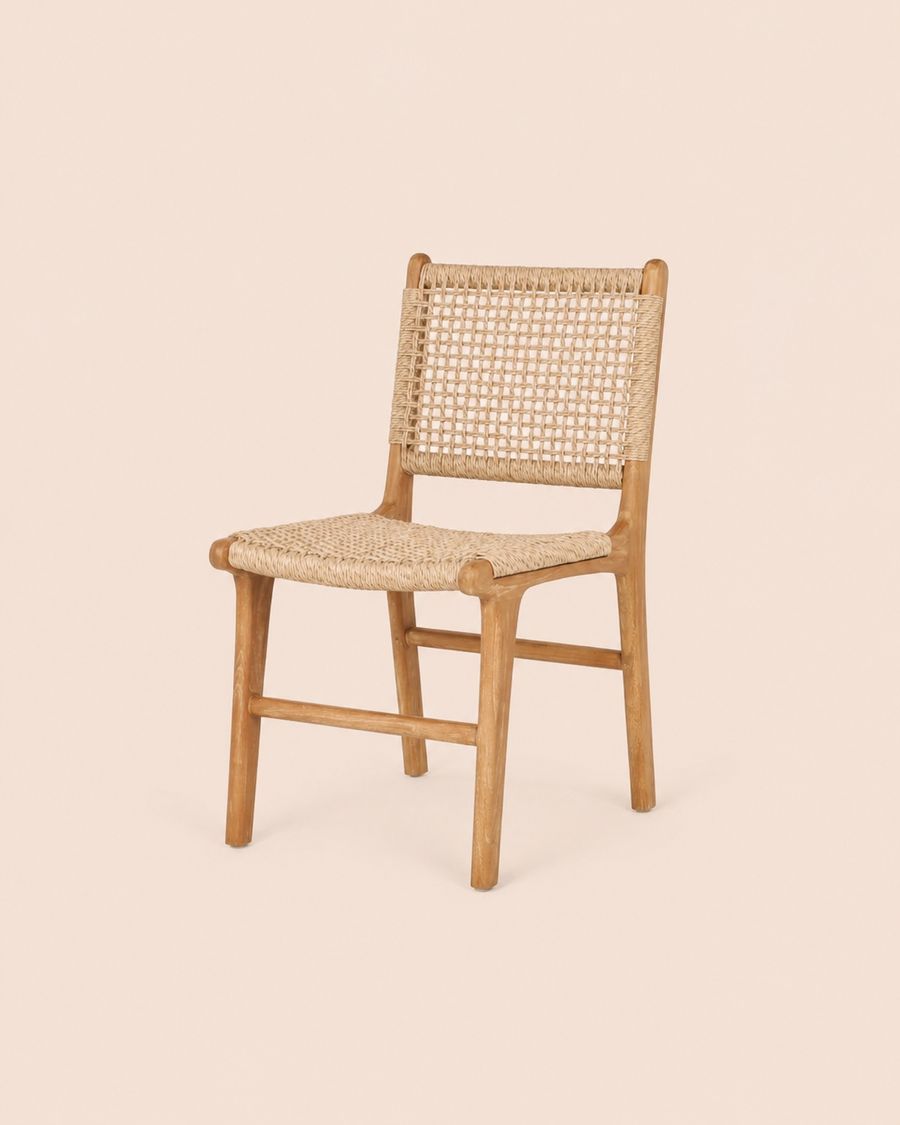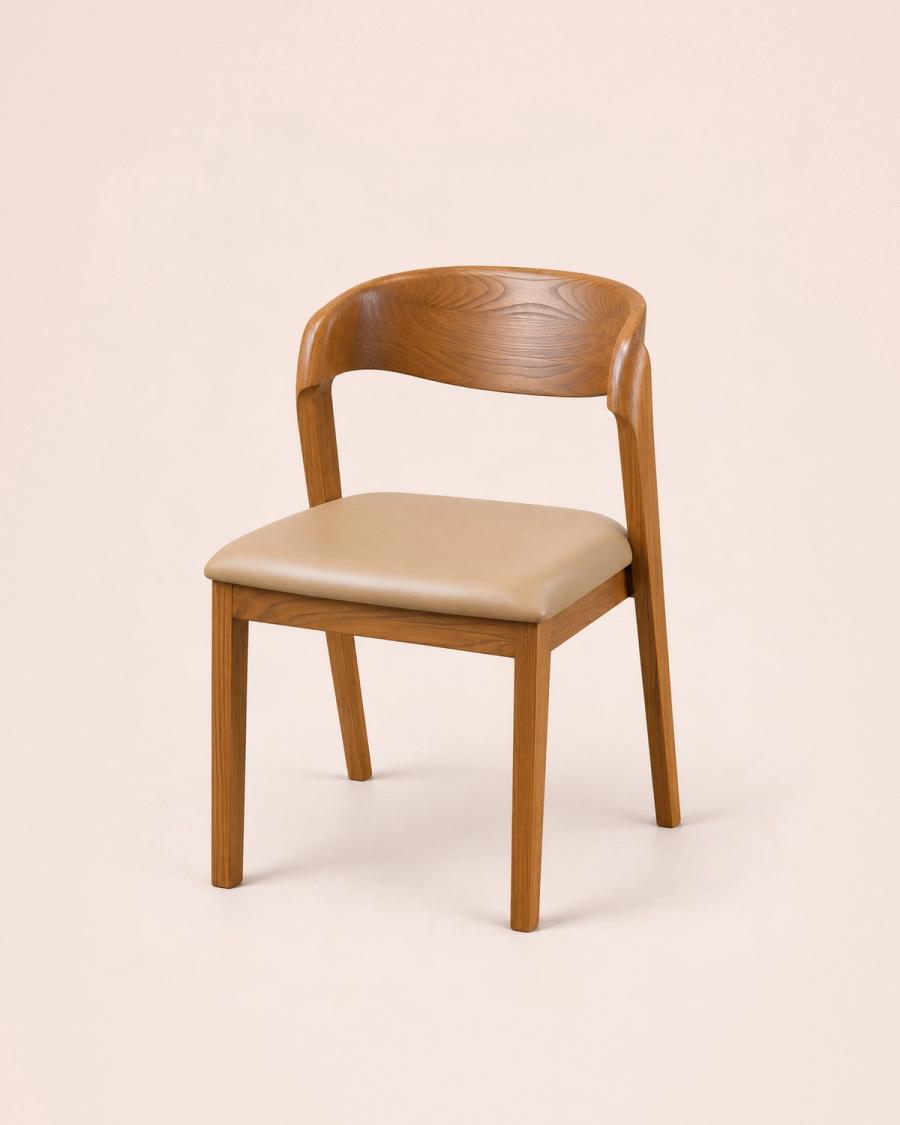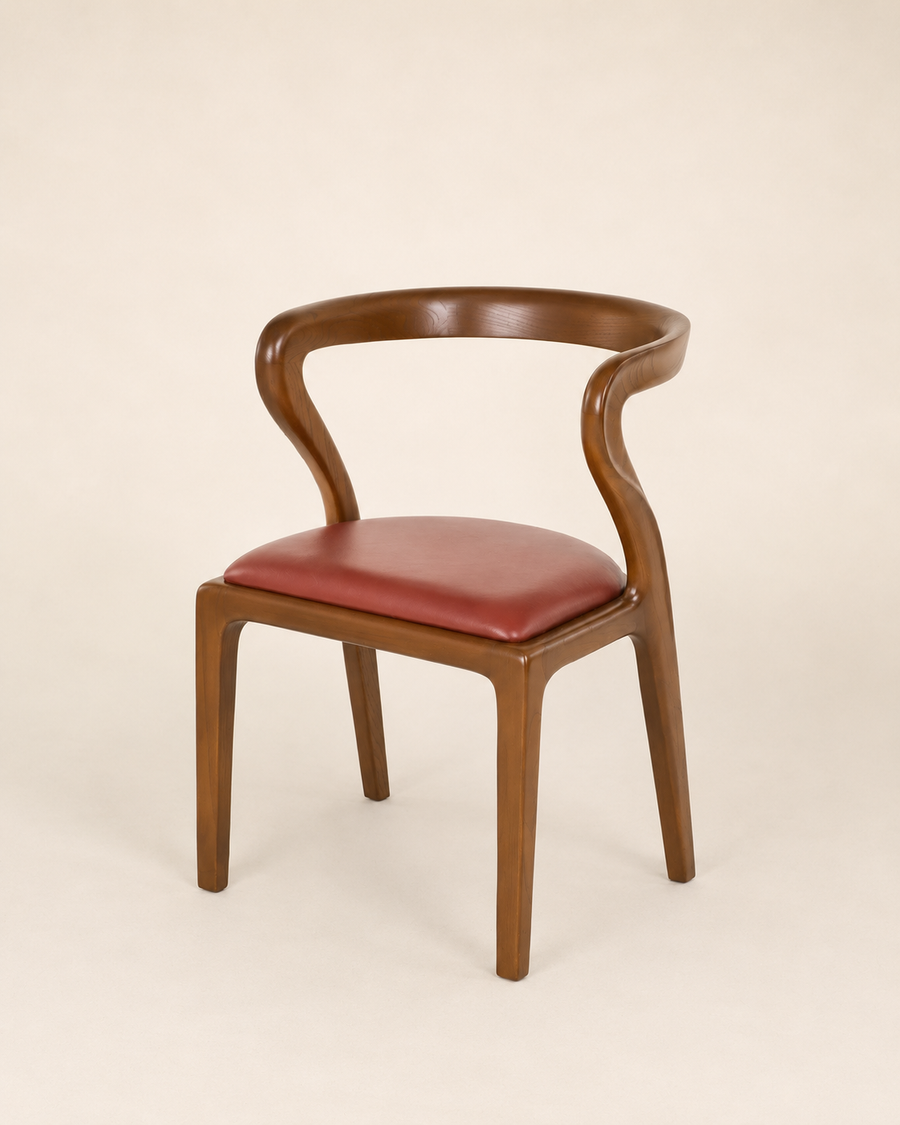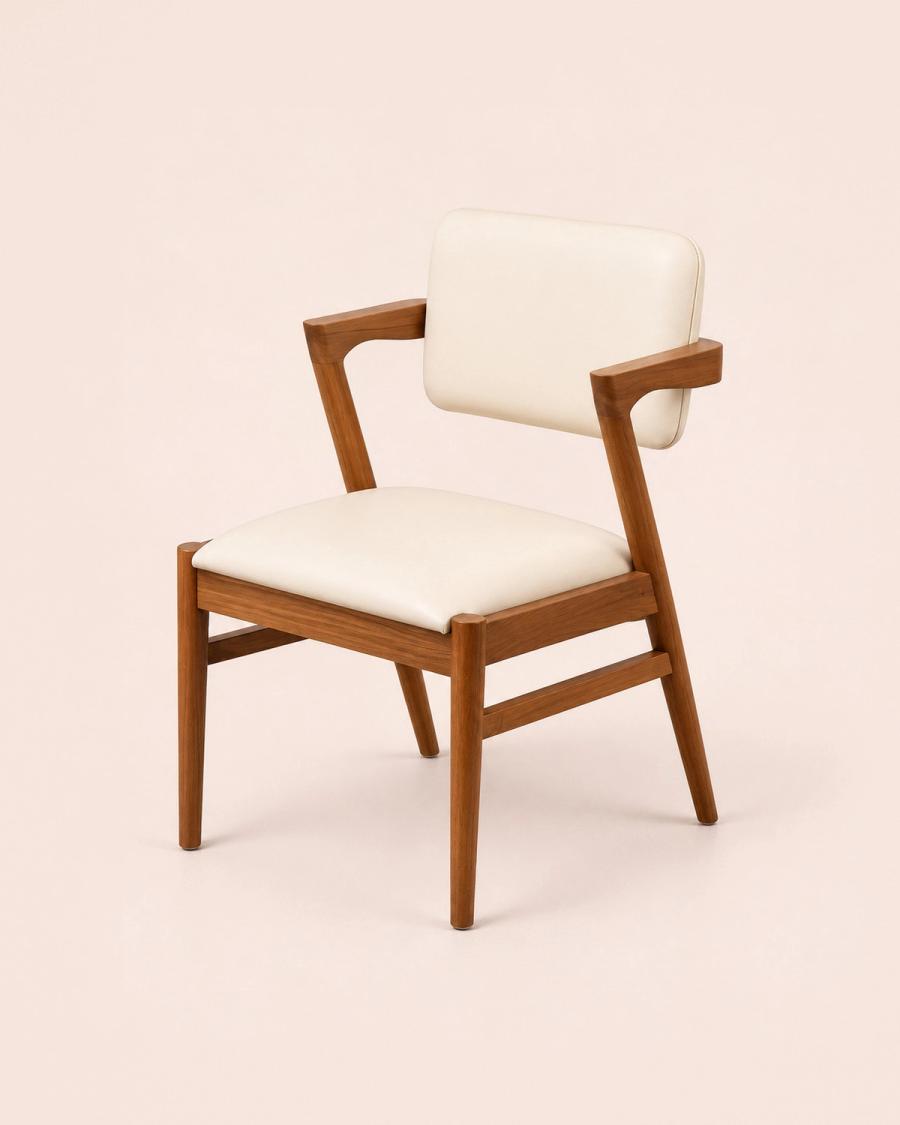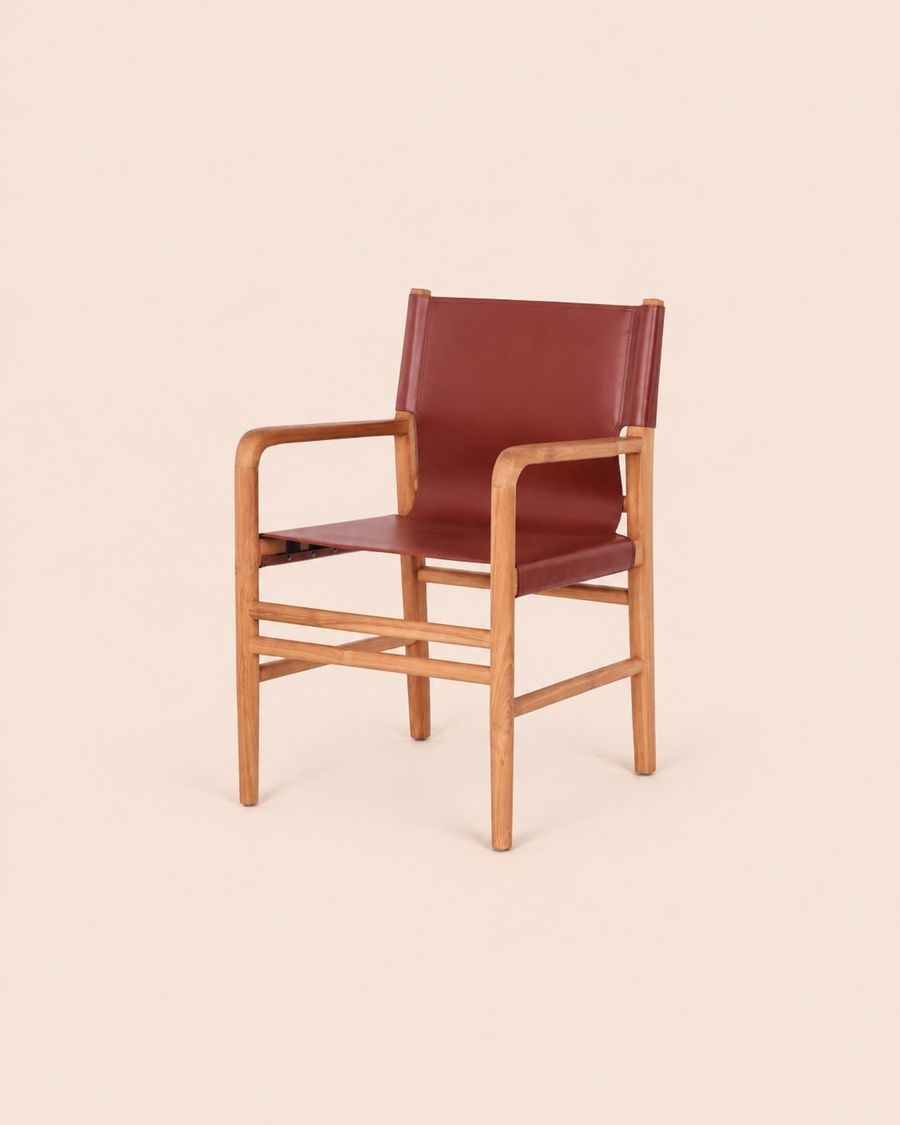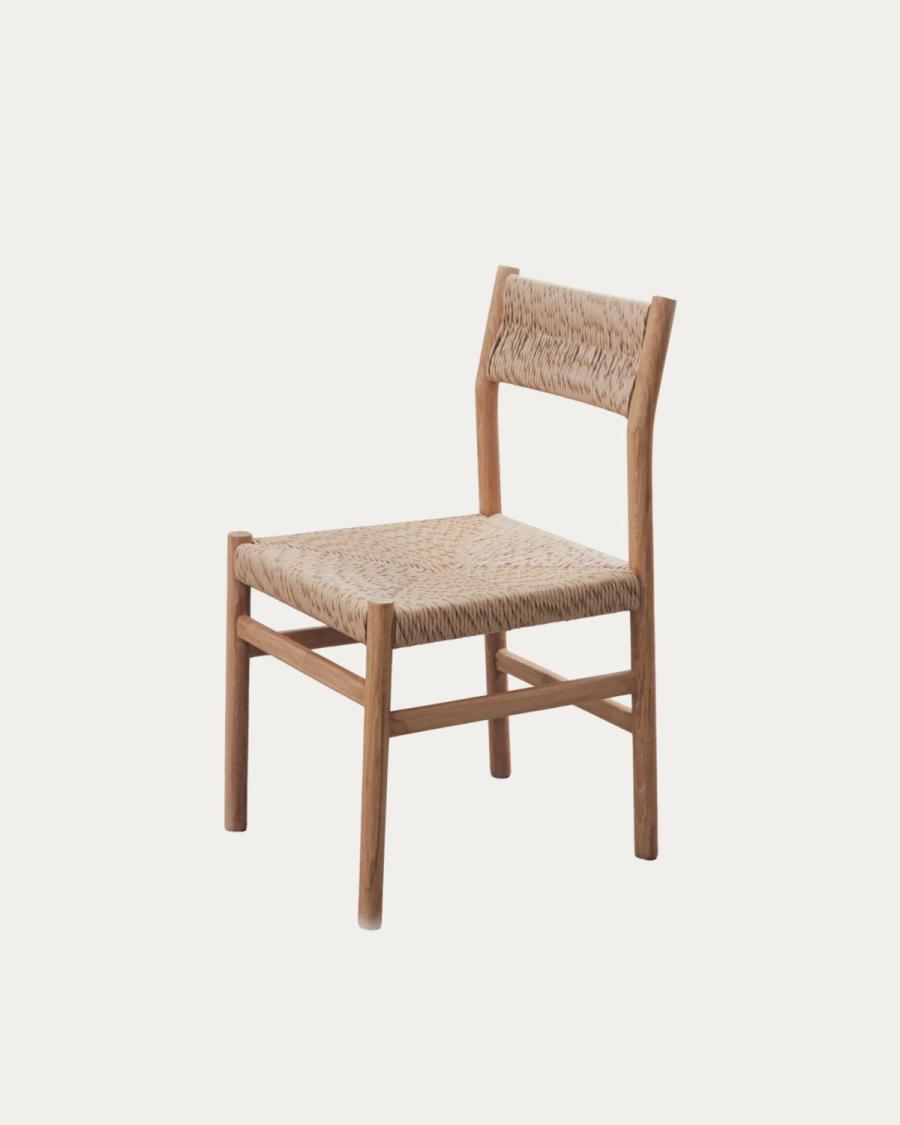
AwanDining chair
Teak, synthetic weave
A restaurant chair is sat on hundreds of times a week, so choose the frame before the look: solid wood with jointed construction or welded metal, tested to EN 16139 for non-domestic use. Then check the seat, 45 to 48 cm high, the width, the weight and how easily it cleans.
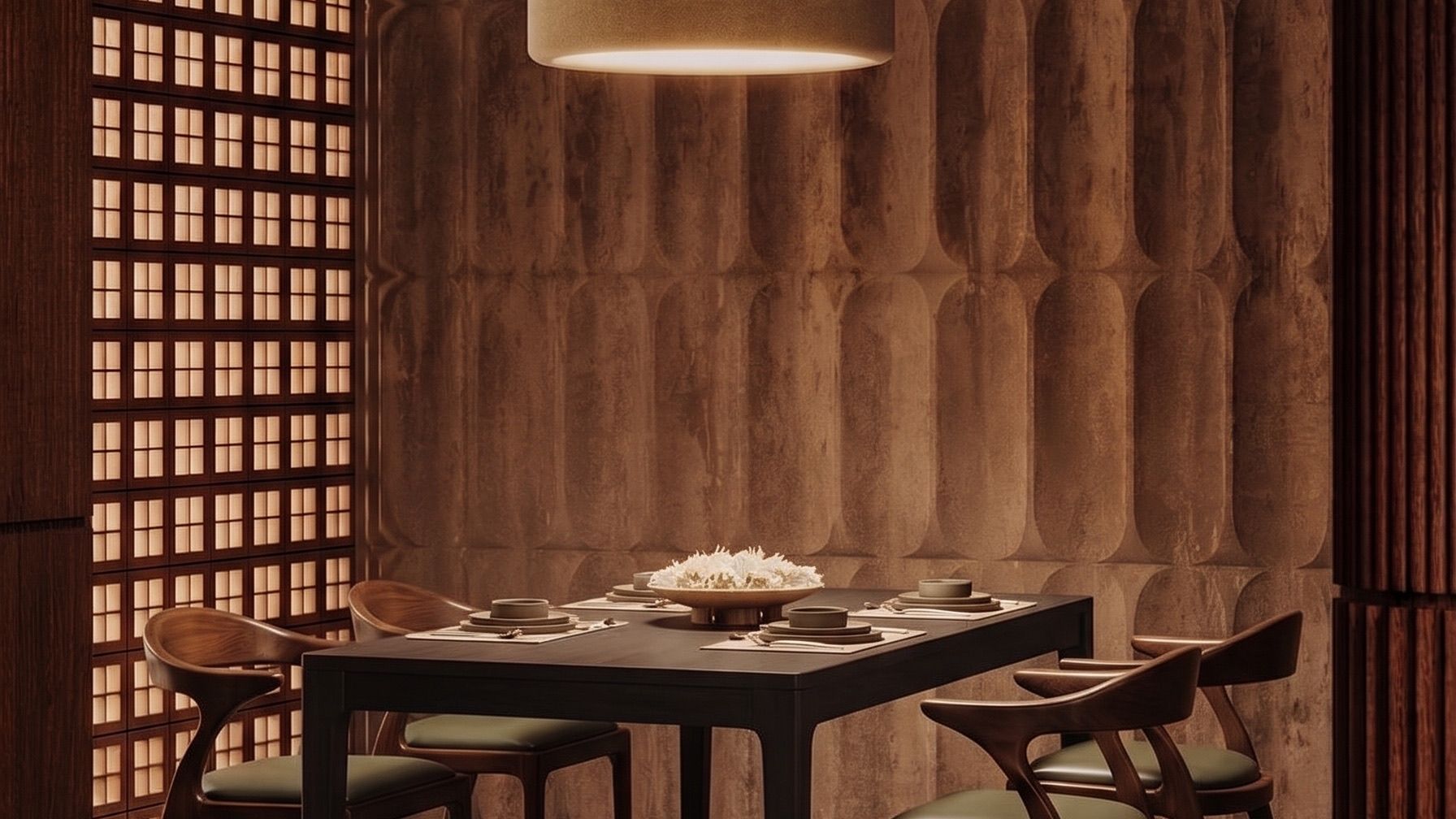
Use. A restaurant chair is sat on and dragged several times every service, by people of every weight, and sooner or later someone will rock back on the rear legs. That is why it is tested to a different standard: EN 16139, for non-domestic seating, whose current edition dates from 2025 and covers adults up to 110 kg.
A chair made for the home can look just as good and fail within months: joints loosen, the seat sags or the upholstery wears through at the edge. The guide to contract furniture explains which documents show that a piece is built for this kind of use.
| Aspect | Domestic chair | Restaurant chair |
|---|---|---|
| Use | A few meals a day | Several services a day, every day |
| European strength standard | EN 12520, domestic seating | EN 16139, non-domestic seating |
| Upholstery | No fire test required in most cases | EN 1021 tests and whatever the project asks for |
| Maintenance | Occasional | Daily cleaning, spare glides and seats |
Solid hardwood with glued, jointed construction, or welded metal. Those are the frames that survive years of dragging and rocking. The first to fail are particleboard, joints held only by screws and thin softwood legs.
Kadek makes its chairs in solid teak or sungkai, a paler and slightly lighter Indonesian hardwood, in its six factories in Central Java. How the two differ is covered in the guide to suar and sungkai wood.
The seat should sit 45 to 48 cm off the floor for a 75 cm table, 25 to 30 cm below the top, as the guide to table and chair height sets out. Beyond the height, check three more measurements:
| Model | Width | Depth | Height | Seat |
|---|---|---|---|---|
| Kilau | 42 | 40 | 88 | Natural leather |
| Larasati | 45 | 59 | 85 | Synthetic fibre or leather |
| Awan | 46 | 51 | 84 | Synthetic fibre or leather strips |
| Terik | 50 | 55 | 82 | Natural leather |
| Mentari | 55 | 54 | 77 | Padded leather |
| Surup, with arms | 55 | 58 | 85 | Natural leather |
Without arms at most tables; with arms where meals run long and there is space. An armchair is more comfortable over a two-hour dinner, but it takes about 55 cm of width against 45 to 50 cm for a side chair, weighs more and needs its arms to clear the table.
Many restaurants mix the two: side chairs at tables for two and four, and armchairs at the ends of long tables, in private dining or facing a banquette.
It depends on how the room is cleaned and how long meals last. No seat wins on everything.
| Seat | For | Against | Where it fits |
|---|---|---|---|
| Wood | Wipes clean and lasts for years | Hard over a long meal | Cafés and high turnover |
| Braided synthetic fibre | Light, breathable, handles humidity | The weave can mark fine fabrics | Casual dining rooms and covered terraces |
| Natural fibre (banana, rattan) | Texture and warmth | Suffers with frequent spills and outdoors | Well-kept indoor dining rooms |
| Natural leather | Ages well and cleans easily | Price; sun and sharp objects mark it | Restaurants and hotels |
| Upholstered fabric | Comfortable, wide choice of colours | Stains, and needs fire testing | Hotel dining rooms and lounges |
The guide to leather for hospitality compares the types of leather, and the guide to fire-retardant upholstery explains which fire tests to ask for on fabric.
Ask whether the seat can be replaced or re-covered without replacing the chair. Nothing extends the life of a set of chairs more.
Only if the room changes use or the terrace is cleared every night. In a banqueting room or a flexible space, stacking chairs save storage and labour. In a restaurant with a fixed layout, stacking adds nothing and narrows the design a great deal.
Solid wood chairs with woven or leather seats rarely stack without rubbing. If you need to stack, ask the maker how many chairs a stack takes and whether they come with protectors between them.
Only if every material in them can live outdoors. EN 16139 does not cover outdoor furniture: terrace chairs are tested to EN 581. A teak frame handles the weather, but a seat of natural fibre, leather or indoor fabric does not. The guide to terrace and pool furniture explains which materials to choose outside.
Kadek's dining chairs and armchairs can be tried at the Madrid showroom, by appointment on weekdays, and any dimension can be adjusted to the project on a technical drawing you approve before production.
The standard sets no figure. A light chair is easy to move and clear away, and a heavier one stands up better to wind on a terrace. Ask for the weight of each model and try it: staff should be able to lift it with one hand.
One per seat in the planned capacity, plus a few spares from the same batch and finish to replace damaged ones. The number of seats comes from the floor area and the spacing between tables, worked out in the guide to table spacing.
Felt on parquet or timber floors, so they do not scratch, and nylon or polyethylene on stone, tiles or terraces, where felt gets dirty and wears out. Check them every few months: a worn glide scratches the floor and makes noise.
It is one of the most durable woods, and the only one in Kadek's collection that also works outdoors. Indoors, any well-jointed solid hardwood, such as sungkai, also works; the quality of the joints matters most.