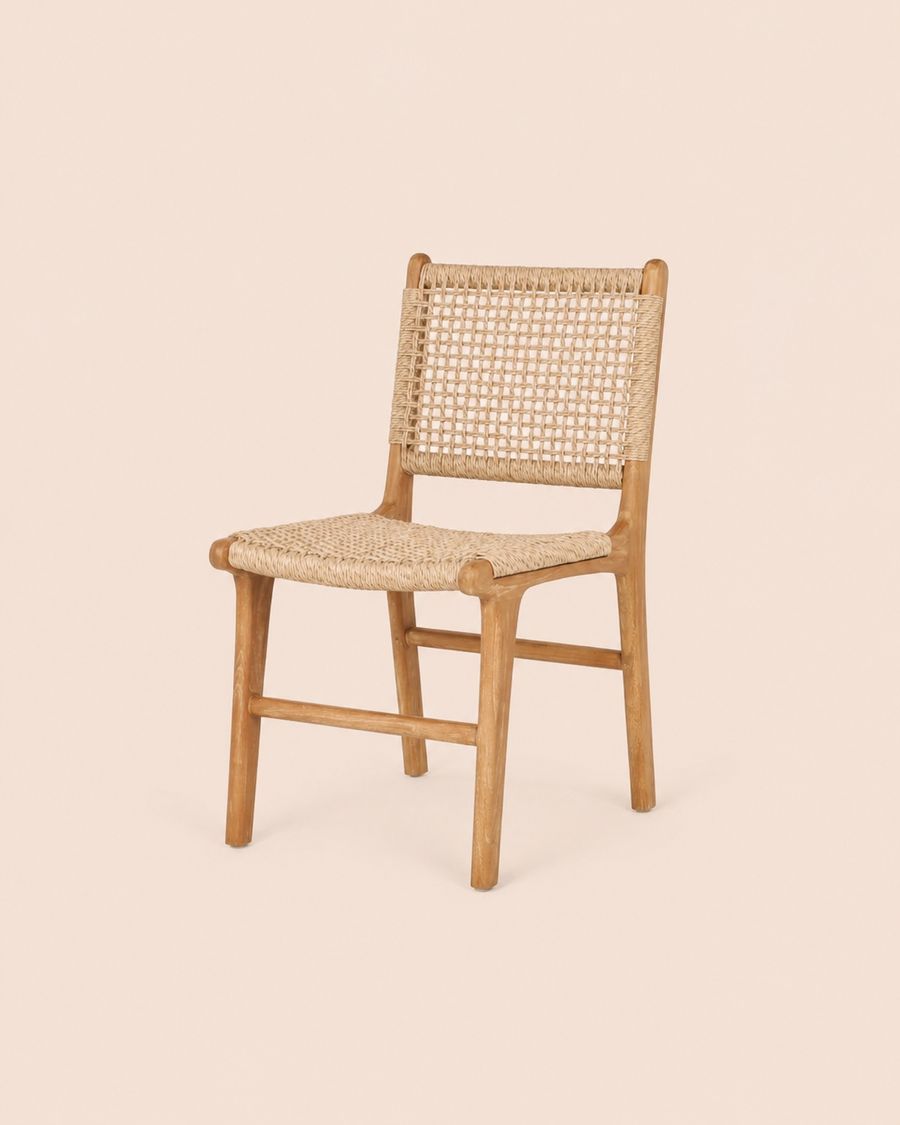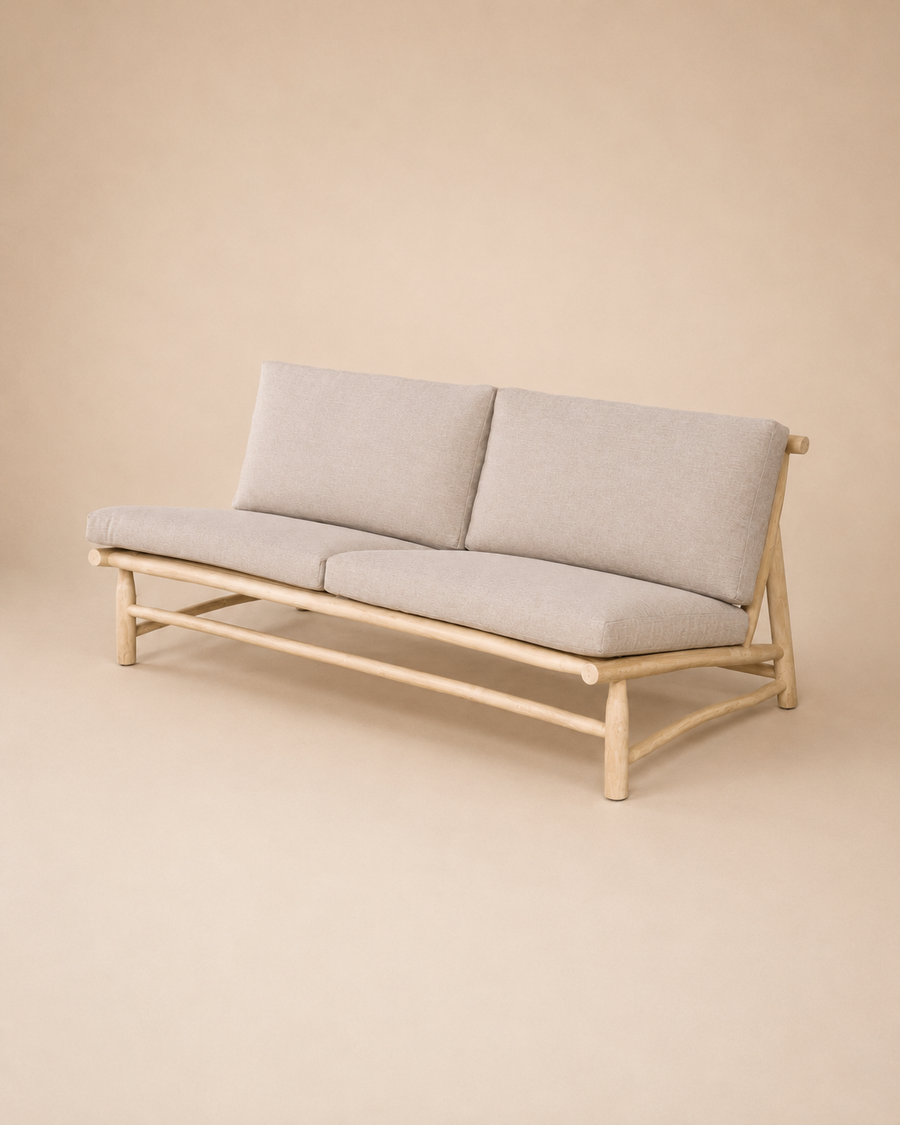
SantaiSofa
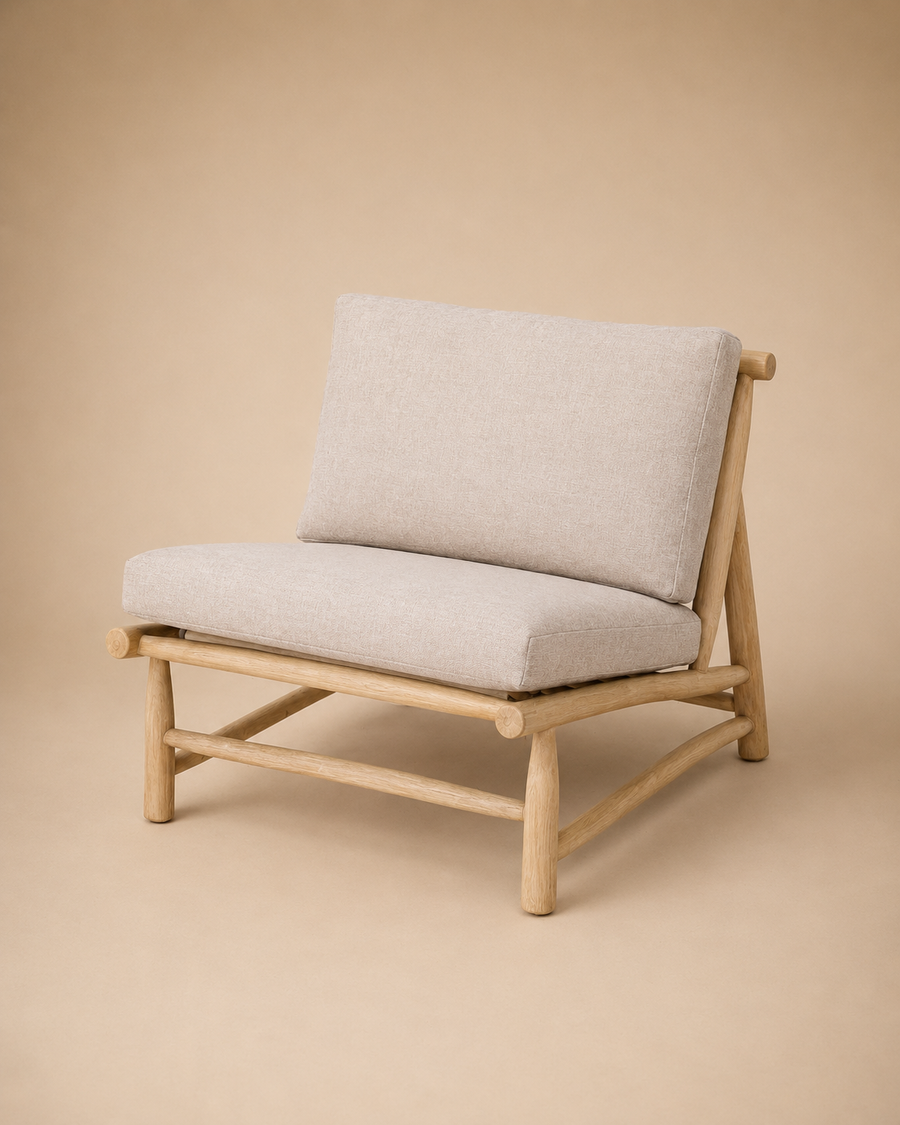
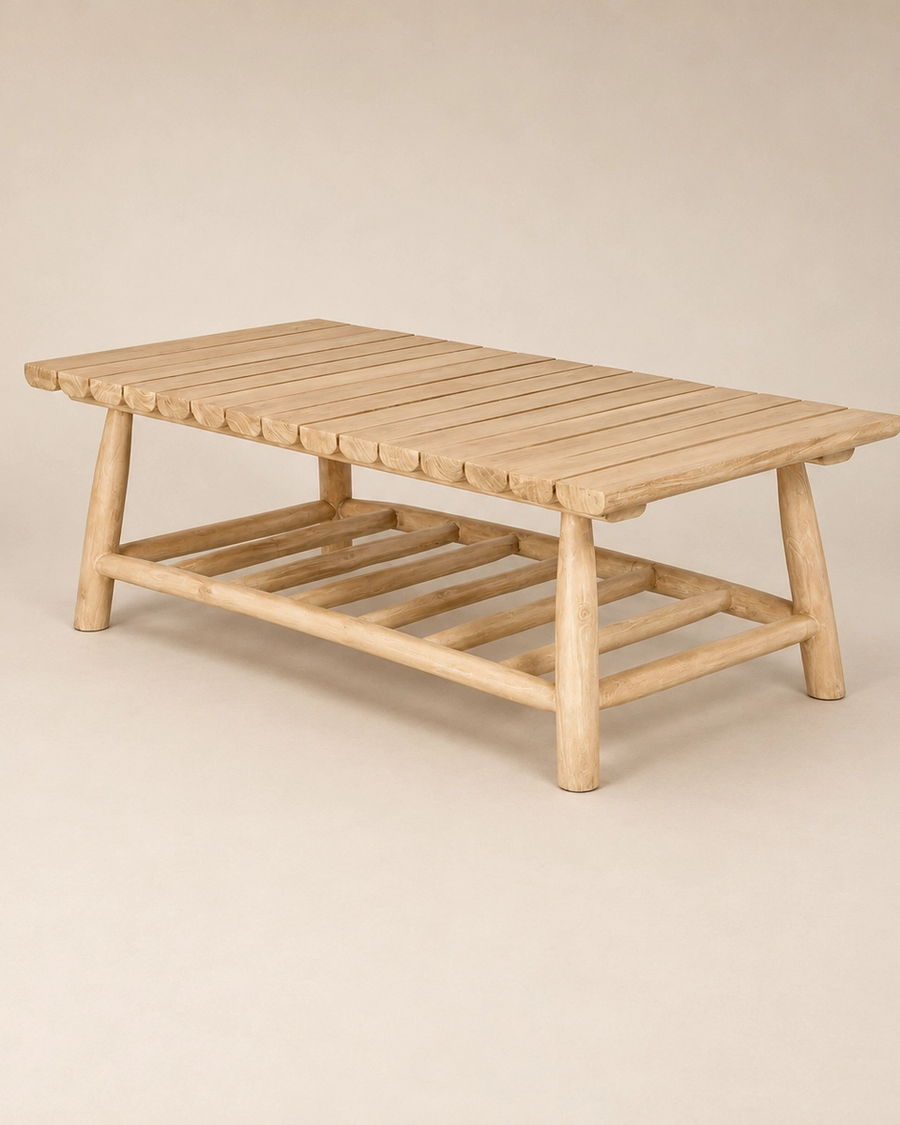
Teak branch, fabric
For a hotel terrace or pool, choose a material that stays put in wind, does not burn to the touch in sun and needs little upkeep. Solid teak does all three; aluminium and synthetic rattan are lighter. Ask for EN 581 tests at non-domestic level: seat and back are tested to 50,000 cycles, twice the domestic level.
The one that combines enough weight, little upkeep and resistance to sun and water for the use it will get. None is perfect: solid teak, aluminium, stainless steel and synthetic rattan each solve different problems.
What separates a home patio from hotel terrace and pool furniture is intensity. Chairs are dragged, stacked every night, used by hundreds of people a season and left in the sun all day. That matters more than looks when you choose.
| Material | In wind | In sun | Upkeep | Worth knowing |
|---|---|---|---|---|
| Solid teak | Heavy and stable, about 655 kg/m³ | Turns silver-grey; needs no oil to last | Washed two or three times a year | Higher purchase price |
| Shorea | One of the lightest hardwoods | Turns silver-grey | Low | Limited availability |
| Ipe | Very dense | Stands up to weather | Low | Very hard to work |
| Aluminium | Light; tubular frames cope poorly with strong wind | Heats up, like any metal | Low; does not rust | Cast aluminium weathers better than iron |
| Stainless steel | Strong; suits heavy-use tables | Hot to the touch | Low, except by the sea | Needs special coatings near the coast |
| Synthetic rattan | Light; not advised in very windy spots without a frame to weigh it down | Resists weather and damp | Easy to clean | Usually woven over a metal frame |
The ratings come from Sinergia Contract's guide to outdoor hospitality materials and, for teak's density, from The Wood Database. If you are choosing between timbers, the guide to outdoor wood for furniture compares teak with iroko, acacia and pine.
The EN 581 series, which covers outdoor seating, loungers and tables for camping, domestic and contract use. For a hotel or restaurant, ask for testing at the non-domestic level, the most demanding of the three.
According to a summary by the Italian test laboratory CATAS, the series has three parts: EN 581-1, general safety requirements such as open tube ends and trapping points; EN 581-2, mechanical safety of seating, loungers included; and EN 581-3, the same for tables. Each part is revised on its own, so check which edition the test report cites.
| Test | Camping | Domestic | Non-domestic |
|---|---|---|---|
| Seat and back durability, cycles | 12,500 | 25,000 | 50,000 |
| Static load on the seat, N | 1,100 | 1,600 | 2,000 |
| Armrest durability, cycles | 5,000 | 10,000 | 30,000 |
| Seat impact, drop height | 14 cm | 18 cm | 24 cm |
| Table horizontal fatigue, cycles | 5,000 | 10,000 | 20,000 |
After testing, the piece must show no broken parts and no loose joints, must still do its job, and must not tip over in the stability tests. Tables also have a stability test with a parasol, and any glass they carry must be tempered or laminated.
Ask the supplier for the test report for each model, naming the laboratory, the standard and the level. A piece tested only to domestic level has passed half the seat cycles that hotel use calls for.
A lounger that copes with backrest adjustments, wet swimmers and sun all day, and that moves easily for cleaning. EN 581-2 covers loungers with their own table of loads and cycles, so non-domestic testing applies to them too.
Before choosing a model, measure the space with the lounger fully reclined, not folded, and leave room between loungers to walk barefoot and for staff to serve. Ask the maker for each lounger's spec sheet with its length, width and height, both reclined and upright. If the space calls for a different size, any piece can be adjusted through custom furniture, with a technical drawing to approve before production.
Yes, if the terrace is cleared every night or at the end of the season: a stacking chair takes up less storage and is quicker to put away. If the terrace stays set up, weight and stability matter more than the stack.
Wind is the other half of the decision. Sinergia Contract advises against light tubular aluminium and synthetic rattan in very windy spots, unless the rattan is woven over a metal frame that adds weight. A solid timber chair moves less, but it is also heavier for whoever clears it away.
Ones made for outdoor use, with removable covers, that are put away when not in use. On a terrace the cushion is usually the first thing to replace, long before a teak frame.
Not much, if it is done on time: regular cleaning, a check of the fittings when the season opens and closes, and cushions kept under cover. The expense usually comes from skipping it, because a loose joint nobody tightens ends in a broken chair.
For the cold months, whether the terrace stays out or goes into storage, follow the steps in the guide to teak in winter.
Rule of thumb: choose outdoor furniture for the worst week of the year, not the best. If it handles that week's wind and packs away without a struggle, it will handle the rest.
That depends more on the material and the care than on the brand. Long lives are quoted for hardwoods: Sinergia Contract mentions up to 50 years for shorea and more than 25 years outdoors for ipe, and some British teak retailers quote 30 to 50 years or more. These are sales figures, not test results, and they assume basic upkeep.
Cushions and fabrics last much less, so budget for replacing them separately from the frames. And before you buy, a non-domestic EN 581 test is the best sign that a frame will stand up to hotel use.
Each town hall has its own terrace bylaw, which sets how much space can be used and other conditions. Nationally, Orden TMA/851/2021 on accessibility in urban public spaces gives its article 33 to elements tied to commercial activity, including the terraces of bars and similar venues.
In teak, yes: the same piece can go indoors and out. That keeps one look across the venue and lets you move tables and chairs with the seasons.
It can be in shaded areas: Sinergia Contract notes that tempered glass copes very well with temperature changes and avoids glare. In direct sun, a timber or laminate top gives fewer reflections.
The use changes: by the pool people sit down wet and barefoot, and the furniture spends more hours in the sun. Look for surfaces that shed water, fittings that do not rust and no metal parts that burn to the touch.
Teak or aluminium frames, yes. Bring in the cushions and, if strong wind is forecast, the light pieces and the parasols.